Panama: Snowbirds in Paradise – Sand, Sea, and Skyscrapers or A Relaxing Visit to the Azuero Peninsula

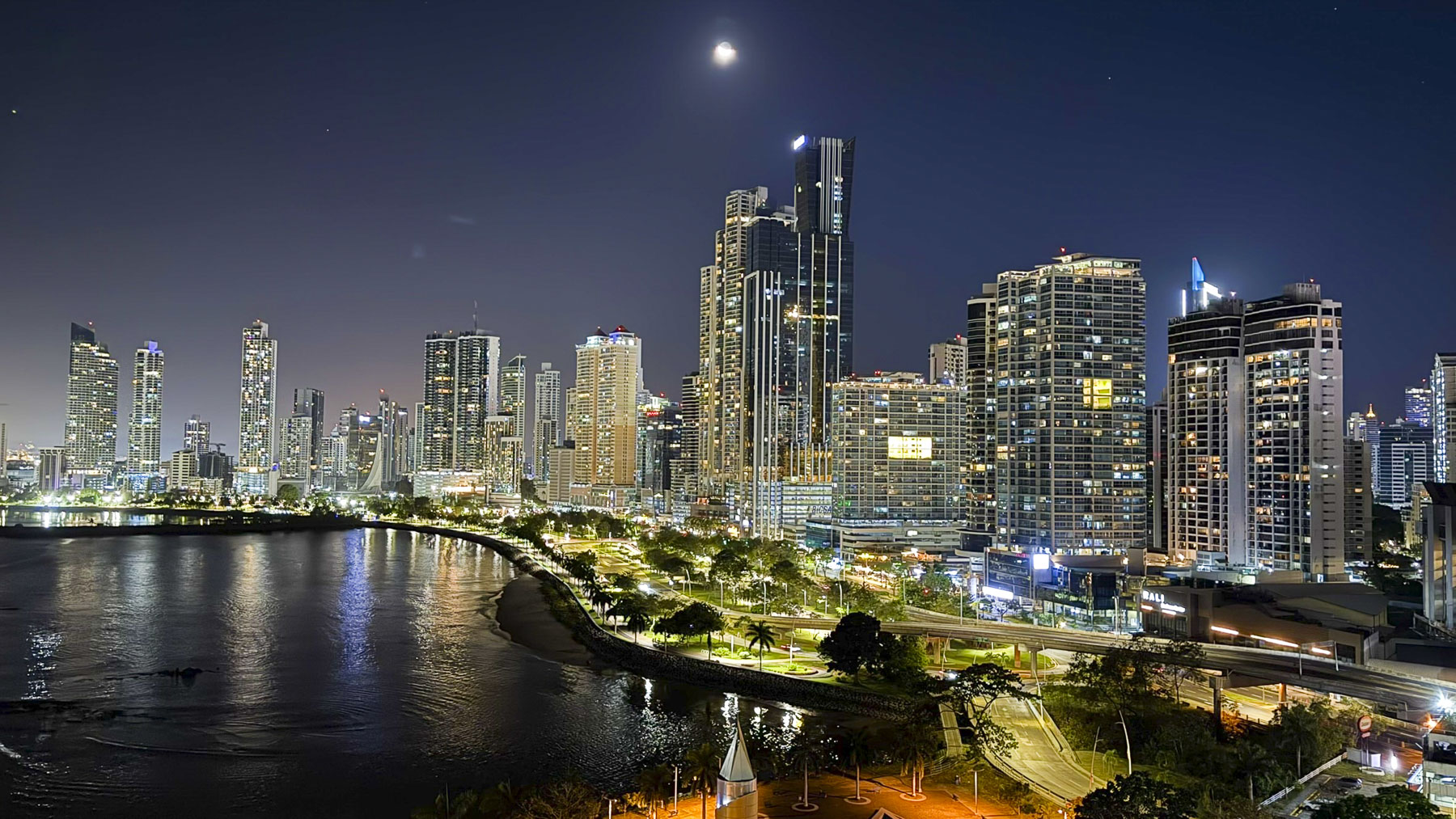
By the time we picked up our rental car at the Tocumen International Airport it was the height of the evening rush hour in Panama City. Fortunately, we were heading into the city, while the traffic lanes carrying the daily exodus of commuters home from the financial capital of Latin America were jammed. It was only a twenty-five minute drive to our hotel on the waterfront, but we missed our exit and had to re-route our way through the now deserted downtown streets to the Hotel Plaza Paitilla Inn, for a one night stay. We chose this 19-floor waterfront hotel after determining it was the best place to get those iconic photographs of the city’s modern skyline along the Pacific Ocean coast. And we were not dissappointed.

Golden light filled the room as we drew back the curtains along a wall of windows to reveal a spectacular cityscape that transitioned through the sunset, twilight, and darkness. It was a million-dollar view and we felt as if we were some place only accessible to billionaires or actors lucky enough to have a movie scene filmed on location here. Surprisingly, the Hotel Plaza Paitilla Inn was an excellent value and very budget friendly.
After discussing our travel plan with the concierge the night before, we departed after an early breakfast to avoid the expected traffic delays as folks took the Friday afternoon off in anticipation of the four days of Carnaval before Ash Wednesday. The nationwide el Carnaval de Panama, which literally happens in every town, is the biggest celebration of the year in the country. It starts in each town with the coronation of a queen and ends with the Burial of the Sardine, which symbolizes the past festivals and enjoyment of drink and food, in the predawn hours of Ash Wednesday, and the beginning of Lent. Little did we know that Panama’s Carnaval is regarded as “one of the largest— and rowdiest — events in Latin America.” Nightly events feature themed parades with elaborately decorated floats escorted by trumpet and drum bands, called tunas. To the benefit of all, water trucks called Culecos spray the revelers in the ninety-degree heat to keep them cool. And between the water trucks, mojaderas, wetters, keep everyone partying around them soaked with water pistols, water balloons, and buckets of water. It’s not a particularly camera-friendly event.

Our destination for the next 5 nights was Posada Los Destiladeros on Playa Los Destiladeros, in Los Santos Province, a 5 hour, 335km (208mi) drive. Leaving the city, we crossed the Bridge of the Americas which soars 64m (210ft) above the Panama Canal, and stopped on the far side at the Mirador de las Américas for our first look at the canal. Two monuments commemorate the arrival of 750 immigrants from China 170 years ago to work on projects relating to the construction of the canal, which created an enduring friendship between Panama and China. The view of the canal wasn’t as impressive as its fact sheet: over 12,000 ships carrying $270 billion worth of cargo pass through the locks of the canal annually. Over 70% of the ships are headed to or are returning from ports in the United States.

Continuing on Rt1 we passed the first of many pillars being constructed to support Panama City’s new Metro 3 line, a double-track monorail project sponsored by the Chinese, that will connect the growing towns of Ciudad Del Futuro and La Chorrea to the city’s Metro 1 and Metro 2 lines, Central America’s first and only subway system that became operational in 2014. Rt1 is alternately called the Pan-American Highway, that famously stretches from Prudhoe Bay, Alaska in the United States, 19,000 miles way to Ushuaia, Tierra del Fuego in Argentina. Though a 100-mile section is missing in the difficult terrain of treacherous Darien Gap region between Yaviza, Panama and Chigorodó, Colombia.

Shopping centers and strip malls with McDonald’s golden arches, Starbucks, and Burger Kings lined both sides of the highway before giving way to open crop- and pastureland. The occasional hilltop offered views of the Gulf of Panama and the Pacific Ocean to the south. While to the north the rural highlands of the Cordillera Central, the jagged mountainous spine of the country, graced the horizon. Veering off the Pan-American Highway we headed west on Rt2 to Las Tablas. The town has been ground zero for Carnaval in Panama since the mid-1800s when two fiercely rival groups representing Calle Arriba and Calle Abajo started to compete in a festive, one upmanship every year before the 40 days of Lent began. The event in Las Tablas is very popular with folks from Panama City seeking to experience a more traditional Carnaval with folkloric music and regional dress, in what many consider Panama’s “heartland.”

Traffic had been slowly building all morning, and by early afternoon the streets of our intended route were blocked with floats being prepared for the weekend’s first parade that night. Folks were already creatively parking along the side of the roads and walking to the town’s central plaza, Belisario Porras. The congestion in the town unfortunately nixed our plans for lunch there, and we continued on for several miles along Rt2 through a scenic landscape of lightly treed hillocks. Cattle grazed in the shade under the trees.

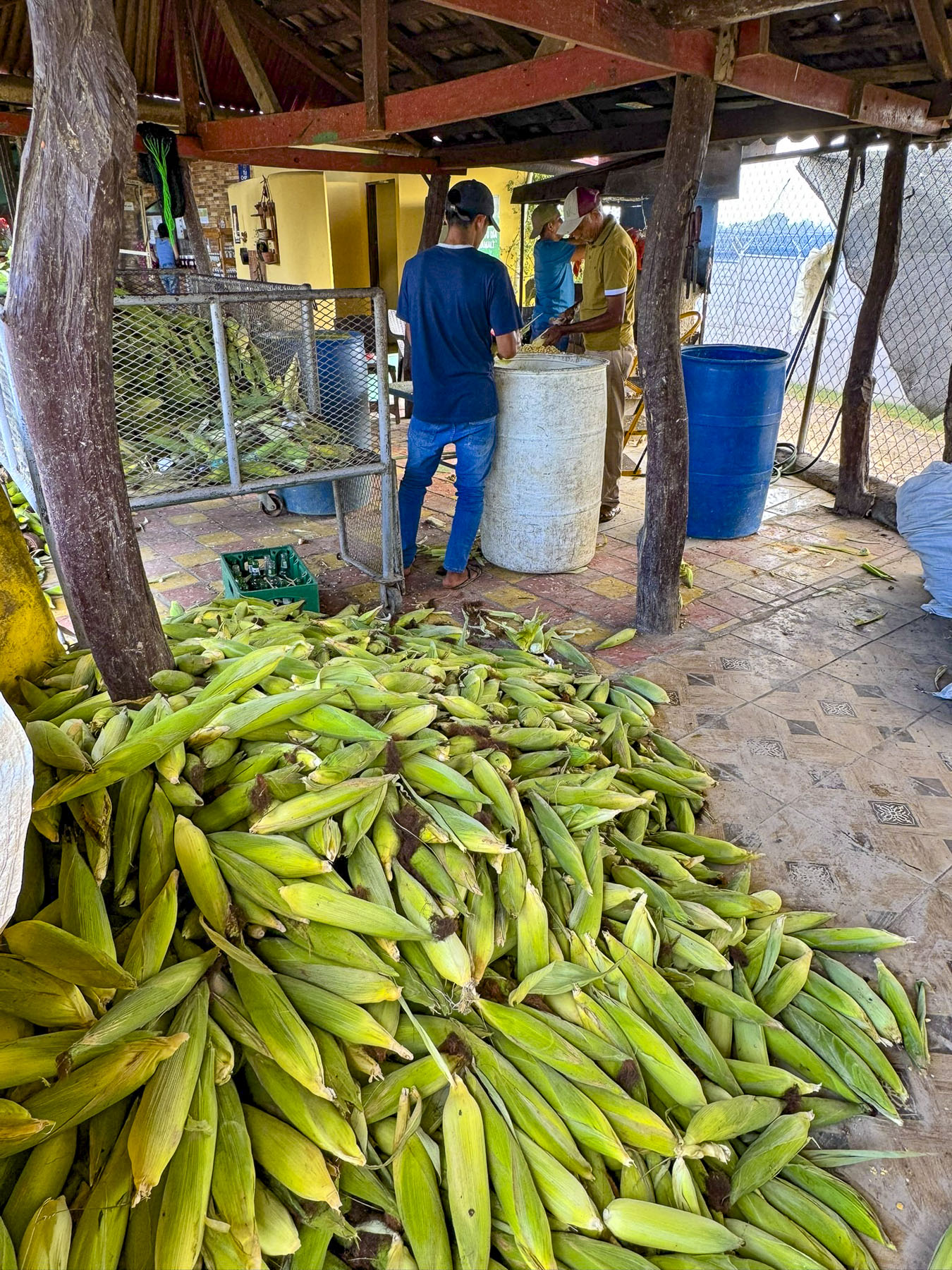
Cars were parked on both sides of the road in front of El Cruce #2. It was a small fonda – a Panamanian roadside food stand, with smoke billowing up from its barbeque pit. It piqued our interests, and we stopped.  The outside grill area was open sided, under a corrugated tin roof. In its shade a man prepped and attended the meats that were smoking above a fire while another was using a machete to shave kernels from ears of corn. The unhusked pile next to him seemed monumental, akin to the Greek myth of Sisyphus and his never-ending task. It was the beginning step in the preparation of masa, a corn flour. It’s a must-have ingredient for traditional, homemade corn tortillas and tamales. The menu hung above a small window to the kitchen filled with women attending various stoves. Everyone was very nice and curious about where we were from, but seemed surprised that we had stopped. A large John Deere combine harvester with a police escort passed as we ate. A small caravan of pickup trucks with farm workers standing in the back followed it slowly down the road. The fonda was a very authentic, nothing touristy about it experience, and the food was good.  The line of traffic behind the harvester slowly disappeared as cars passed it when the opportunity arose.  It wasn’t until the last seconds as we raced past the tractor that we realized we also had to pass the police car! We returned the officer’s wave. It seemed like it was an everyday occurrence in the rural countryside. In Pedasi, the closest town to our hotel, preparations for the Carnaval were also visible down the side streets.
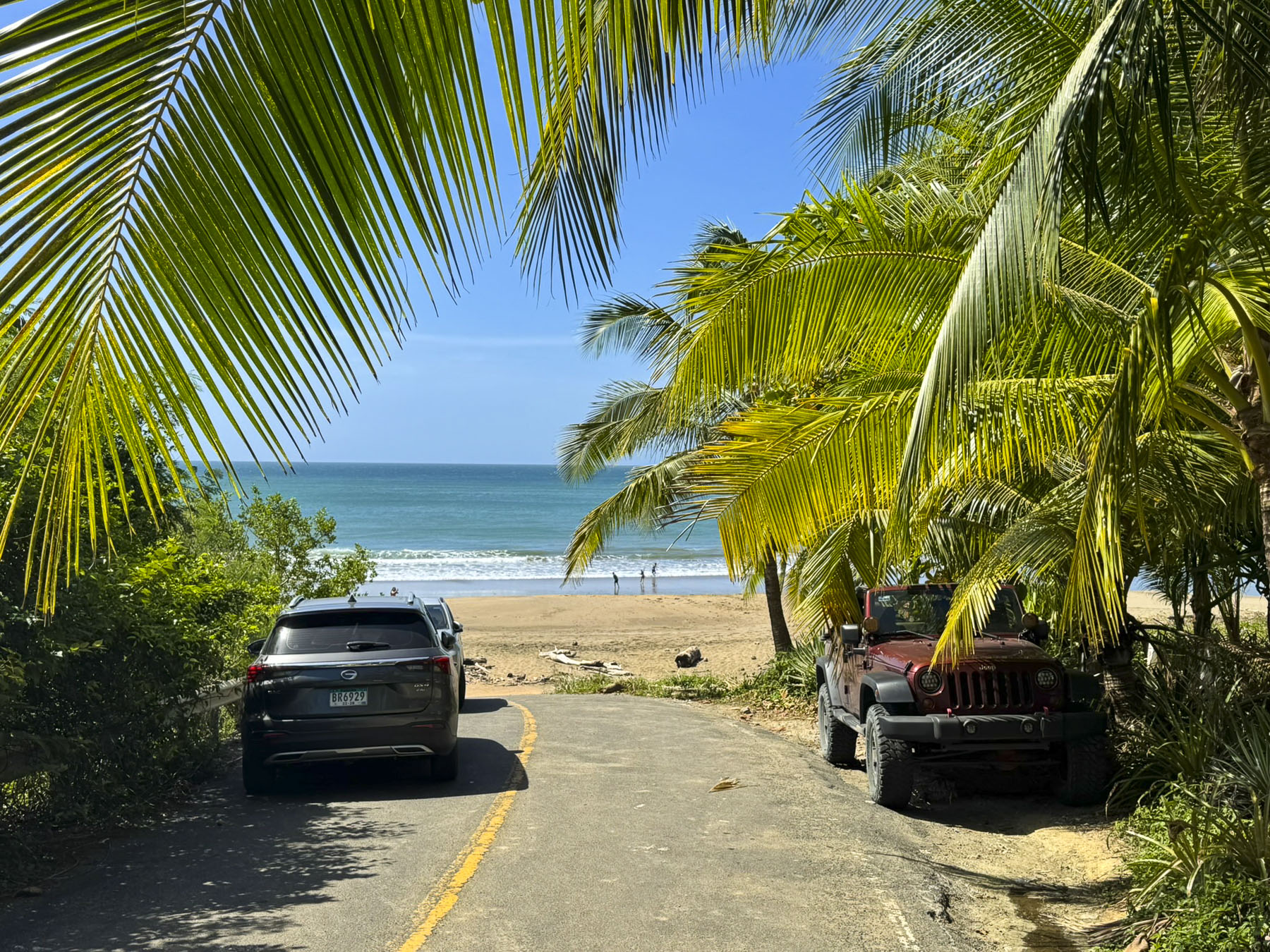
We missed the entrance to the hotel and continued down the road in hope of finding an easy spot to turn around, only to find that the road suddenly ended, with a log across it, at the top of Playa Destiladeros, a short distance away from the thundering waves of the Pacific Ocean, as if an early extension had been washed away in a storm. We were at one of the farthest points south on the remote Azuero Peninsula.
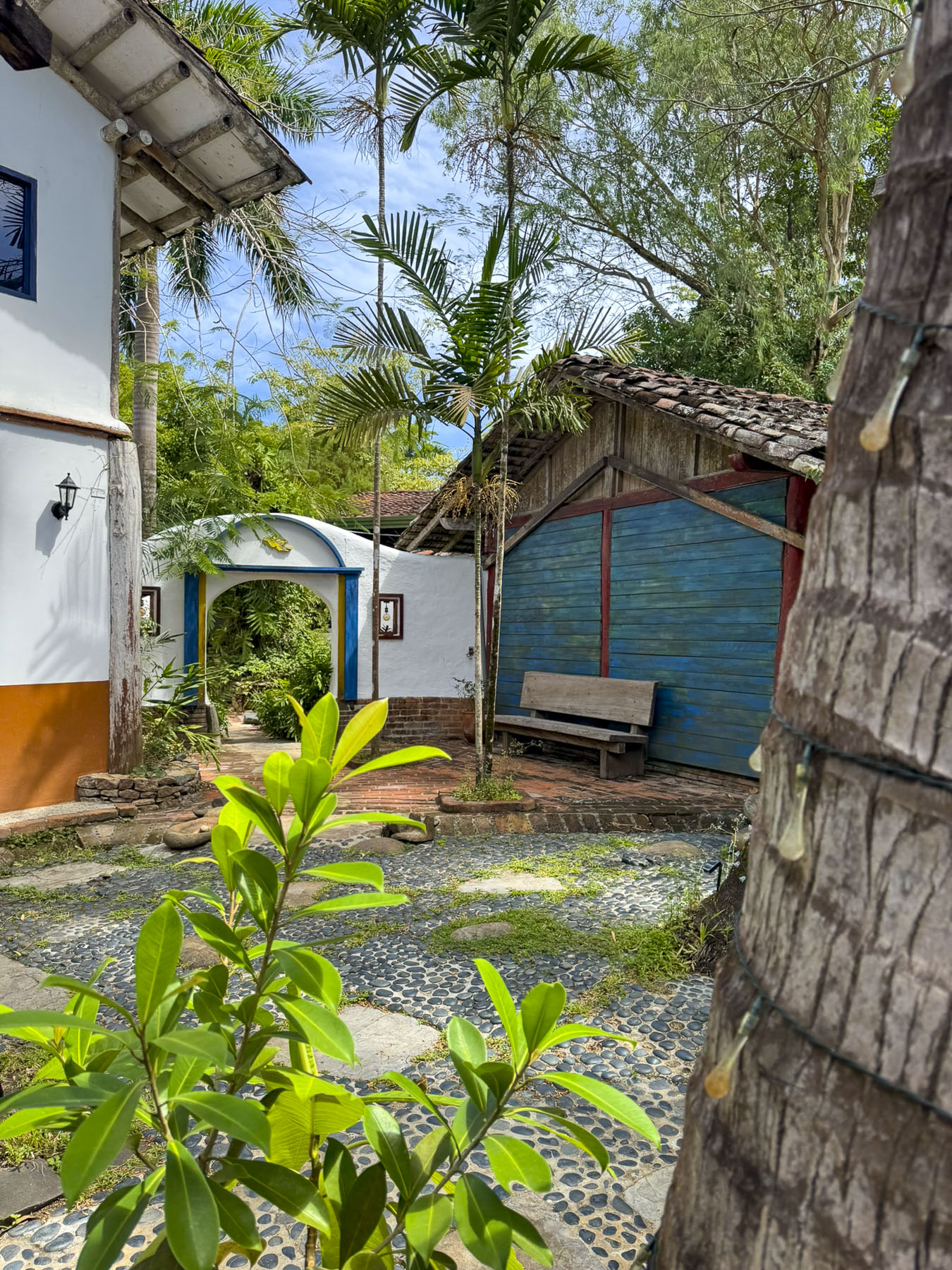
When we made plans for this return layover from our trip earlier in the month to Uruguay and Argentina, we didn’t realize our week coincided with Carnaval, consequently many of the hotels we were interested in were fully booked. After scouring the map for areas we wanted to stay we found Posada Los Destiladeros. While it showed as fully booked on Booking.com and Hotels.com, we were able to book a room directly through the hotel’s reservation page.

From the gated entrance we followed a long twin-tracked road, through a large palm tree covered property with many outbuildings, to the parking area. Through a grove of palm trees, the inviting blue water of the Pacific glistened behind the receptionist.
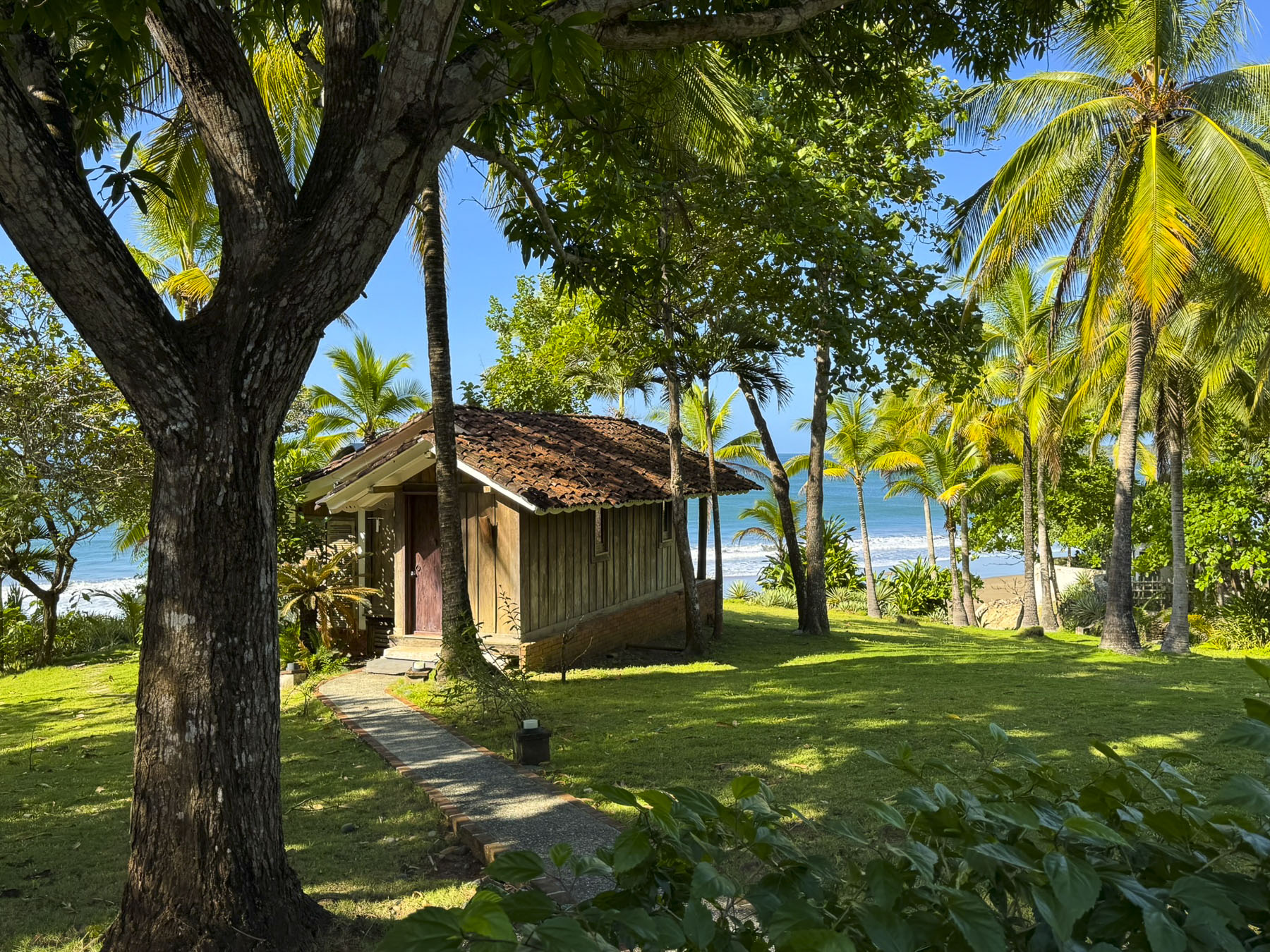
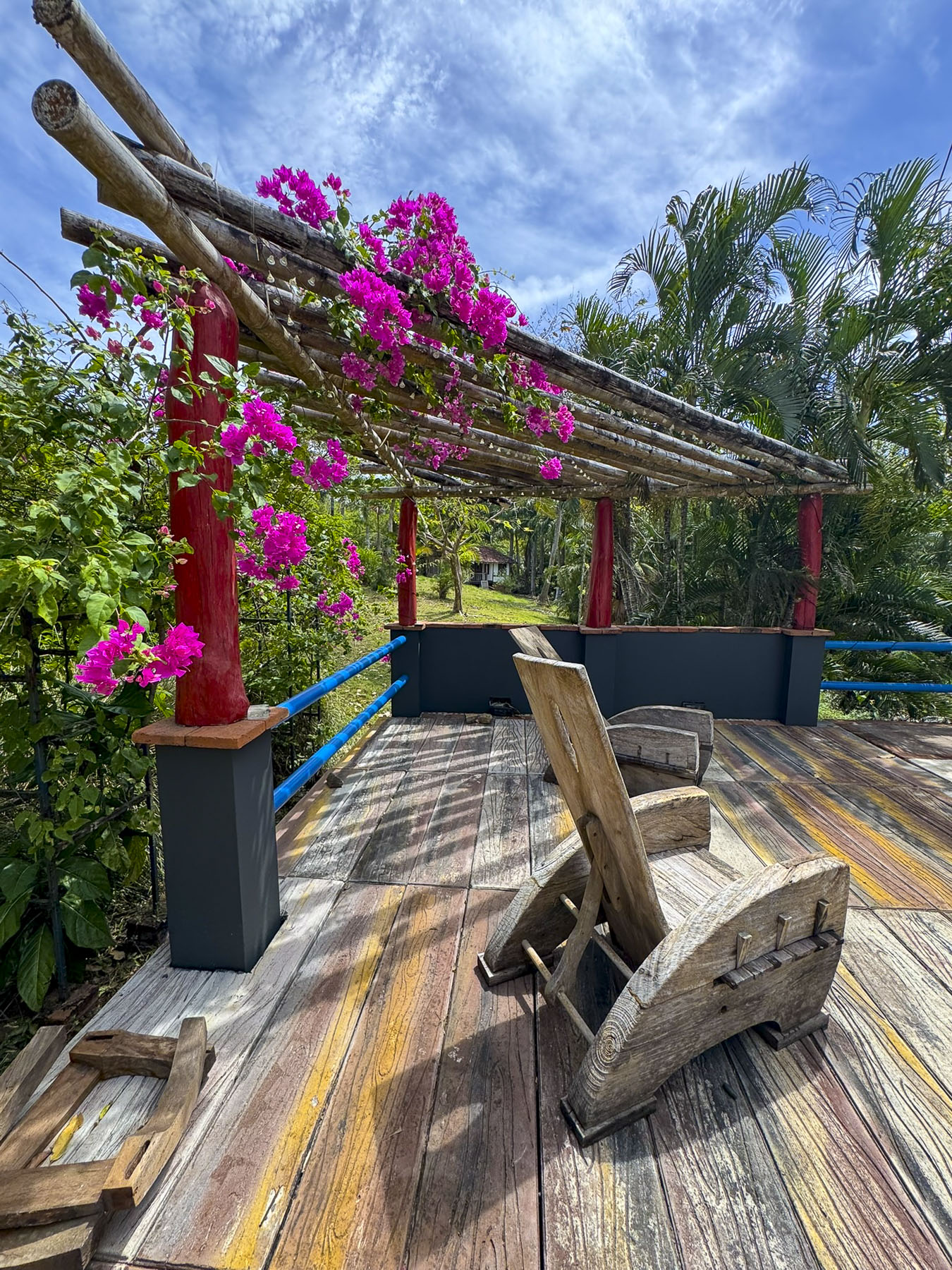
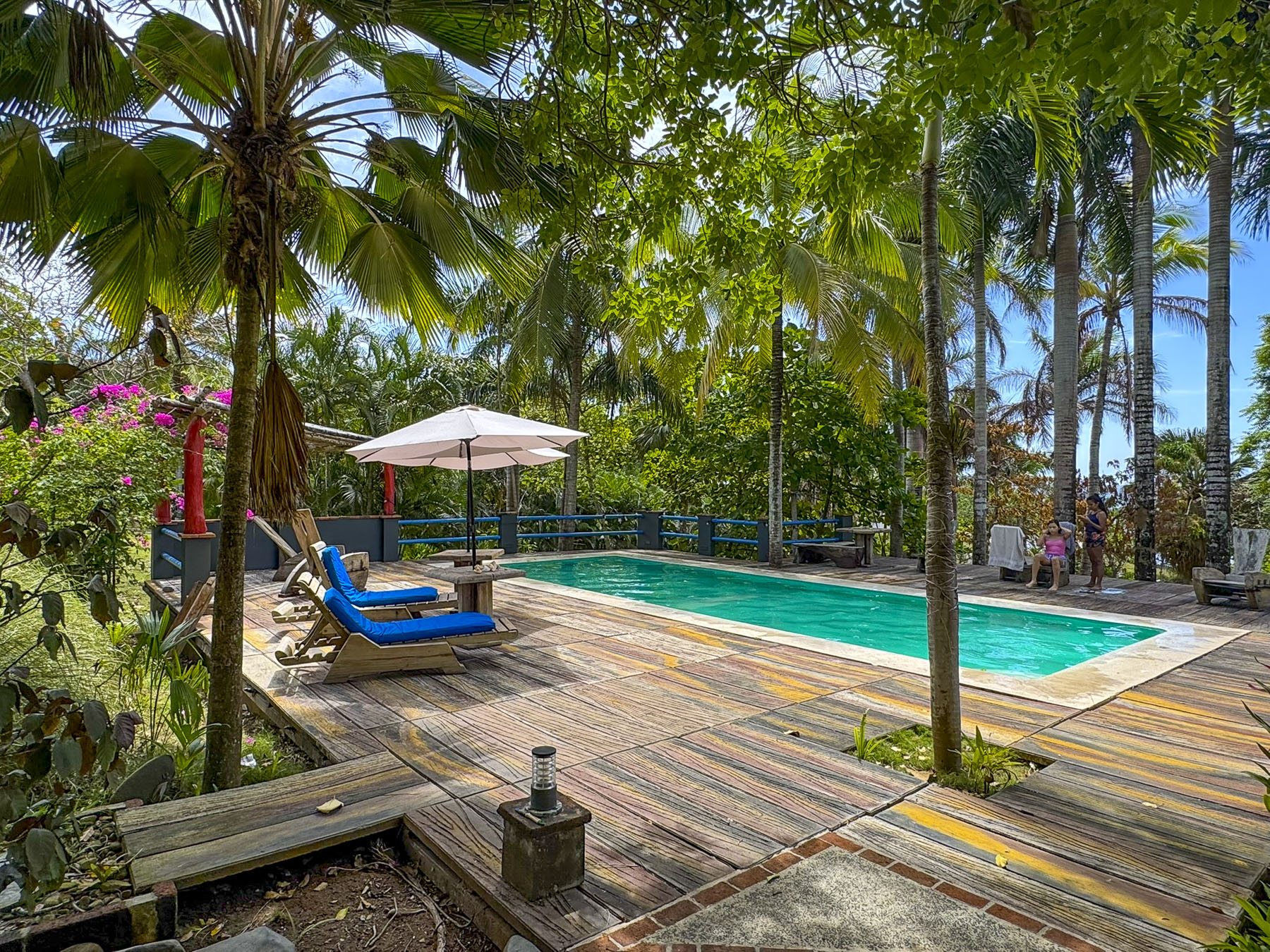
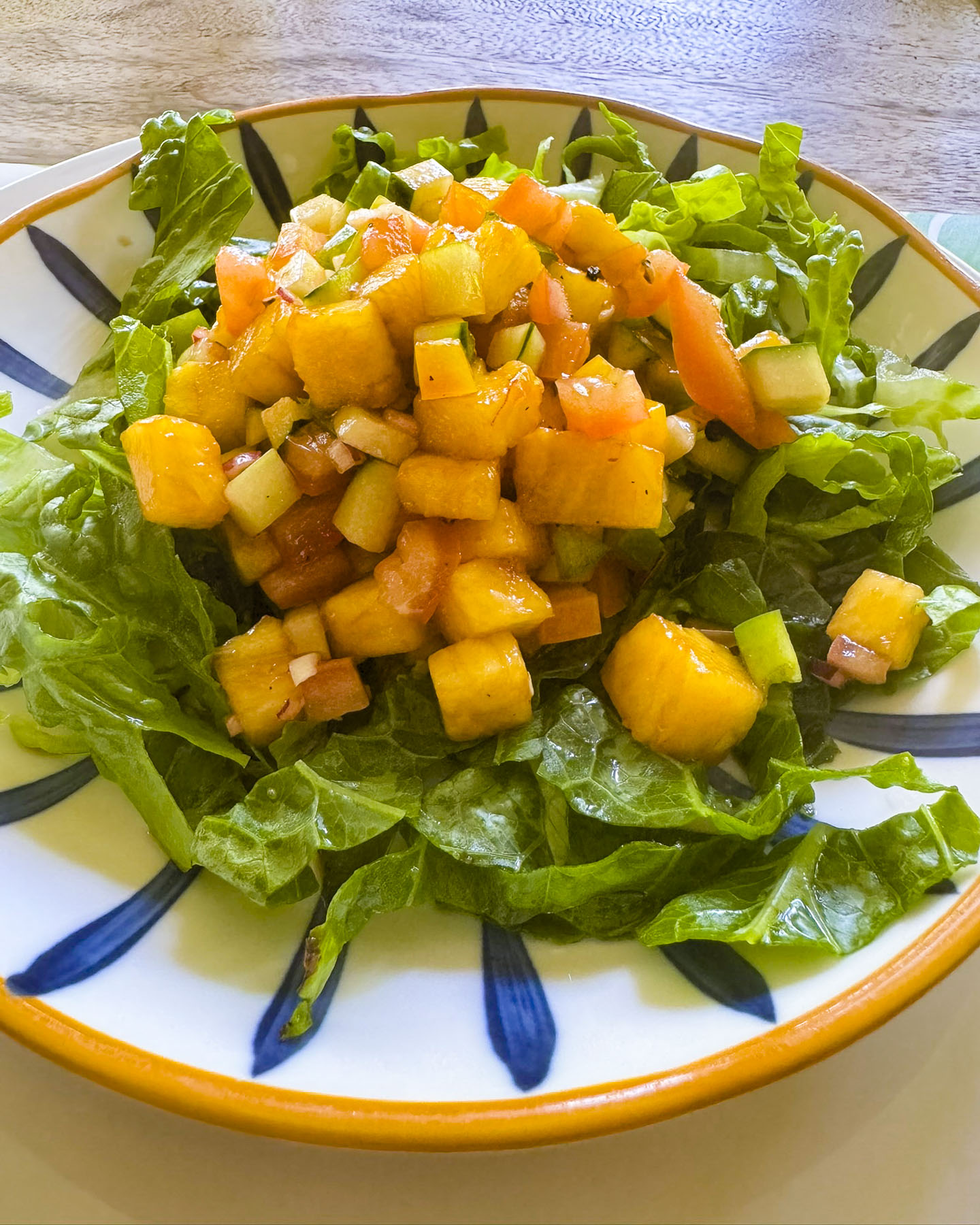
The vibe was really nice. It’s an unpretentious, tenderly time-worn resort in a verdant oasis of greenery on the low cliffs overlooking a wild beach and undeveloped coastline. The staff were very nice and friendly, and after a few days felt like family. The dinners that emerged from their kitchen were extraordinary!
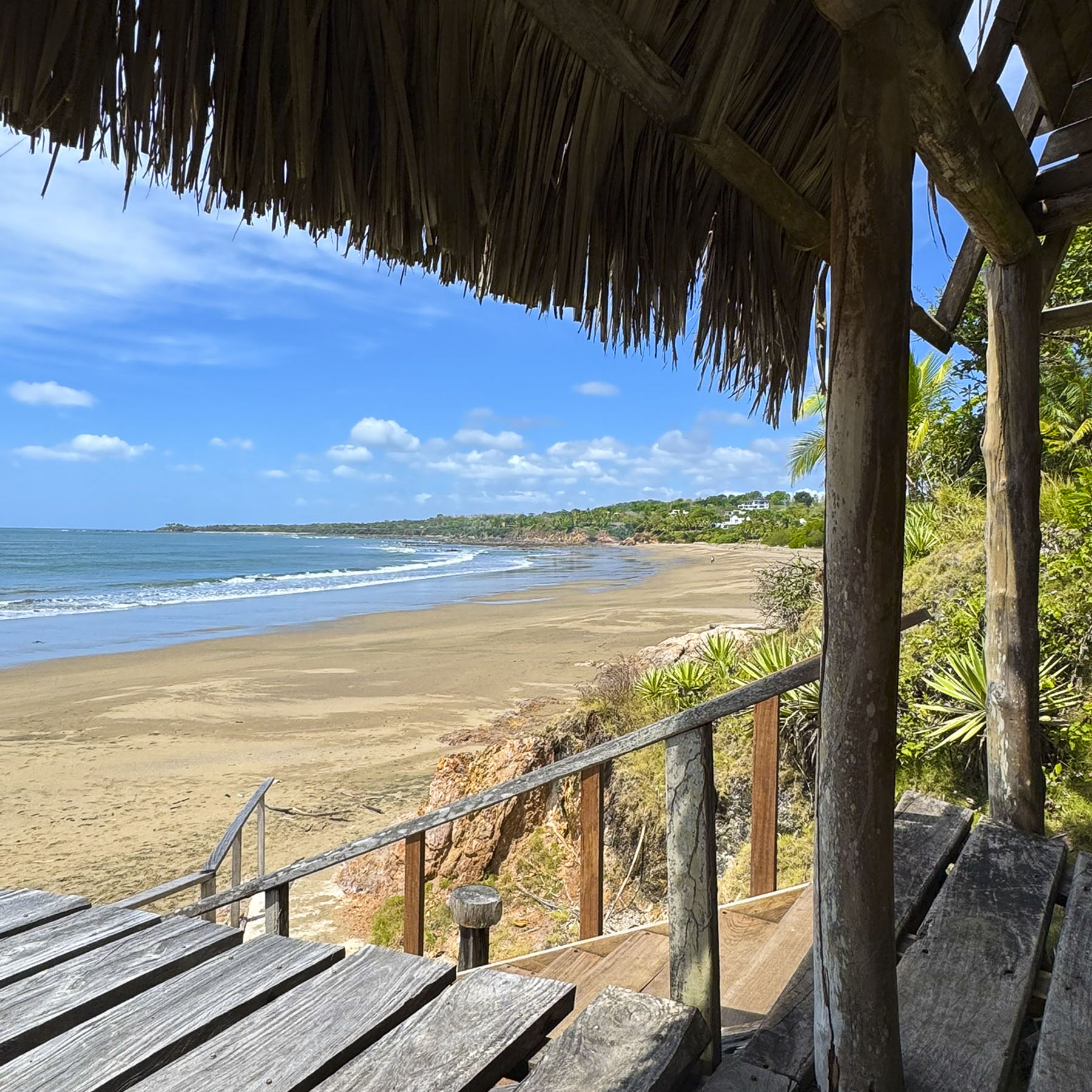
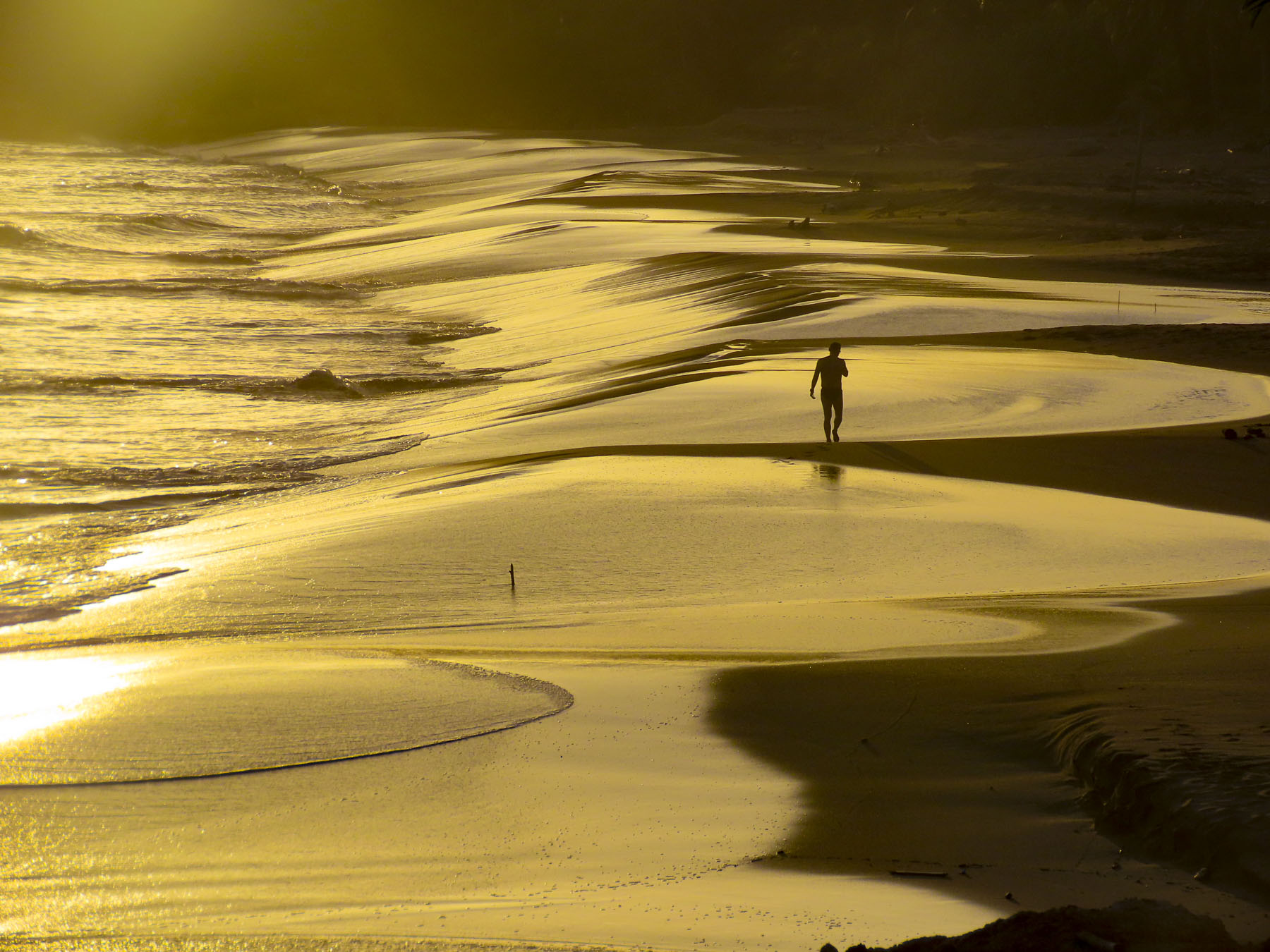
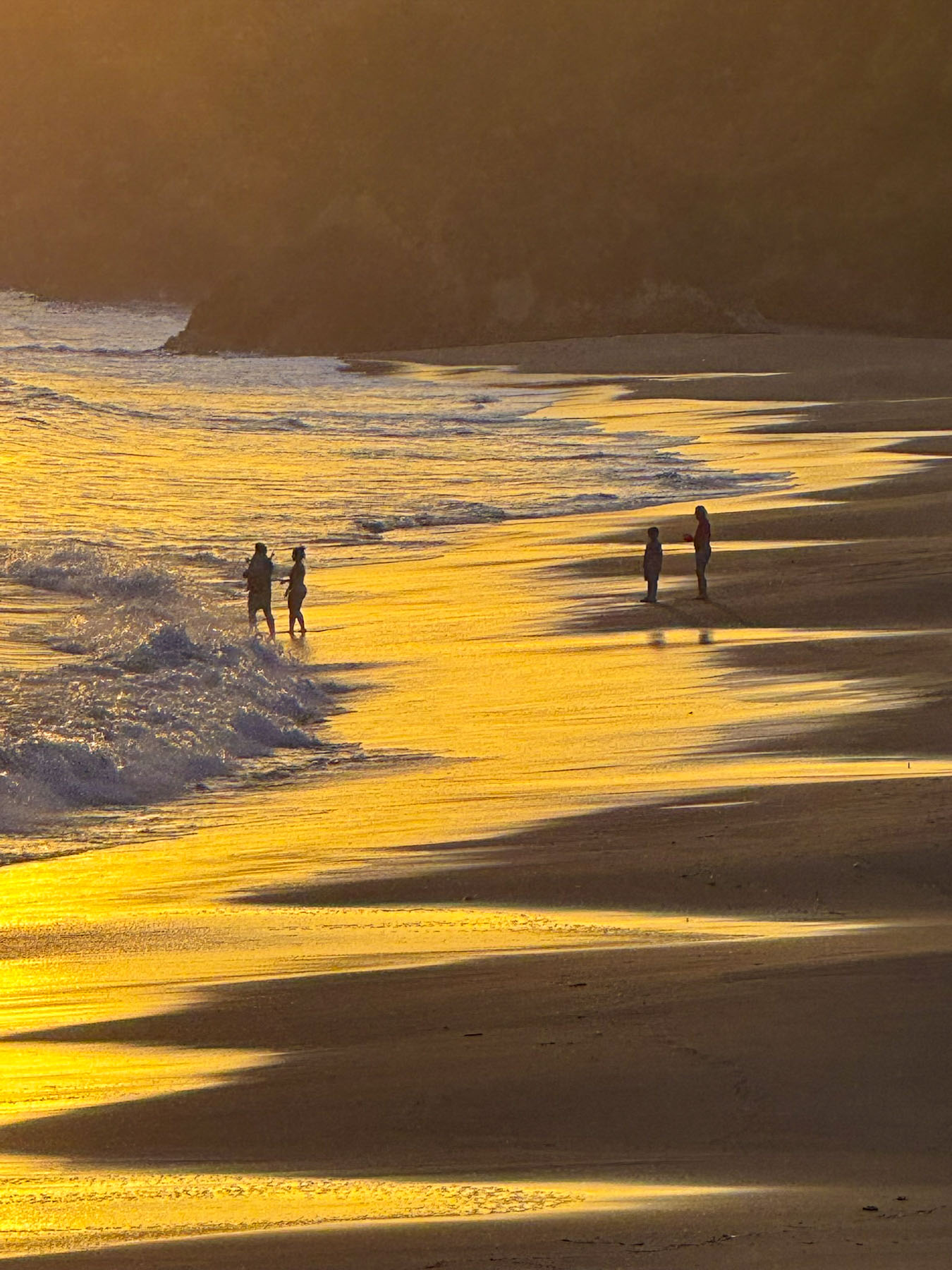
It’s very unusual that we stay in one spot for 5 nights to unwind. But the Posada Los Destiladeros was the perfect place for us to relax, with easy walks on the beach, lounging around the pool and under palm thatched gazebos overlooking the surf as we waited for sunset every day, which offered a dramatic play of light across sand and surf.
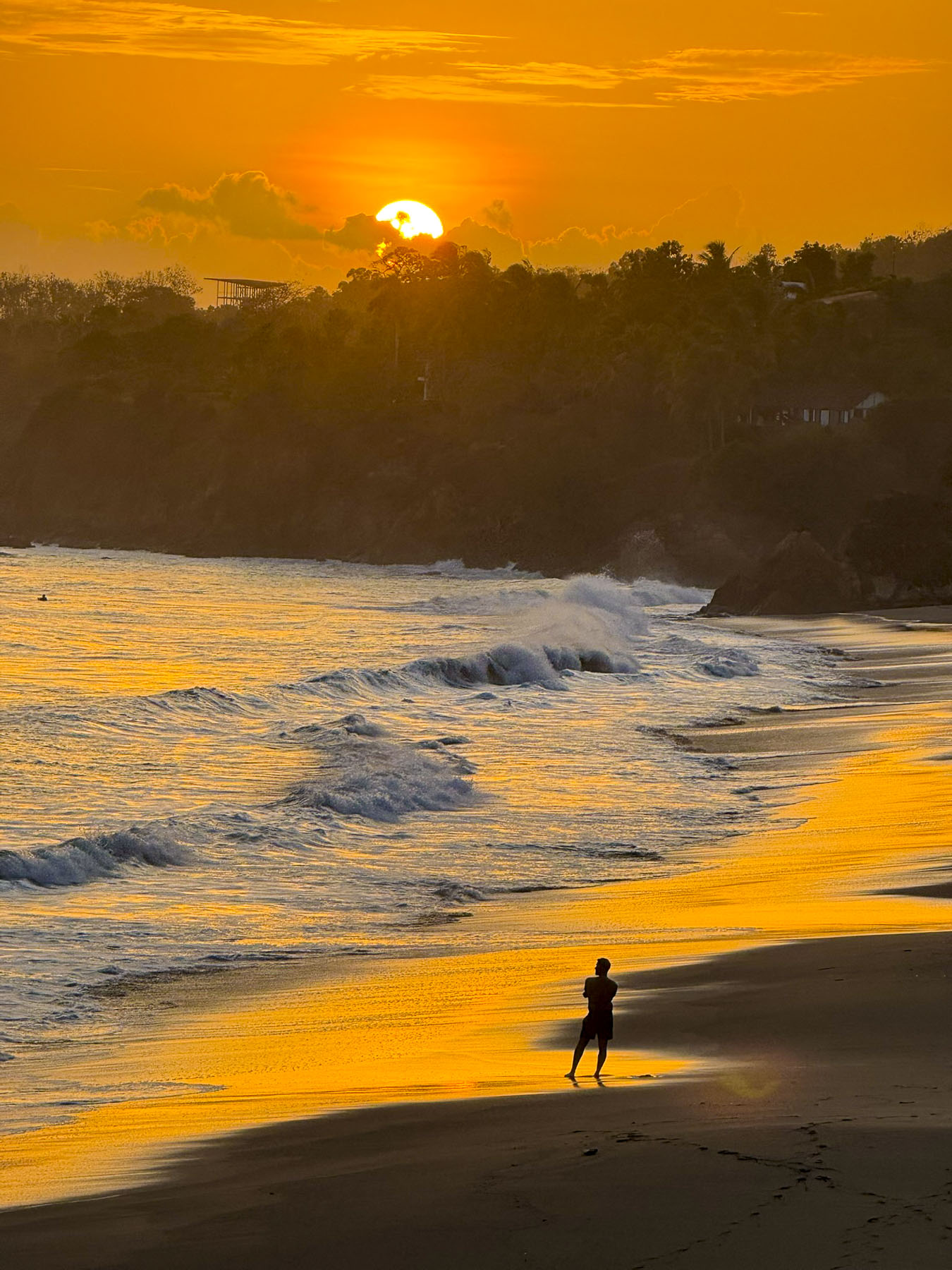
A conversation in the pool one afternoon with another guest, a Panamanian American man visiting family over the week of Carnaval, related that he and his wife had been coming here for years, but “somehow it remains a hidden gem.” Of course, we took several half day trips to explore what else the Azuero Peninsula had hidden away.
Several days later we drove toward the beach town of Las Escobas del Venado. Well suited to the heat and humidity of the region, herds of Brahma cows have rested in the shade of the region since Spanish colonists first brought them to the area in the mid-1500s. At a turnoff for the small ranching town of Los Asientos, a roadside monument highlights the town’s traditional la corridas, bullfights. These are non-lethal events since a 2012 law prohibited the injury or death of the bull; however, la corridas are still popular in rural Panama. Along the road milk cans were placed next to the rancher’s gate, waiting for the local dairy cooperative to pick them.
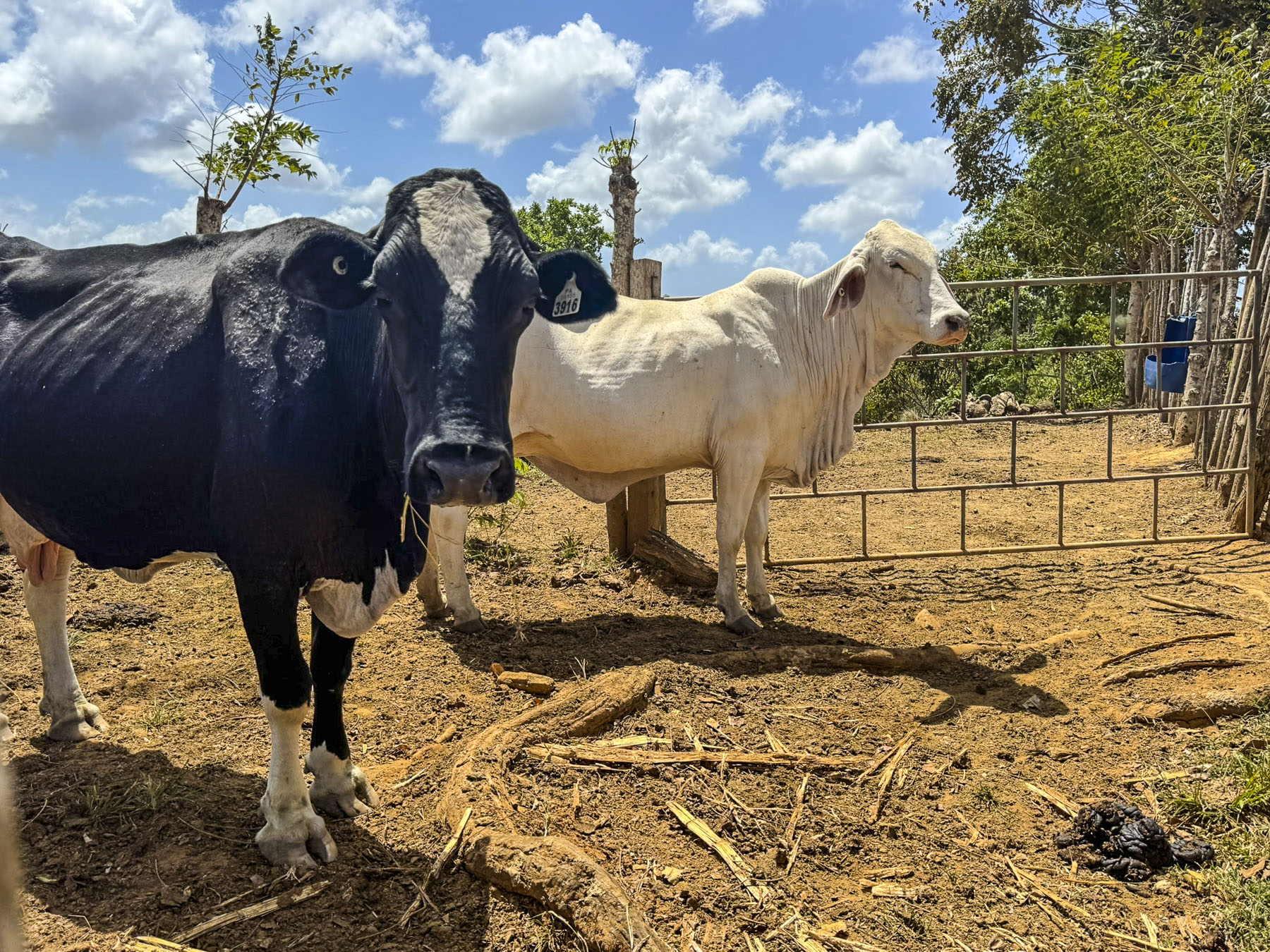
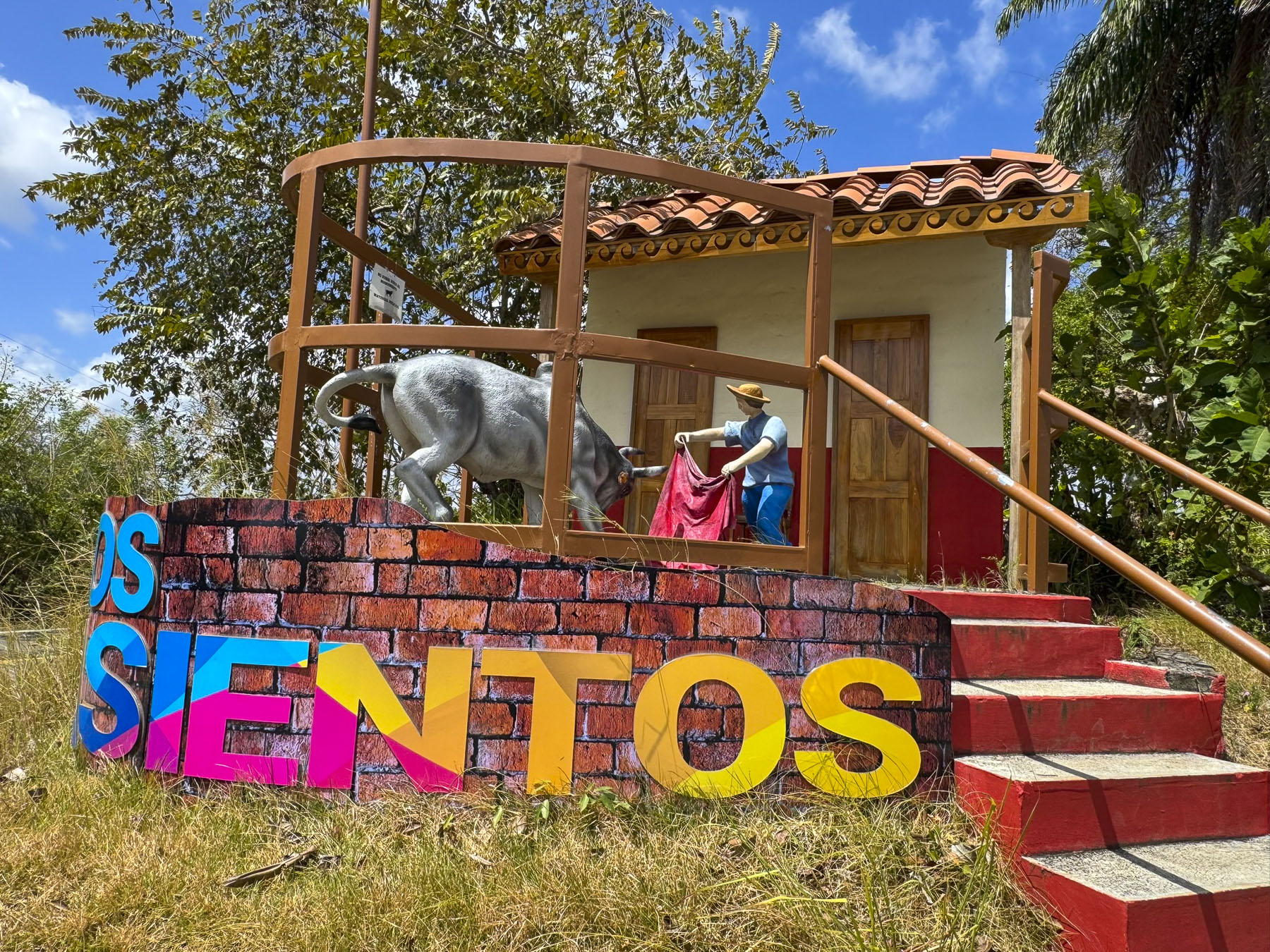
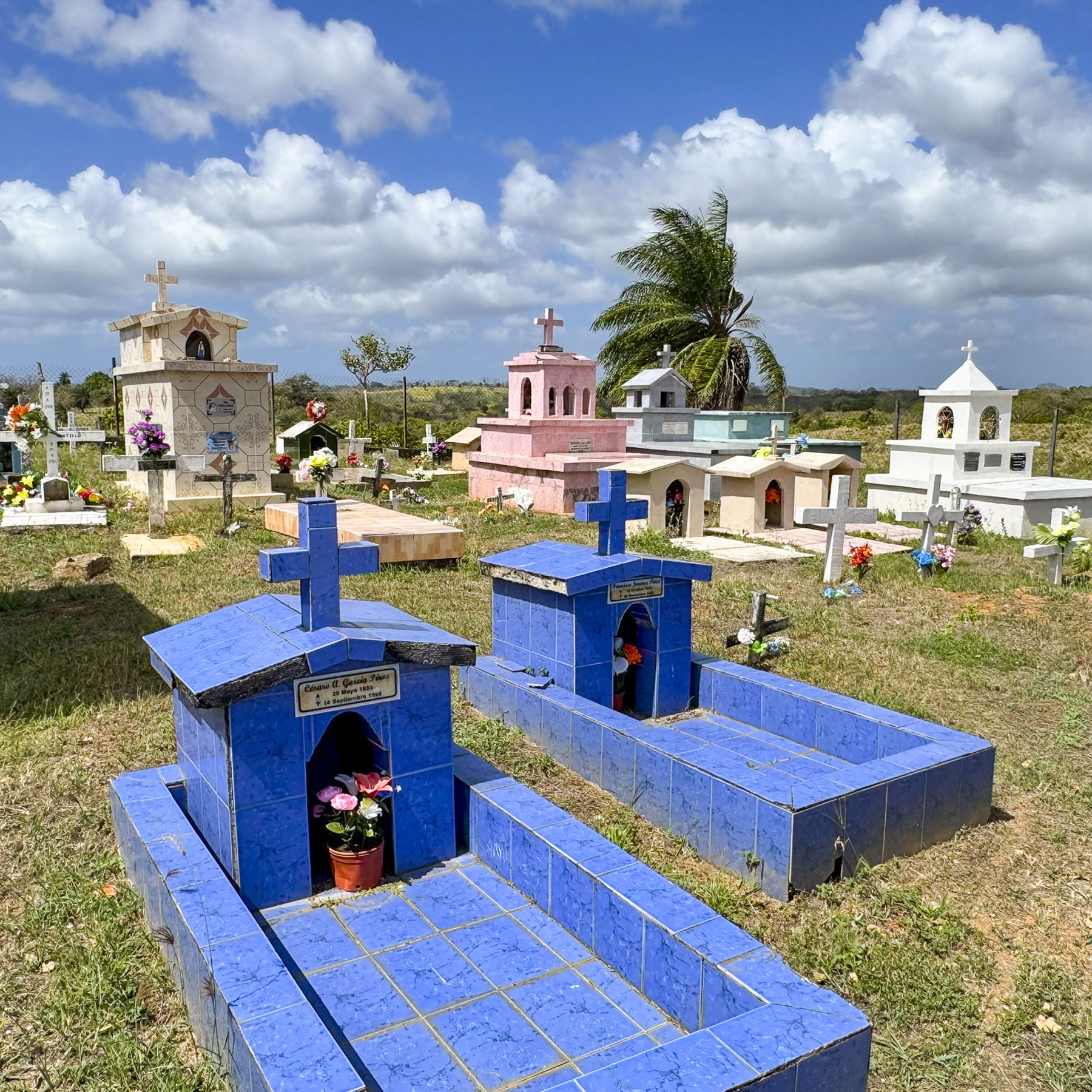
A little way farther along, the colors of the tombs in a small cemetery seemed to vibrate against the verdant landscape, which receives between 45 and 90 inches of rain every year. A large group of cyclists, followed slowly by a support vehicle, made passing difficult along the narrow hilly road, with many blind curves. Though the congestión they created was well tolerated, without the honking of horns. Drivers respected their safety and gave them a wide berth when they were eventually able to pass. Small artesanal lumber mills along the way vertically stacked their milled lumber, like skis, against a wall to dry.
During the dryer summer months the Rio Oria lazily flows through the ranchlands to the ocean.

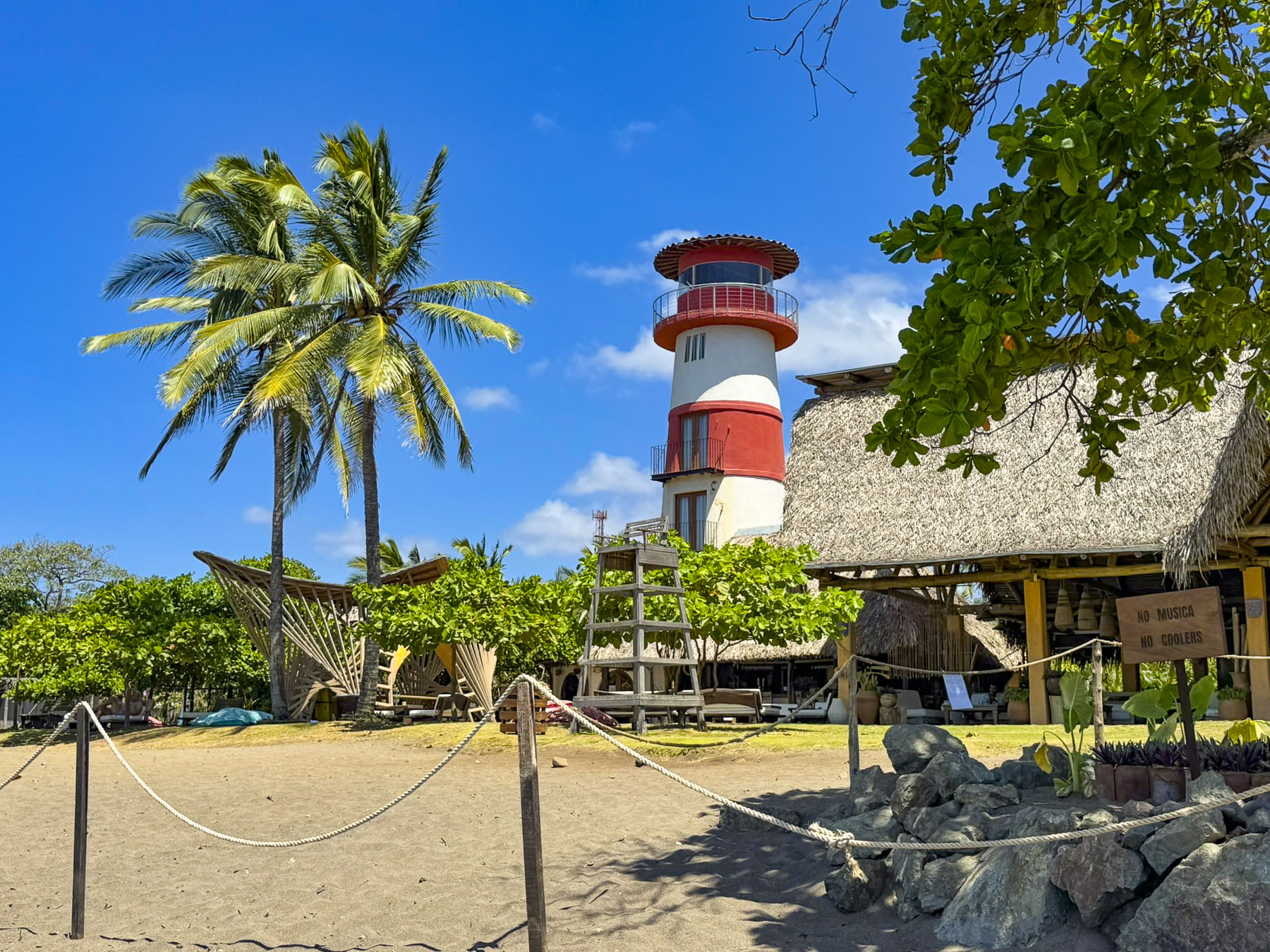
Las Escobas del Venado was the closest example of a traditional beach town, with several small hotels build along the shore of the half-moon shaped Playa Venao. It is not by any means a large resort town. The beach is very wide and shallow, especially when the tide is out, and it’s a popular spot to horseback ride or drive an ATV along the sand. Across the water a sailboat was safely anchored out of the wind and rolling waves behind the bluff at the southern end of the bay. The day was very hot, so we didn’t spend much time on the beach, and hugged the shade as we walked to the Almendro Café for our traditional “walk a little then café.”

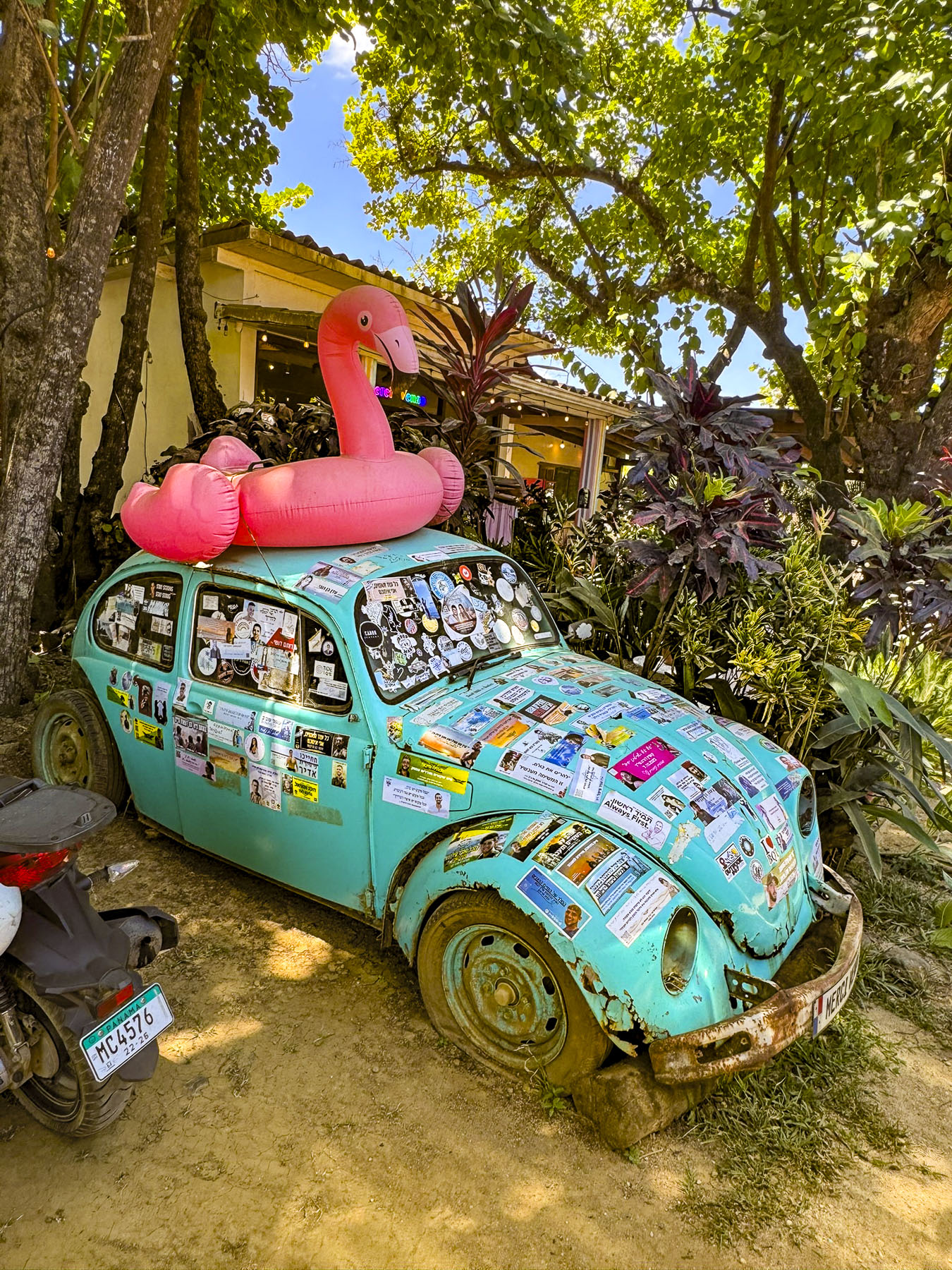
It was a really nice spot, under large shade trees. Our coffees and pastries were excellent, and its menu looked very good with vegetarian, vegan, and gluten-free choices. It was to our surprise part of the Selina River Hostel which promotes itself as a destination for digital nomads to enjoy the sun, surf, and sand of Playa Venao. We definitely skewed their demographics for the morning.

We continued driving into the highlands along Via Hacia El Carate, a narrow serpentine road that rose through a mesmerizing landscape of hills and valleys. Unfortunately, there were not any places to stop along the way until we reached the Mirador La Vigía, which offered great views of forested ranchlands, backed by the Pacific Ocean on the horizon.

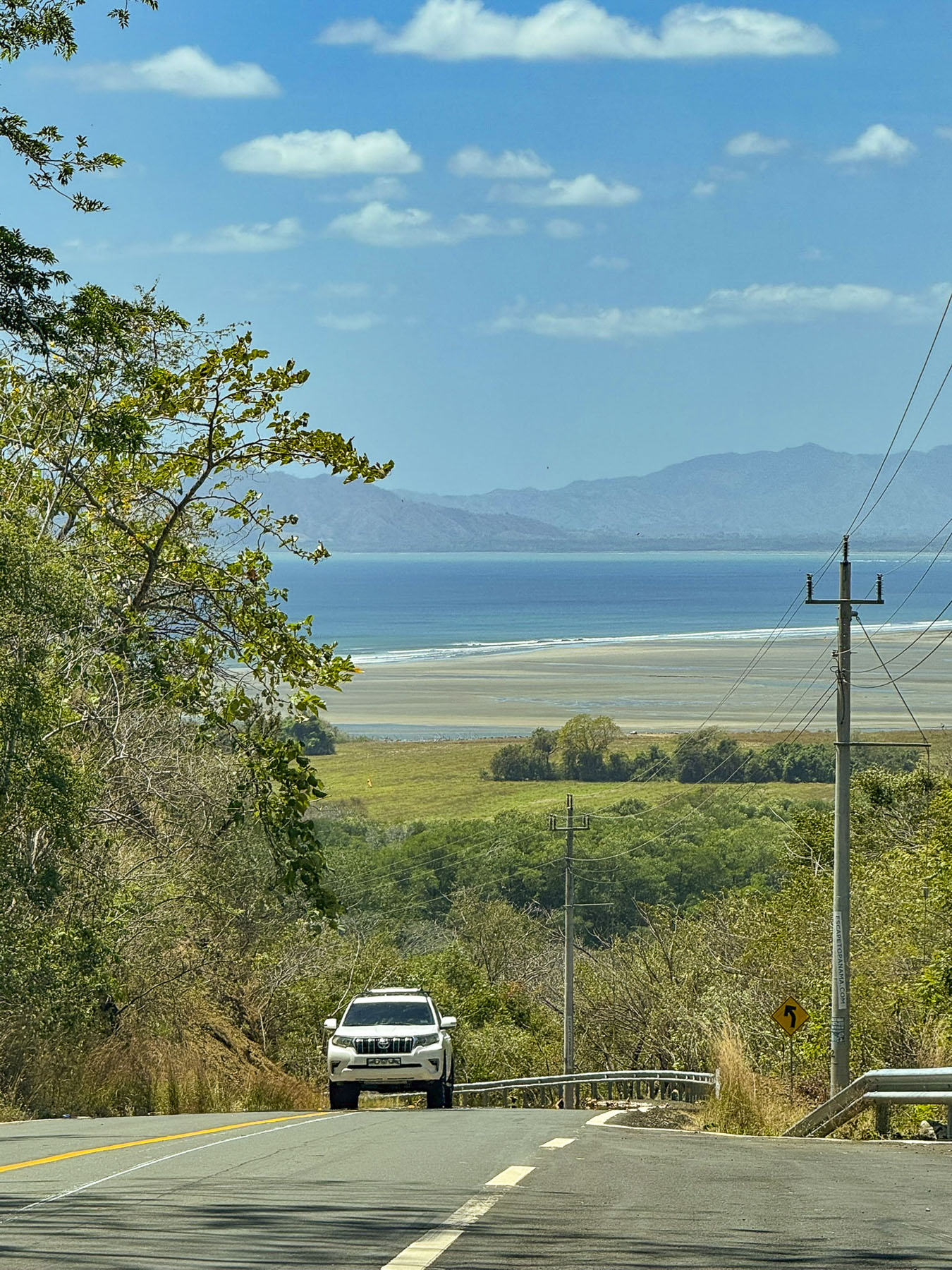
Familiar with the road now, we occasionally stopped along gated pastures to photograph the expansive landscape, that showed little sign of human intrusion, as we followed the same road back downhill.

They were few opportunities for lunch along the way so we decided to head back to the Almendro Café at the Selina River Hostel . We were not disappointed; the food was excellent and healthy. It’s so nice to order from a menu that doesn’t automatically serve French fries with every order.

Nearing our hotel, a rancher blocked the road with his herd of cows as he moved them to a different pasture.

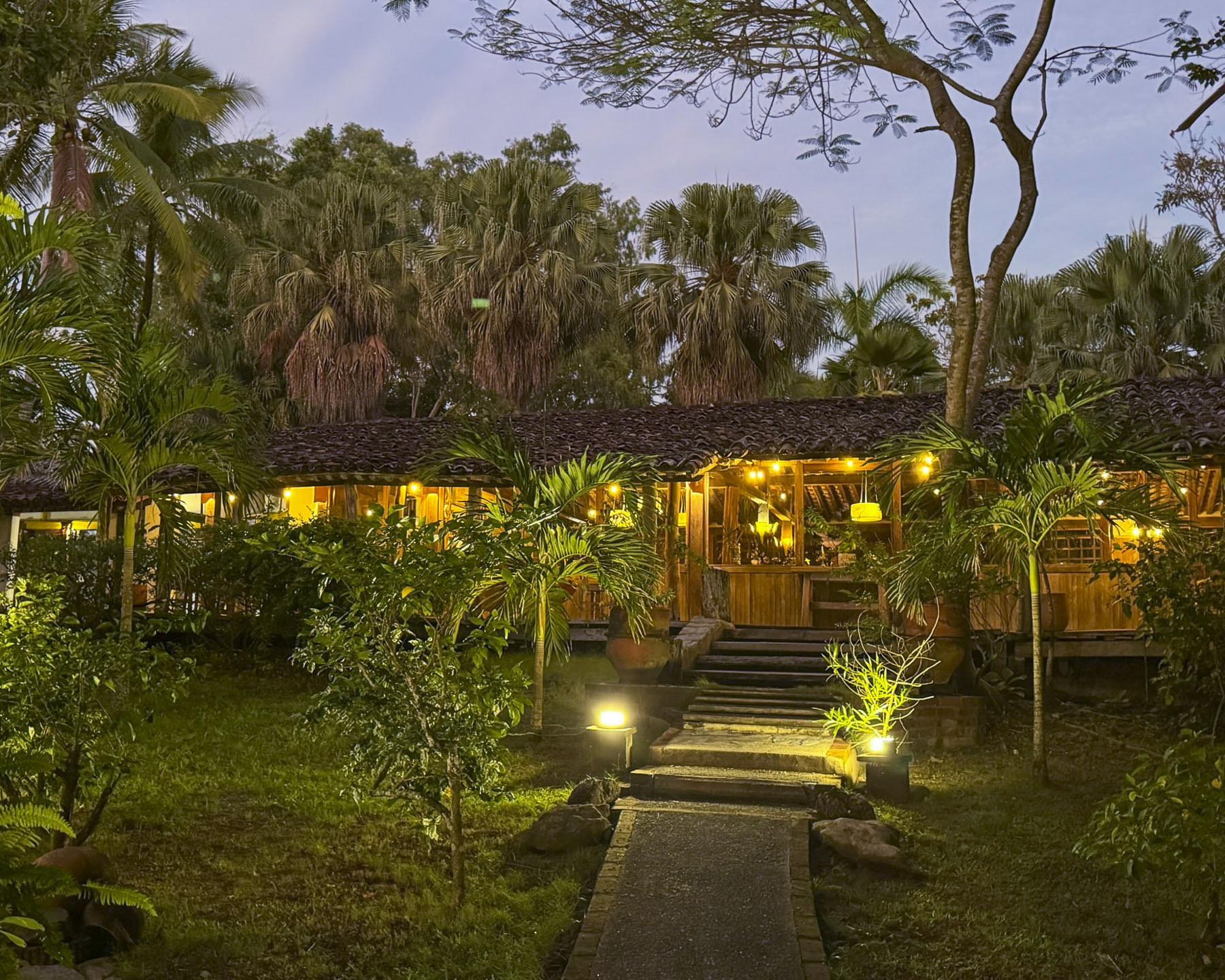
We were back in time to watch the sunset over Playa Destiladeros. We stayed until the last color in the sky had faded away before walking back to the resort’s restaurant, where we usually dined inside to take advantage of the air conditioning and ceiling fans.

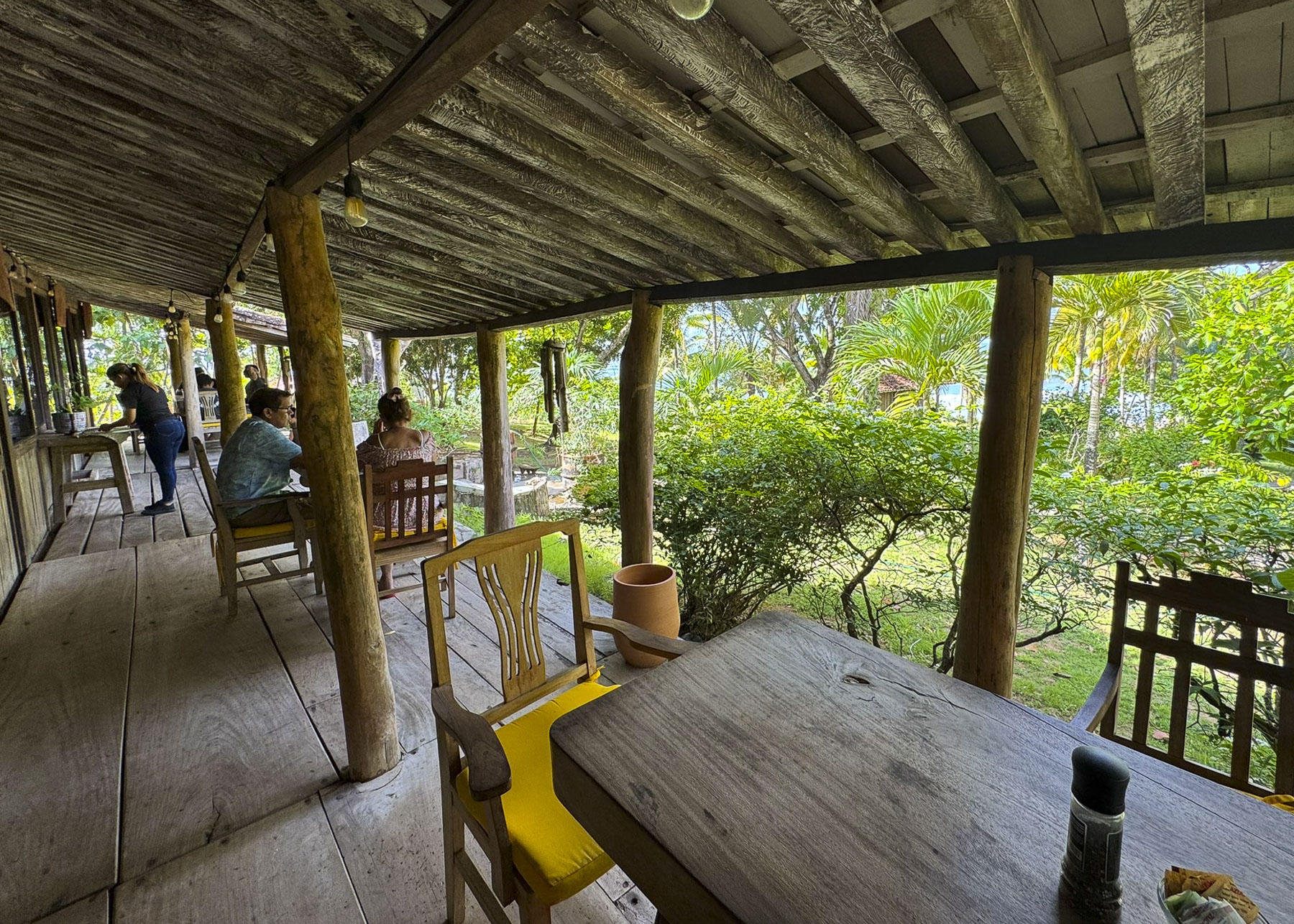
Though having breakfast on the veranda, with the sound of the waves crashing in the distance, was a delight during the cool morning hours.

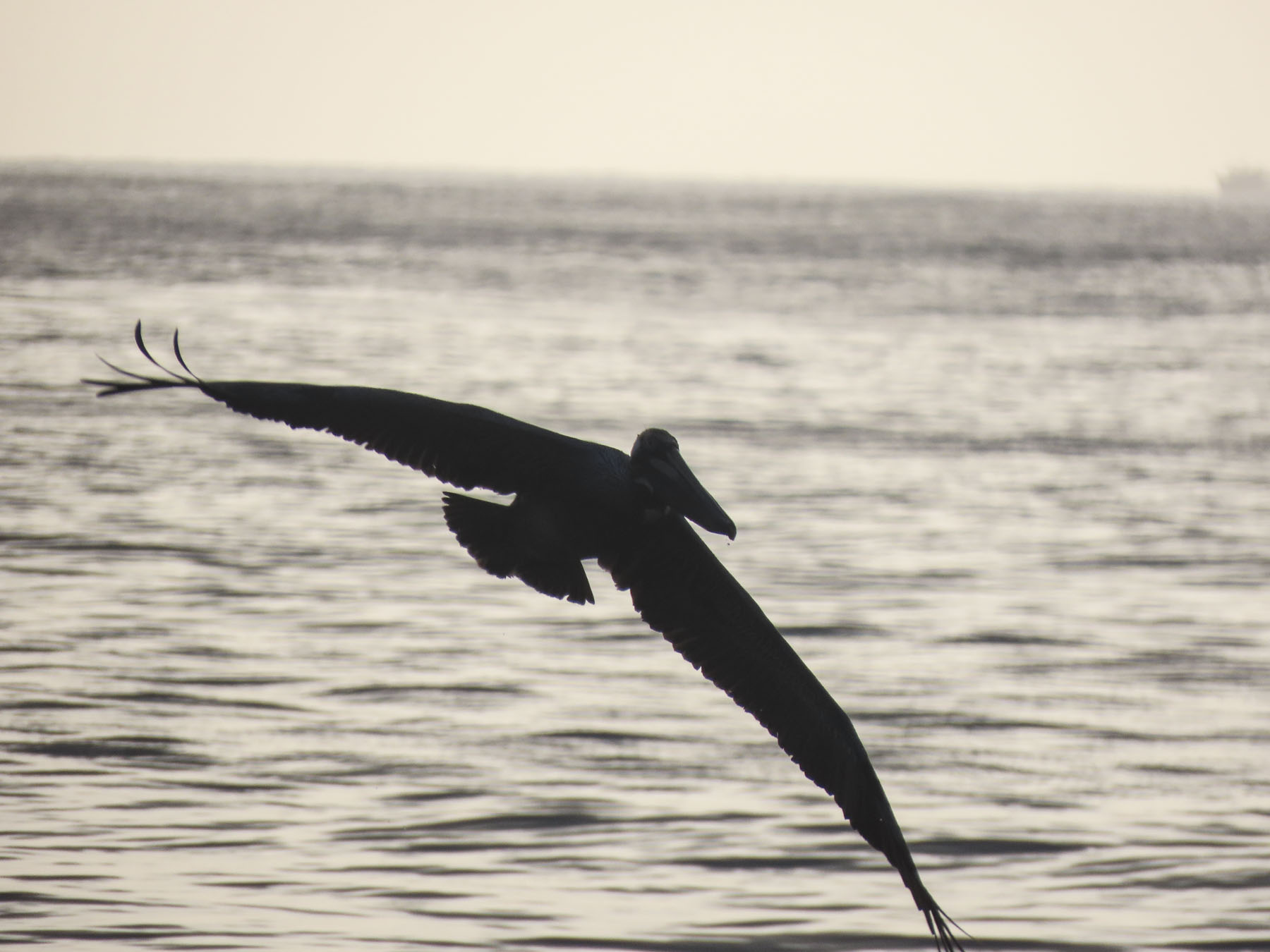
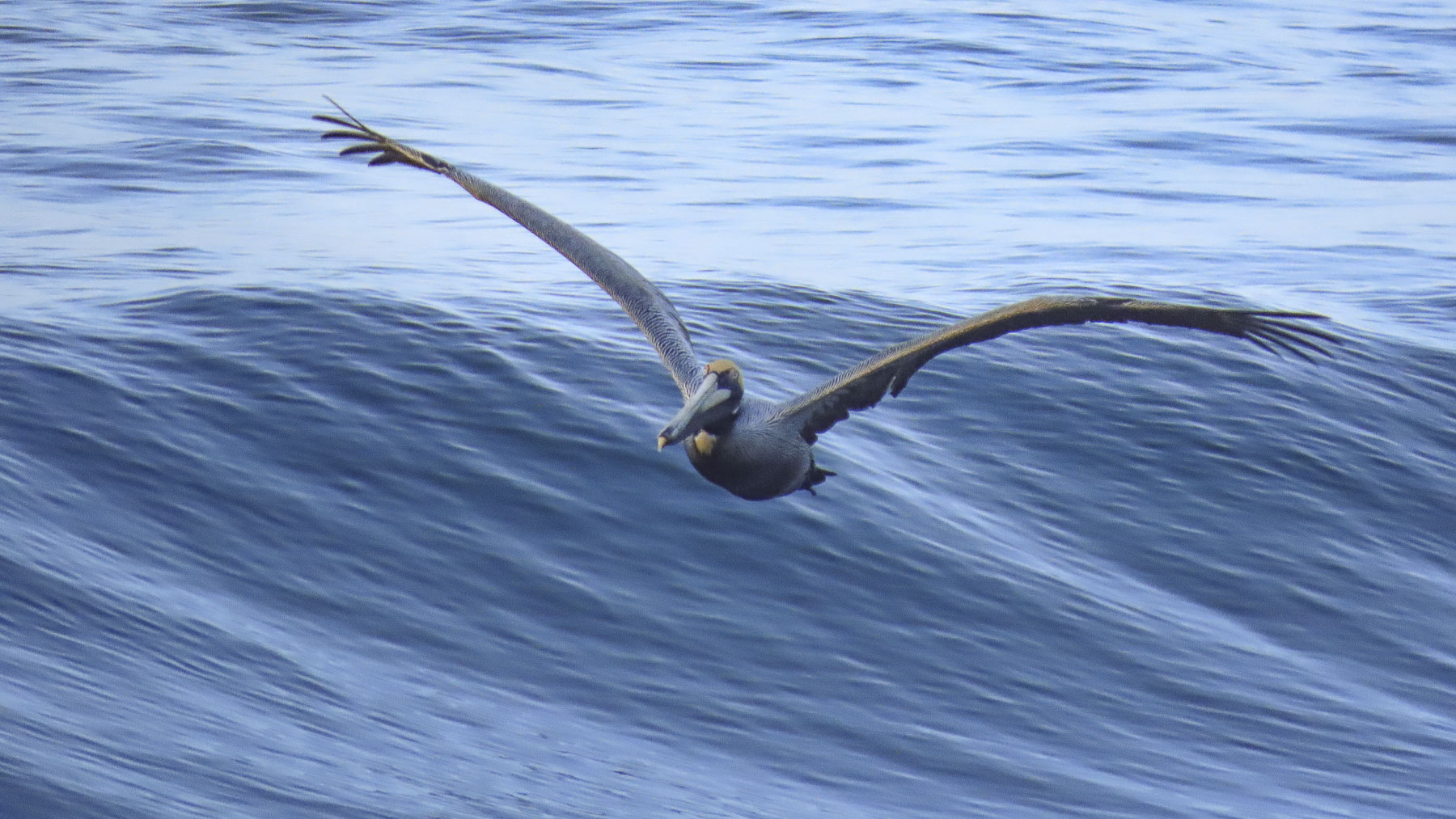
Early morning walks along the beach as the sun crested to the horizon were equally as enjoyable as the sunsets, but more tranquil with squadrons of pelicans swooping low over the surf, looking for fish. Occasionally some would peel away to dive headfirst into the water to catch fish.
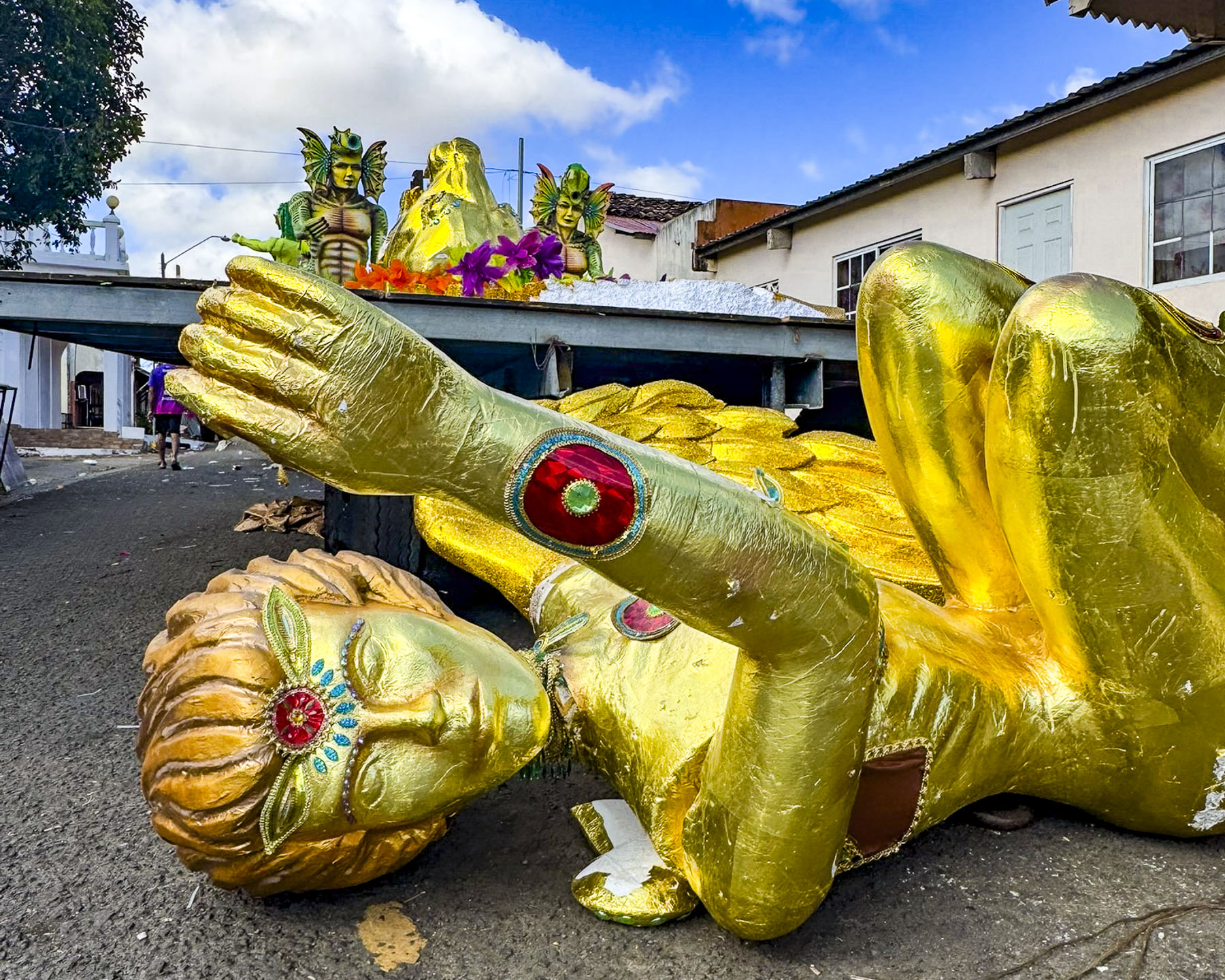
Remnants of Carnaval celebrations the night before were still visible in the small towns along our route as we headed back early to Panama City to avoid the traffic. We arrived on the outskirts of the city sooner than expected and decided to spend the afternoon at Perico Island. Located at the end of the very long Amador Causeway which extends for 6km (3.7mi) into Panama Bay, it’s a popular spot for city folks to catch the breezes, picnic, rent bicycles or walk along its full length which offers great panoramic views of the city’s modern skyline and large cargo ships underway to the entrance of the Panama Canal.
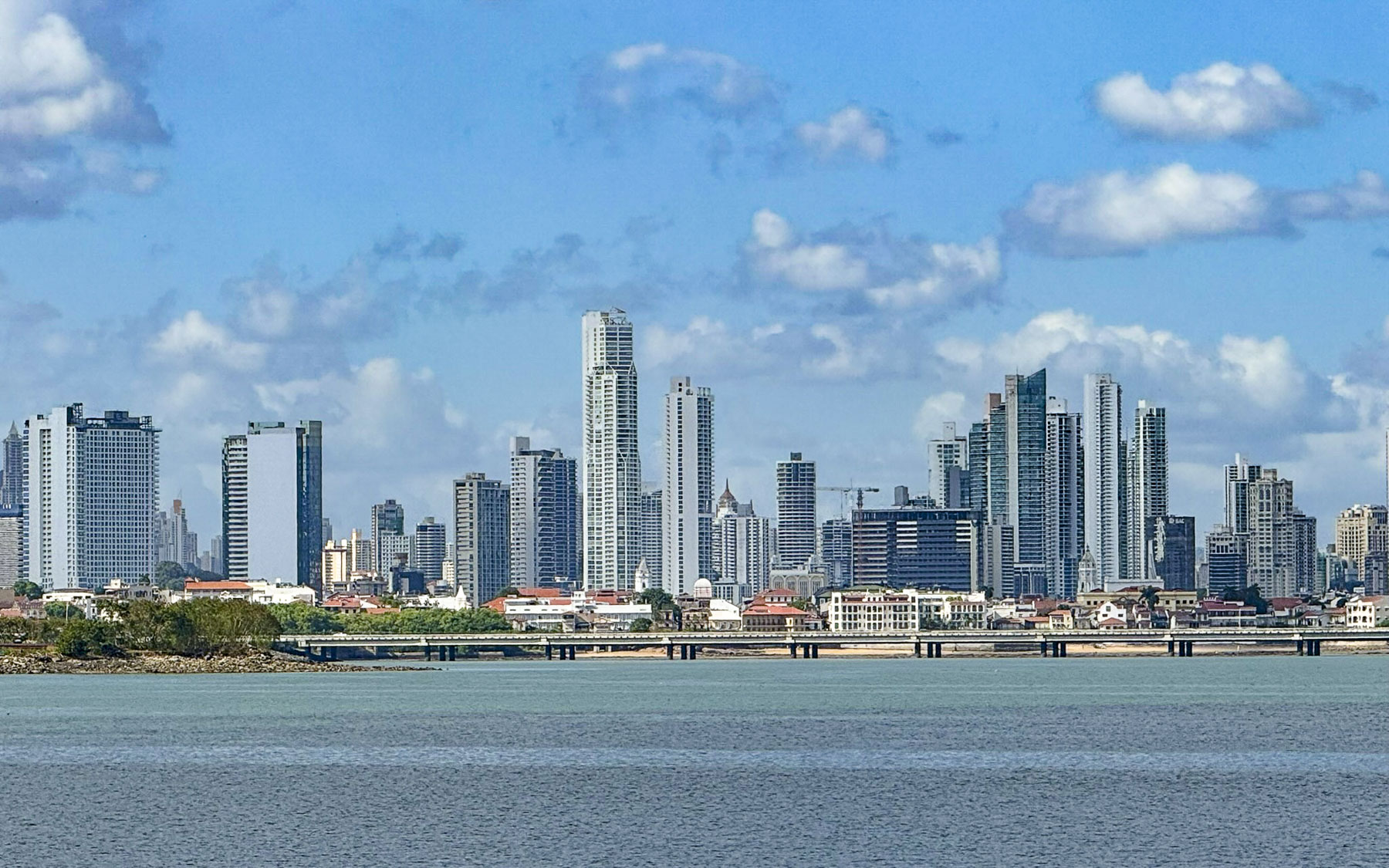
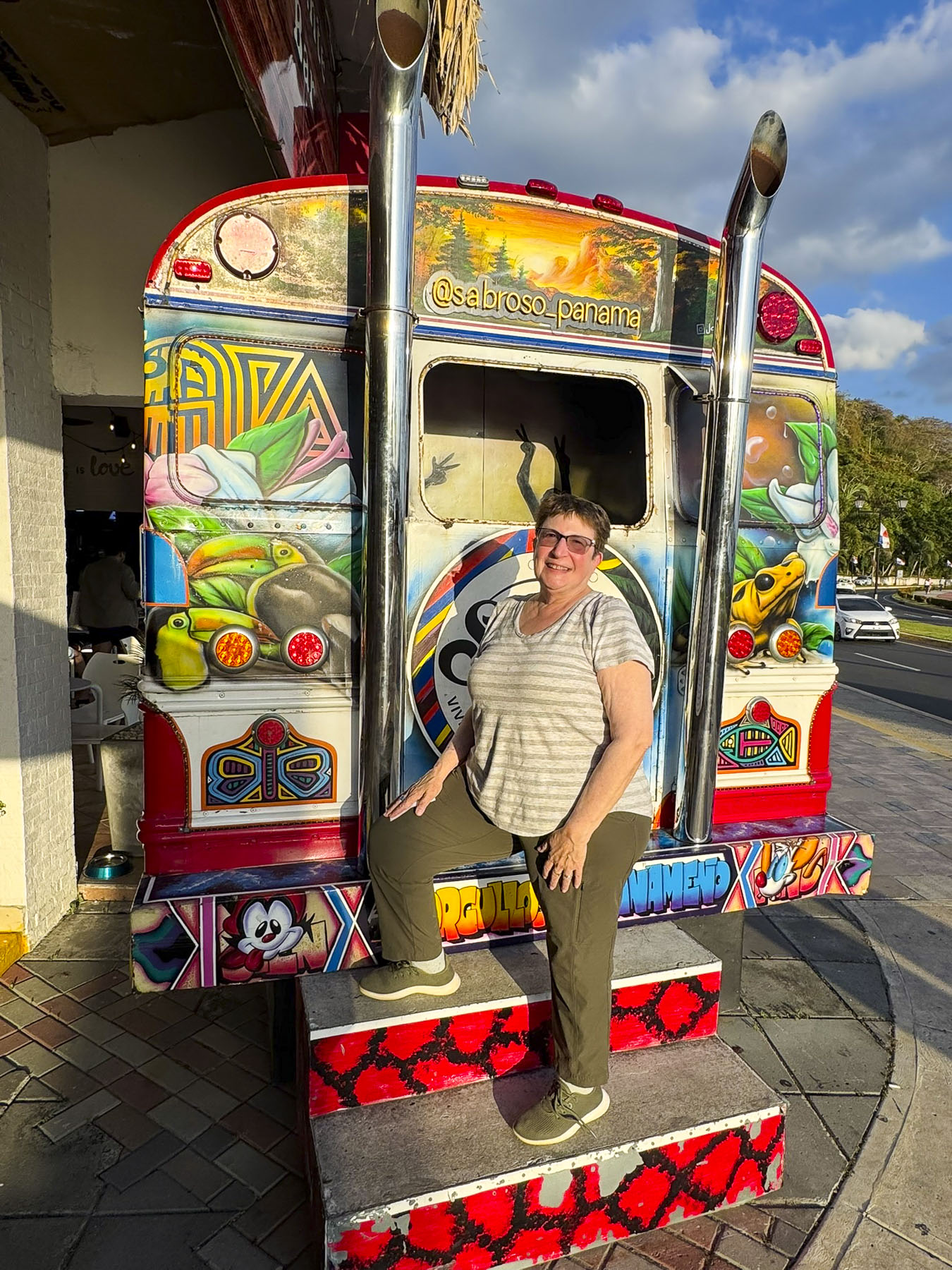
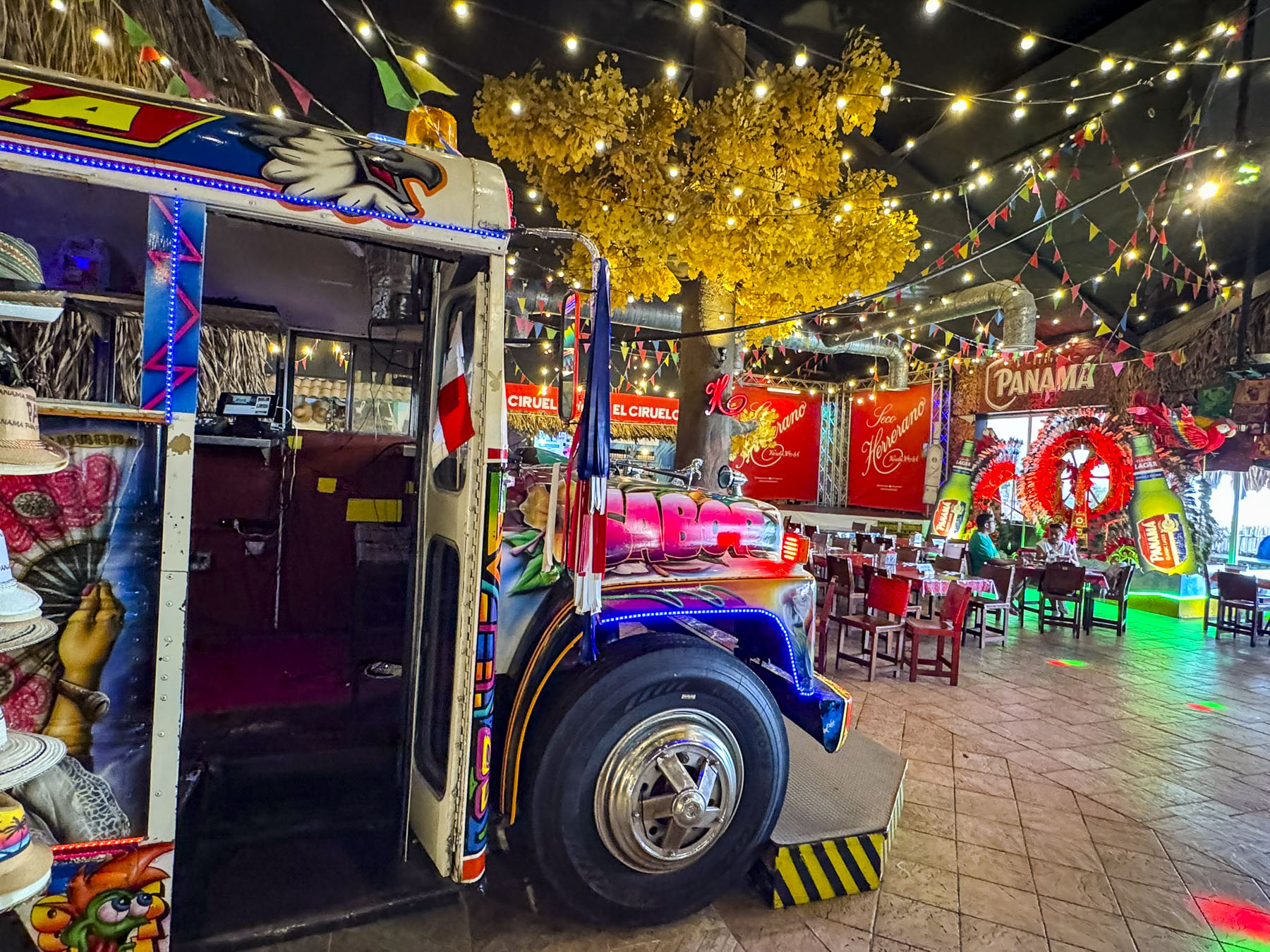
After strolling along the waterfront for a while we decided to have lunch at Sabroso Panamá, a uniquely decorated place with a nice vibe, that also had a balcony overlooking a marina. We tried the carimañolas, similar to empanadas, though they are made with mashed cassava (yucca) dough and then fried.

Carnaval celebrations continued that evening and the direct route back to Hotel Plaza Paitilla Inn (we had such a nice experience there earlier in the week we decided to stay there again) along the Cinta Costera, the city’s waterfront park, and the eight lanes of the Pan-American that parallel it were blocked, and we had to circumnavigate our way around it. The massive street party continued well past midnight into the wee hours of Ash Wednesday morning.

Ash Wednesday was our last full day in Panama City, and we spent it exploring the Casco Antiguo, the historic old town district which dates from 1673, and is also known as Casco Viejo or San Felipe.
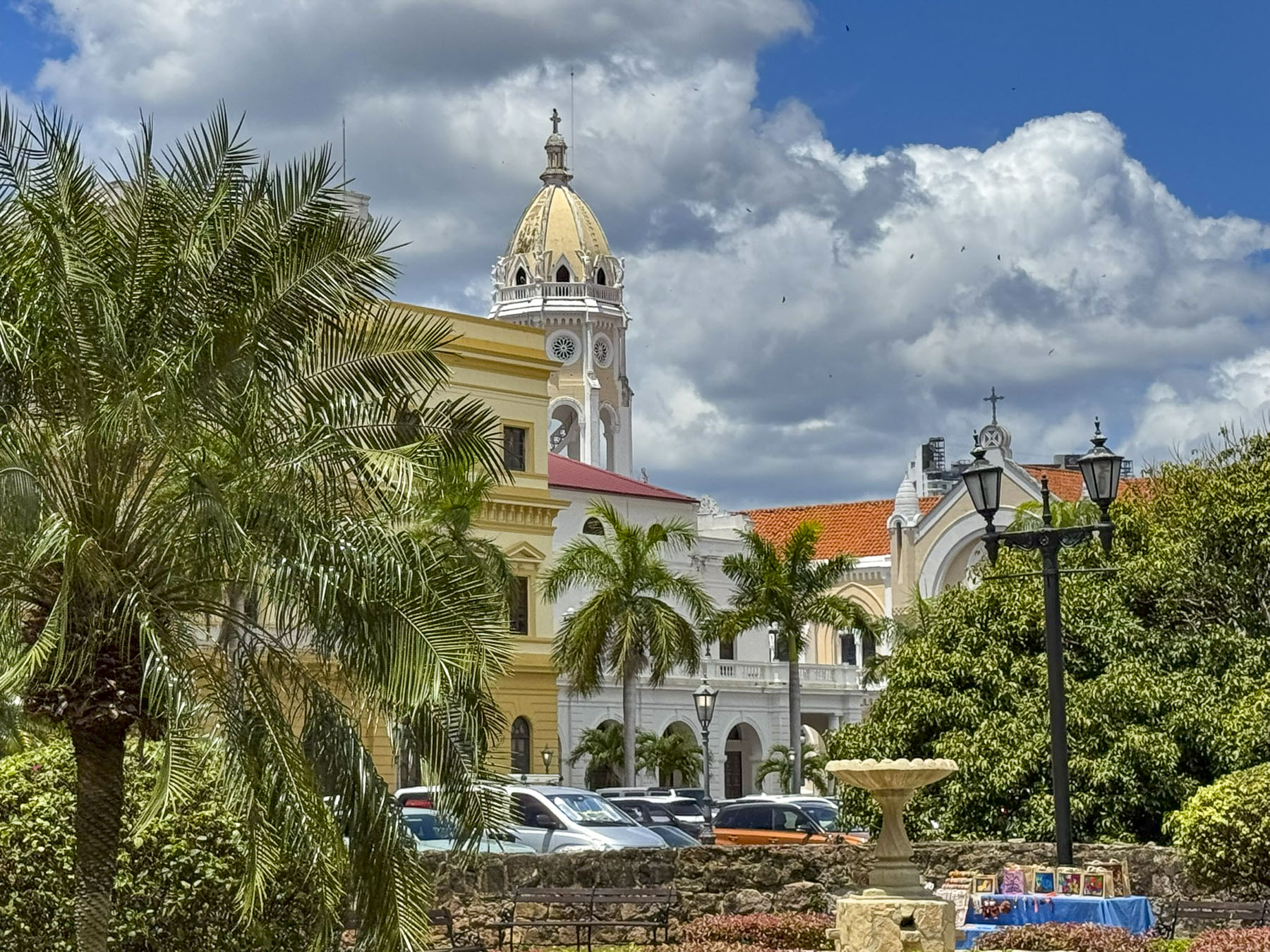
This town, built on a defensible small peninsula, replaced the city’s original settlement, Panama La Vieja, which was started 11km (7mi) farther east in 1519 when Spanish conquistador Pedro Arias Dávila landed 100 settlers along the coast, and built the first permanent European settlement on the Pacific. The city prospered for 150 years as the Spanish used the town as a base for expeditions to conquer the Inca Empire and sent the plundered gold and silver they seized back to Spain. The city’s wealth did not go unnoticed, and in 1671 the British privateer Henry Morgan landed over a thousand brigands on the Caribbean coast and trekked through treacherous jungles across the Isthmus of Panama to reach the city, which they then attacked, pillaged and burnt to the ground. Six hundred Spaniards died during the assault. Though the booty they looted wasn’t as much as expected, Morgan was declared a British hero, and knighted.
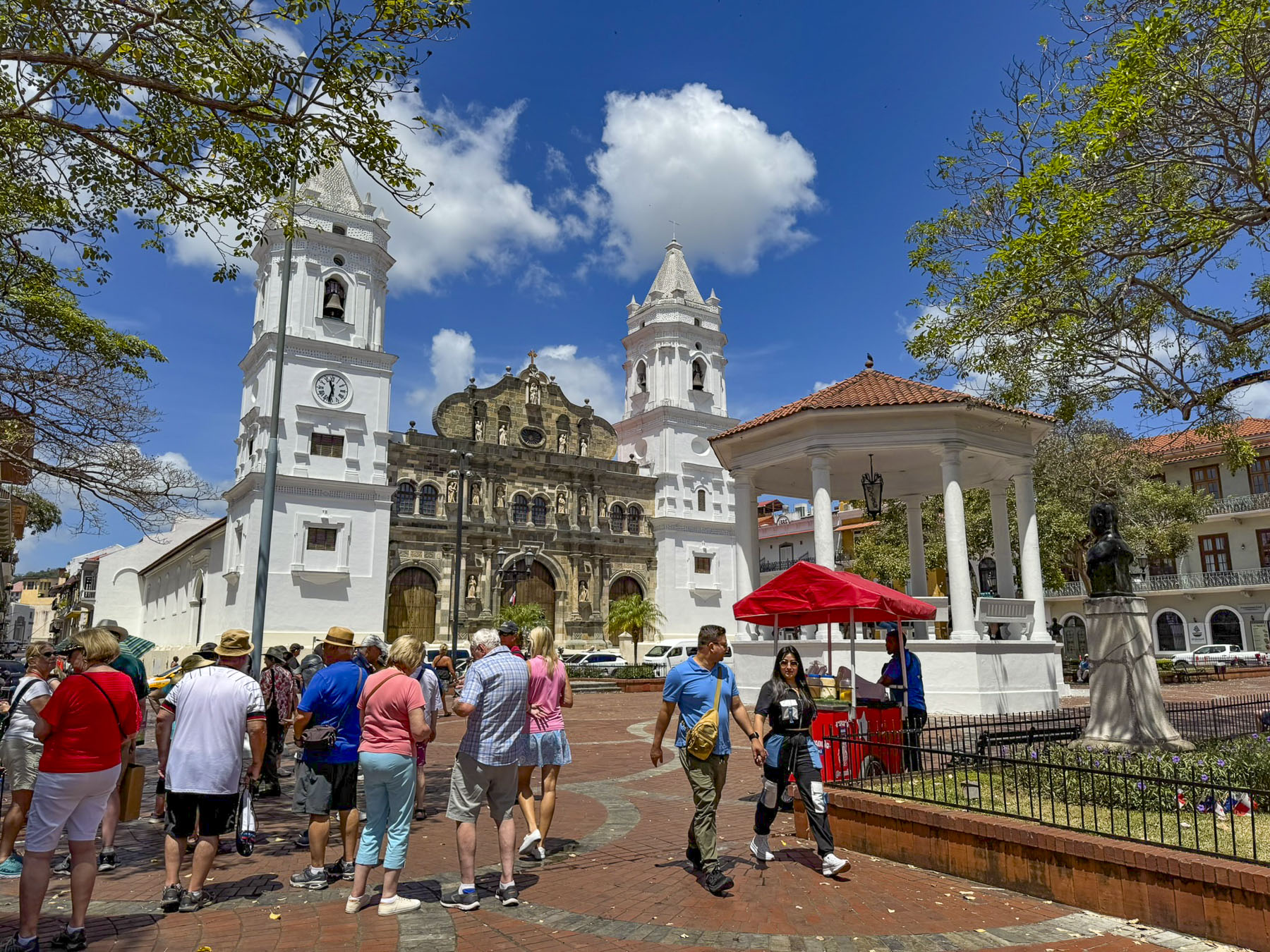
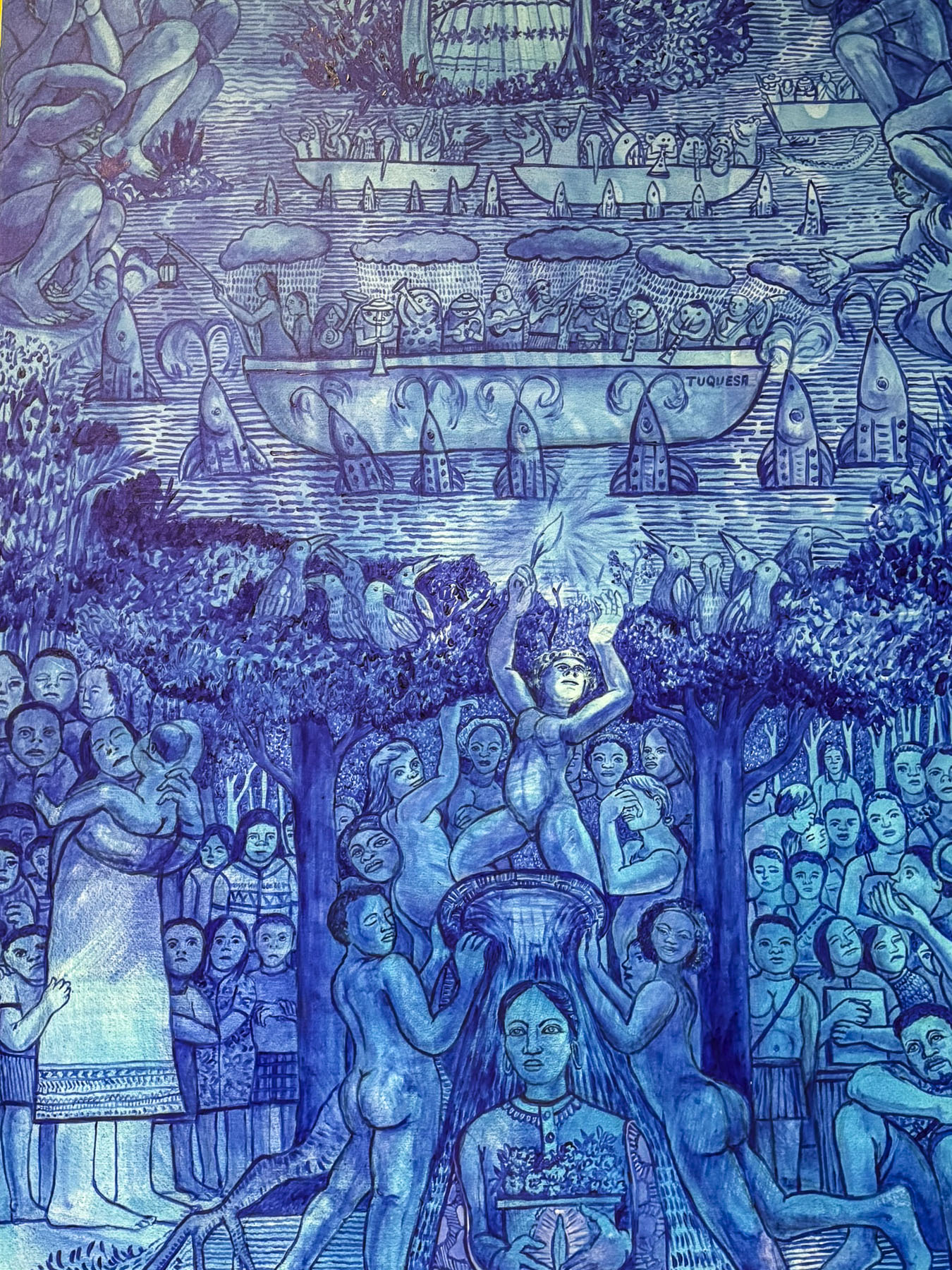
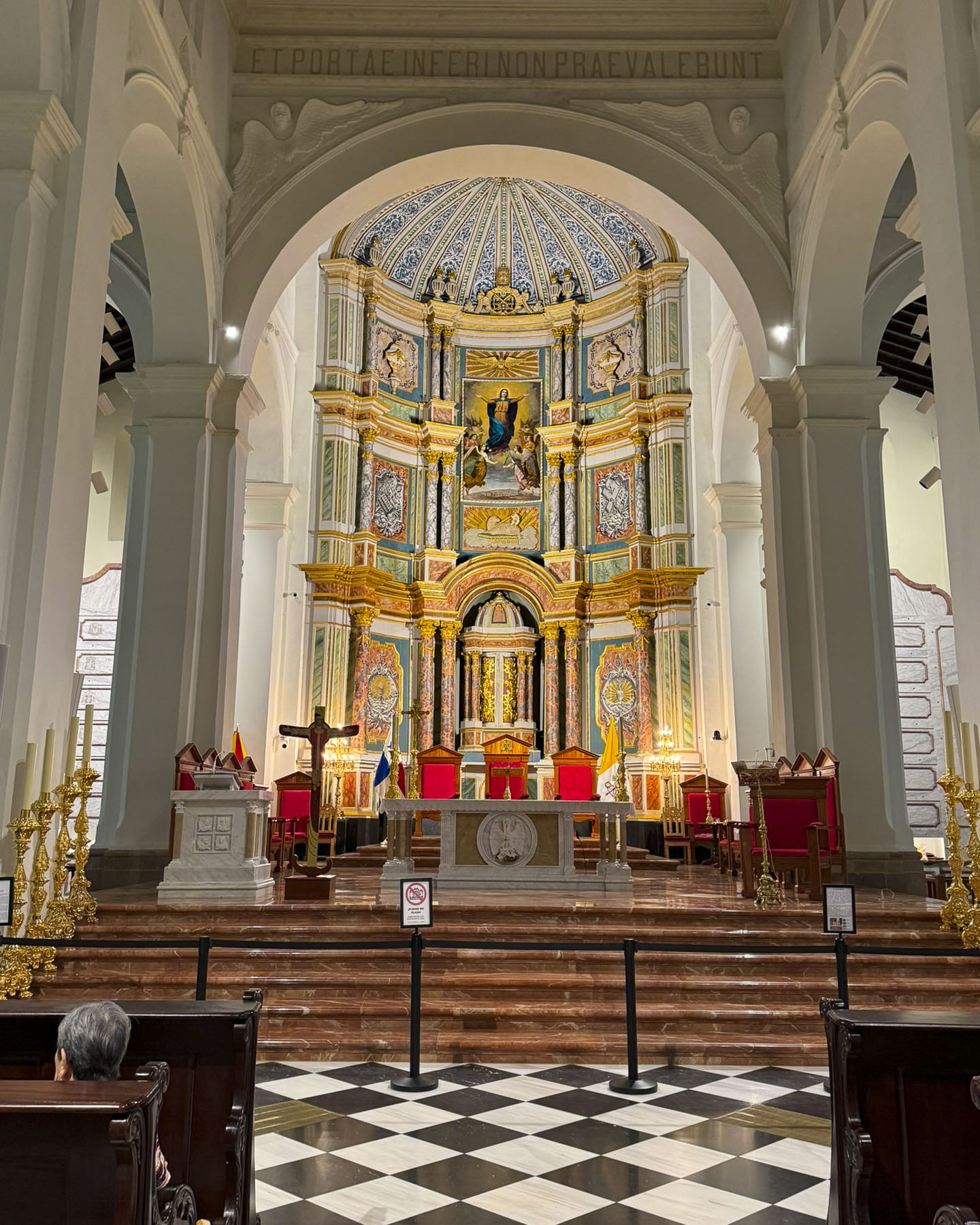
We arrived by Uber to the Catedral Basílica Metropolitana Santa María La Antigua on the Plaza de la Independencia in the center of Casco Antiguo. Its striking façade which blends Baroque and Neoclassical architecture dates from 1688, but the cathedral took more than 100 years to build, and wasn’t consecrated until 1796. Inside, an interesting mural in monochrome blue depicted the indigenous peoples of Panama accepting Chrisitanity.
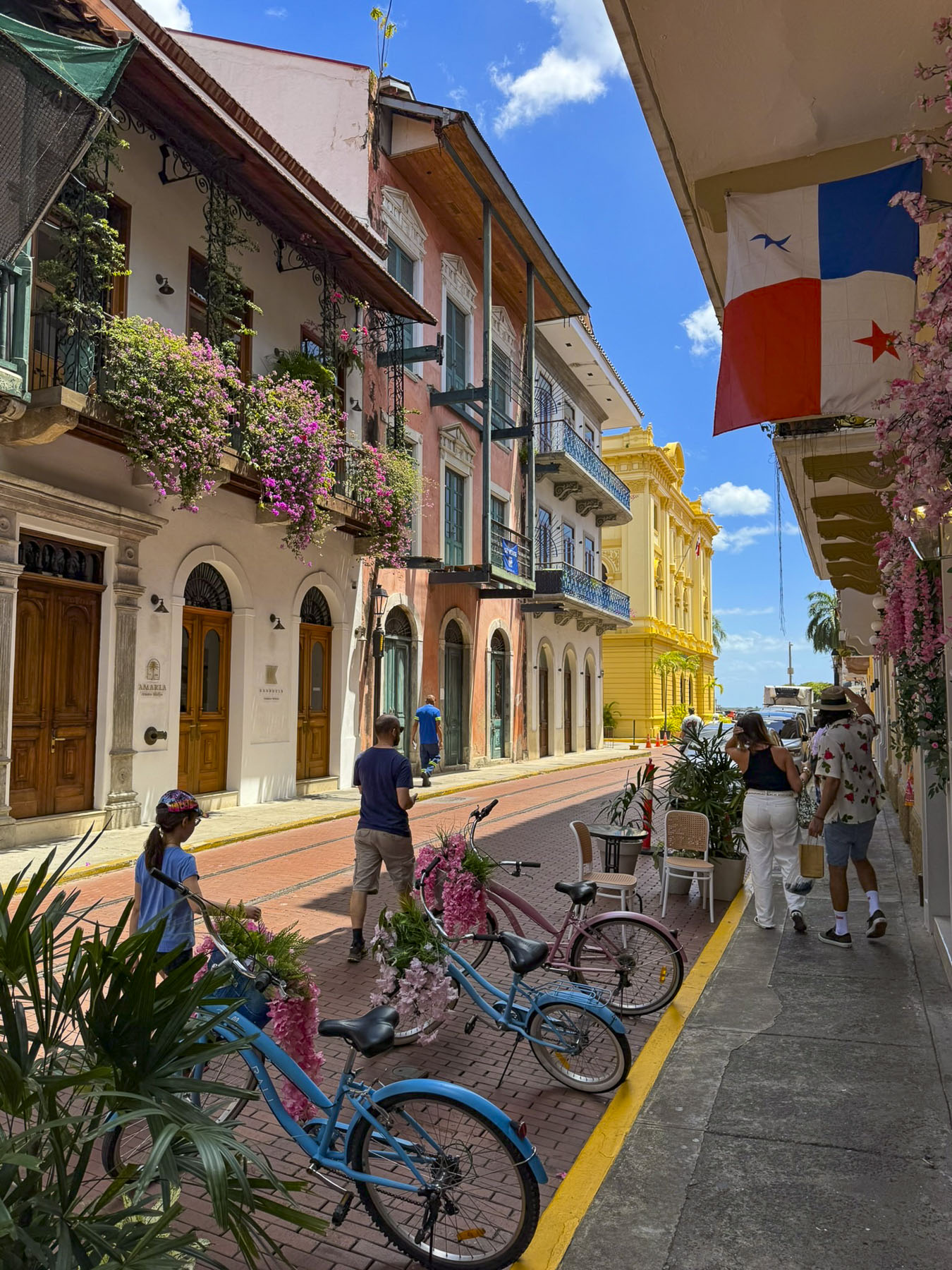
The Old Town was once a citadel, though the defensive wall which encircled its 36 blocks was taken down ages ago to ease its expansion. Surprisingly, within this small area there were 4 still active historic churches and the ruins of another. Our basic plan was to visit every church and then spur off to other nearby points of interest.
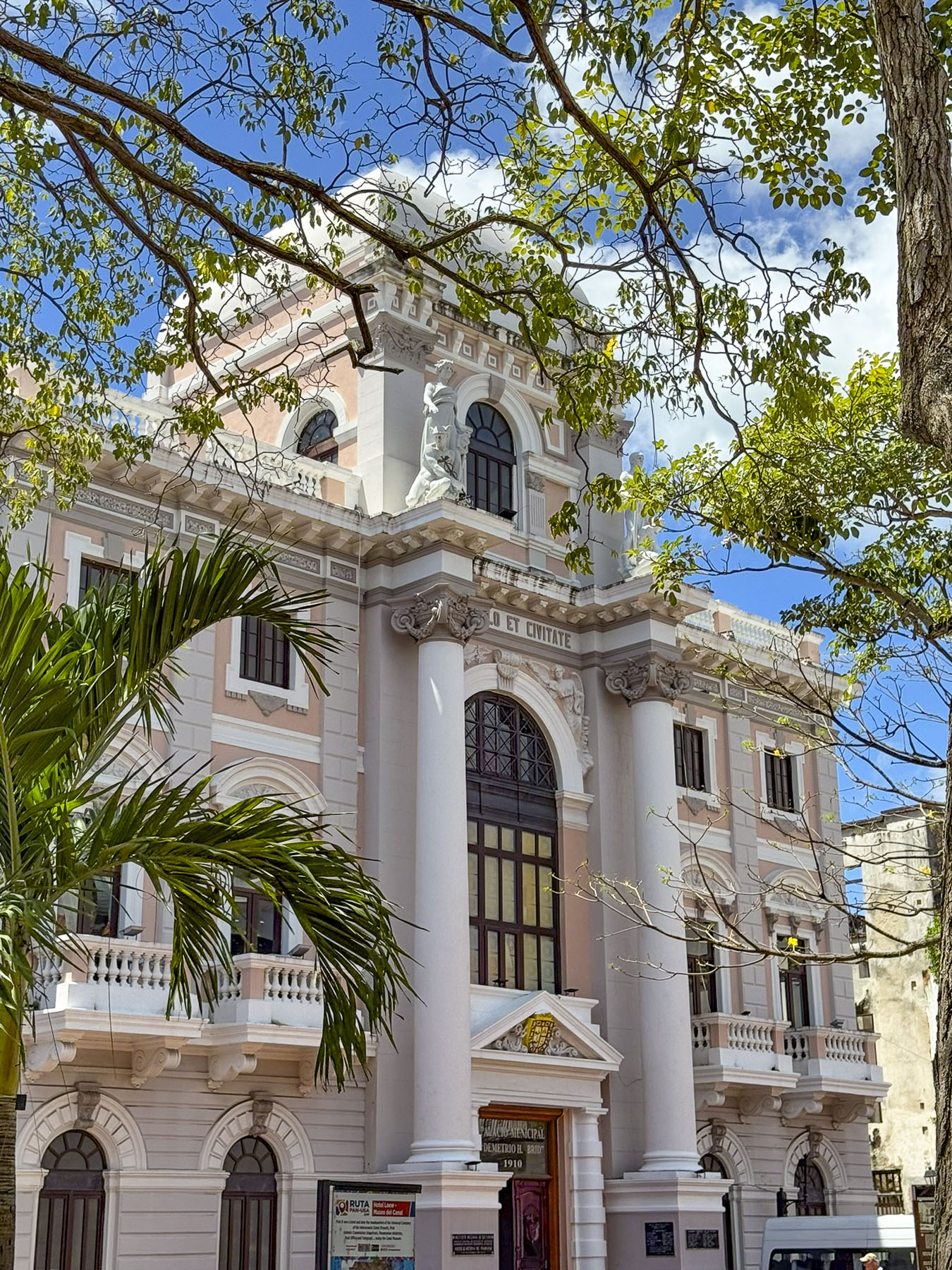
Adjacent to the cathedral was the Museum of Panamanian History, housed in the Municipal Palace of Panama. It’s a beautiful Neo-Renaissance style building with pilasters, arches and decorative cornices. We didn’t tour the exhibits, but we did enjoy resting in the air-conditioning of the lobby.

The narrow-bricked lanes were more suitable for the horse drawn carriages for which they were designed than the cars of today. They surrounded a plaza full of colorful well-maintained 18th and 19th century buildings with decorative iron railed balconies covered by profusely blooming bougainvillea.
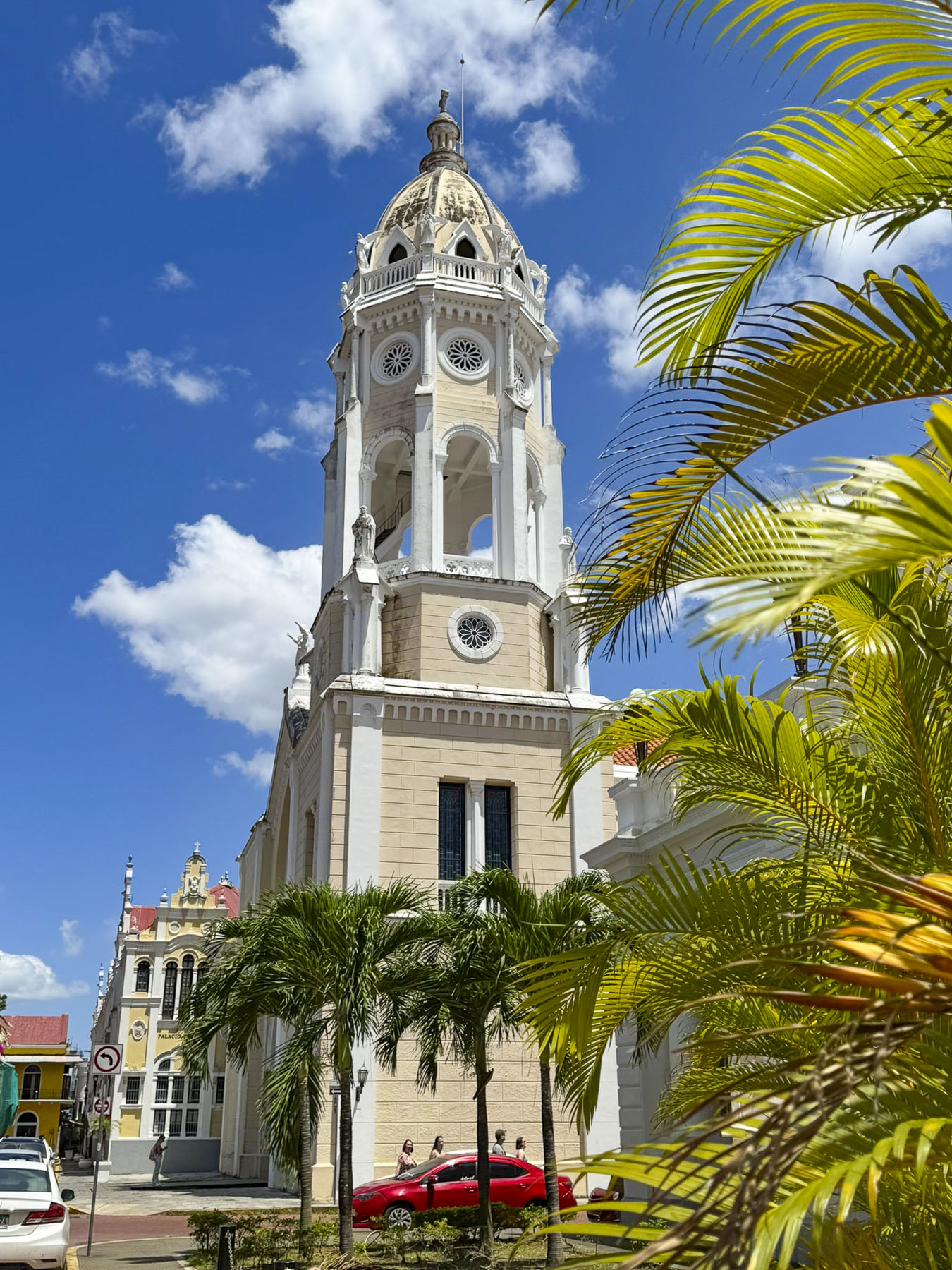
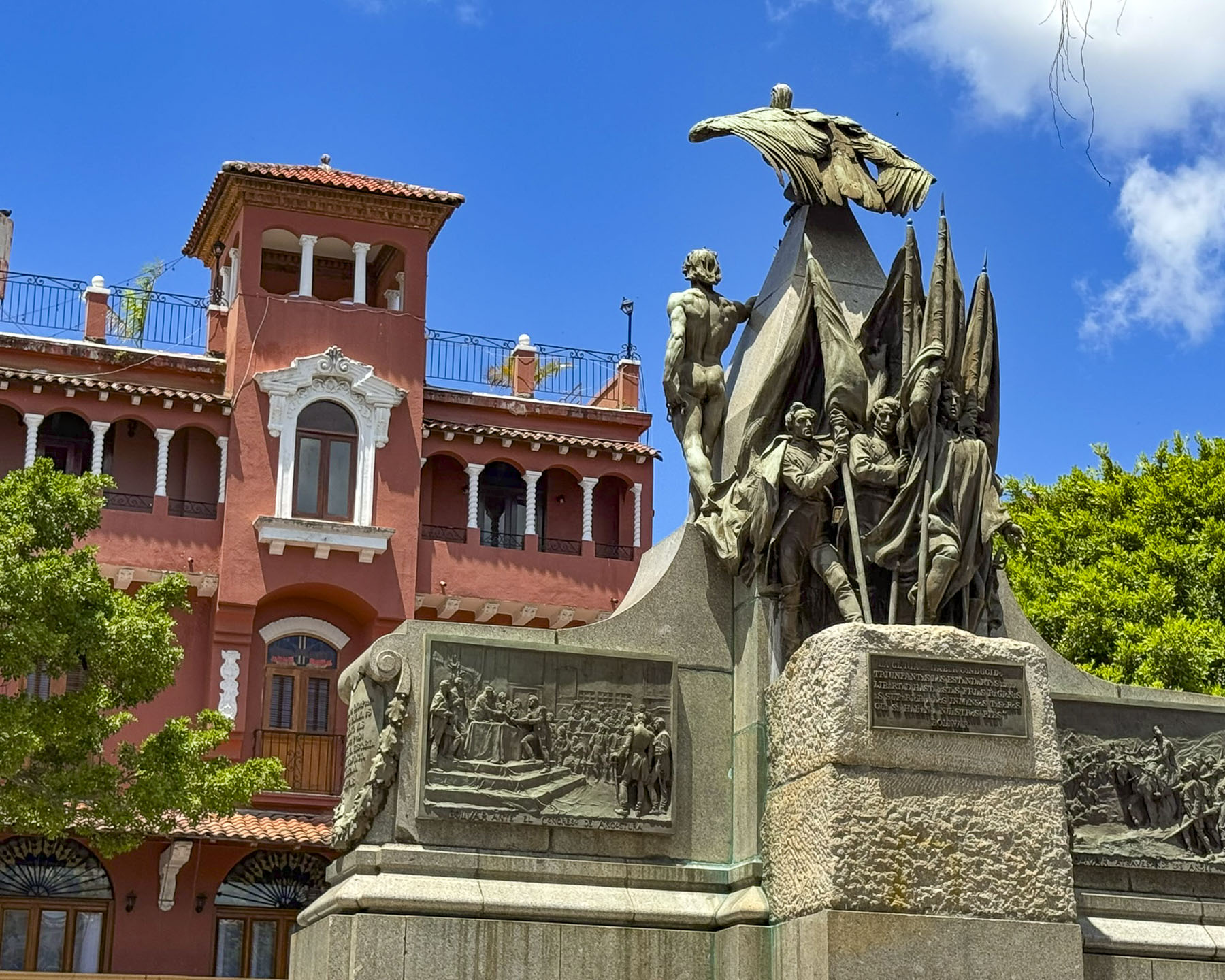
Cafes surround the Plaza Simón Bolívar where a grand monument commemorates the Latin America independence hero. Behind it the graceful belltower of the Saint Francis of Assisi Church looms above the plaza. It was a later addition to the original early 1700s church that was damaged during fires in 1737 and 1756.  
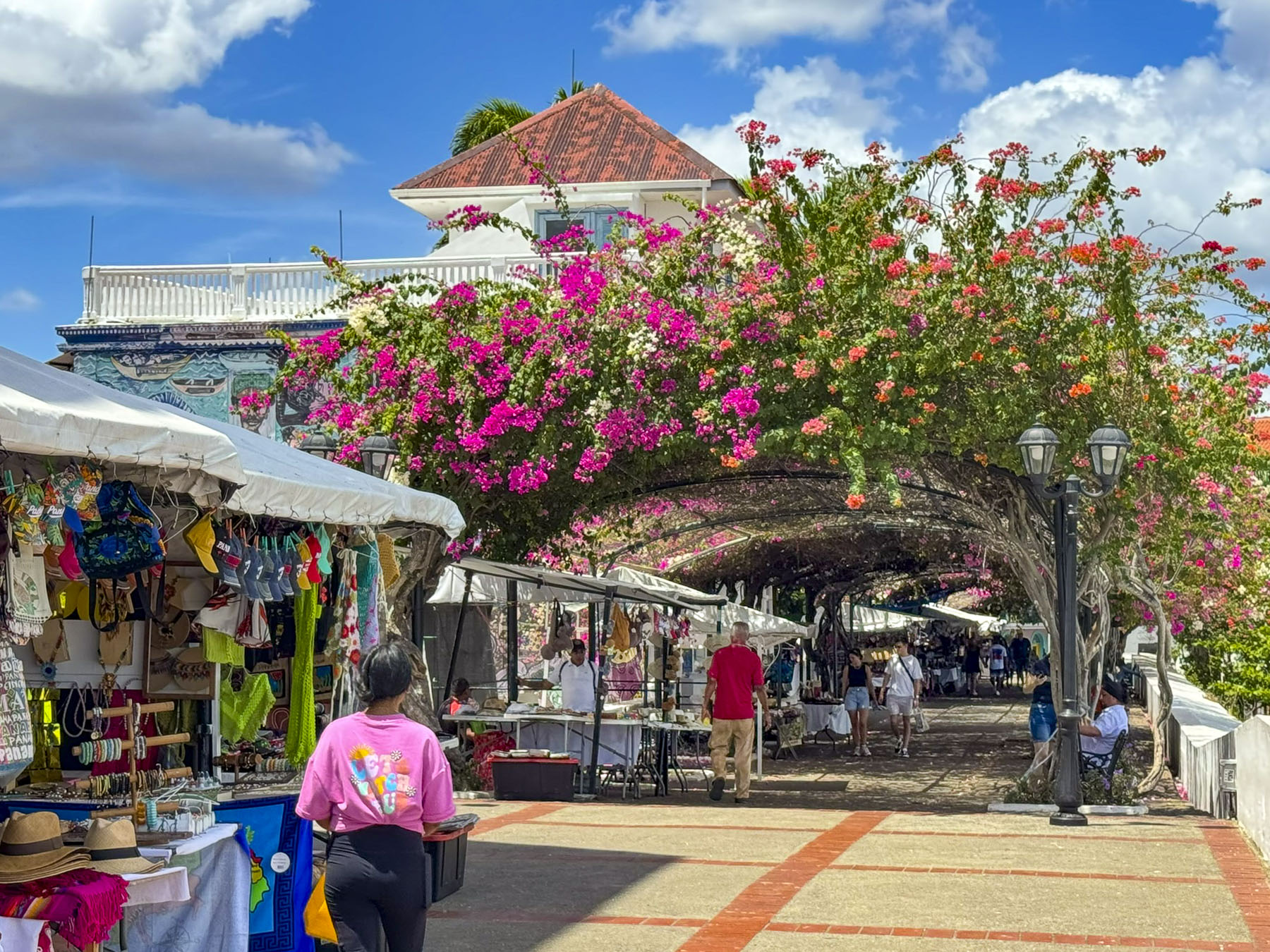
Nice views of the modern Panama City skyline were available along the lane leading to the Corredor Artesanal De Casco Antiguo, a trellis-covered lane with flowering vines that offers shade for the indigenous artisans who have stalls along its length.
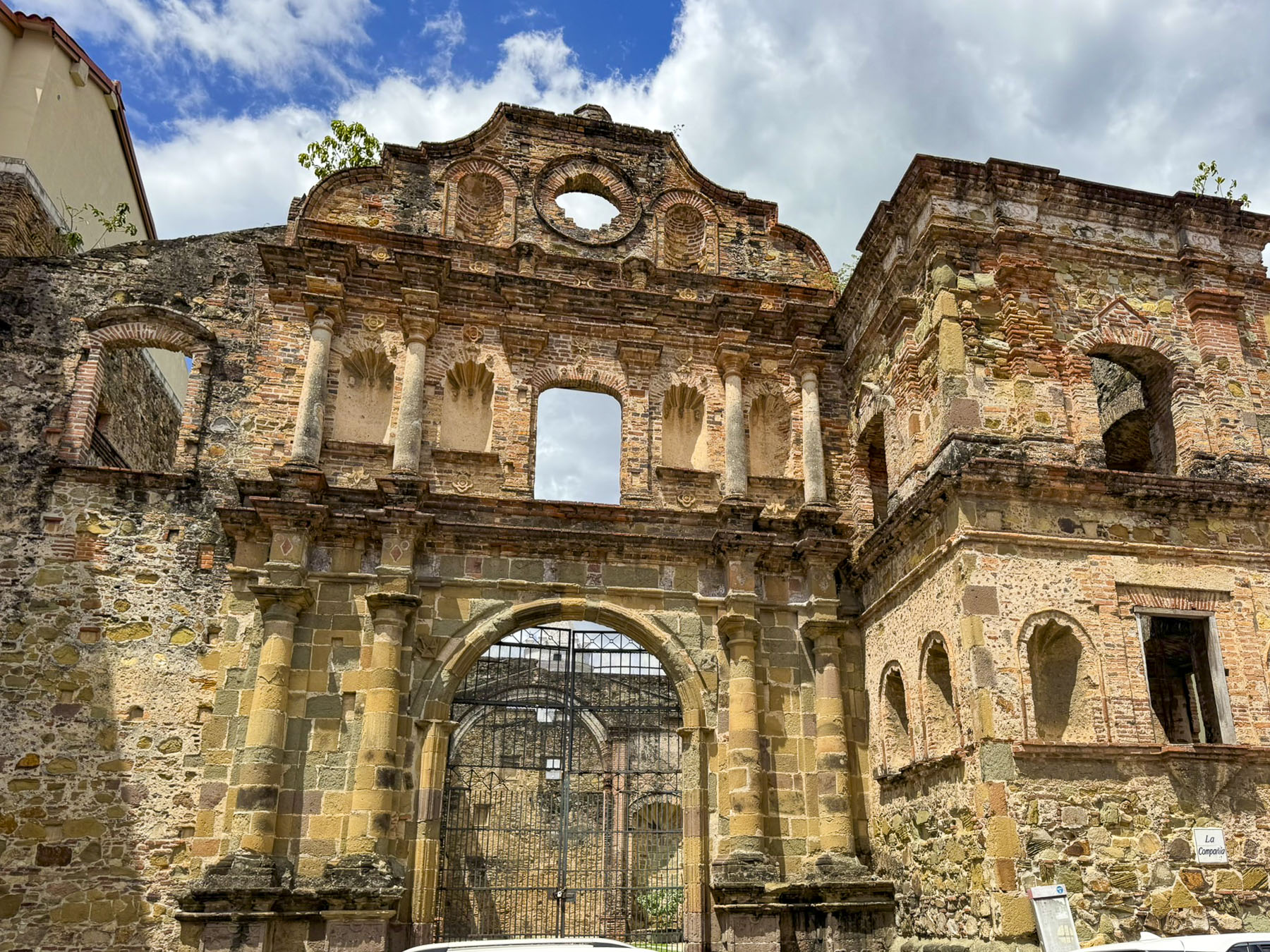
Back in the center we passed the ruins of the Iglesia de la Compañía de Jesús. It was built as a Jesuit monastery in 1641 and later in the 1740s it also served as the home of the Royal Pontifical University of San Javier, Panama’s first university, until the Spanish Crown banished the Jesuits from the colonies in 1767, and the church and monastery was abandoned. The ruins still standing are all that were left from a 1781 fire that ravaged the complex.

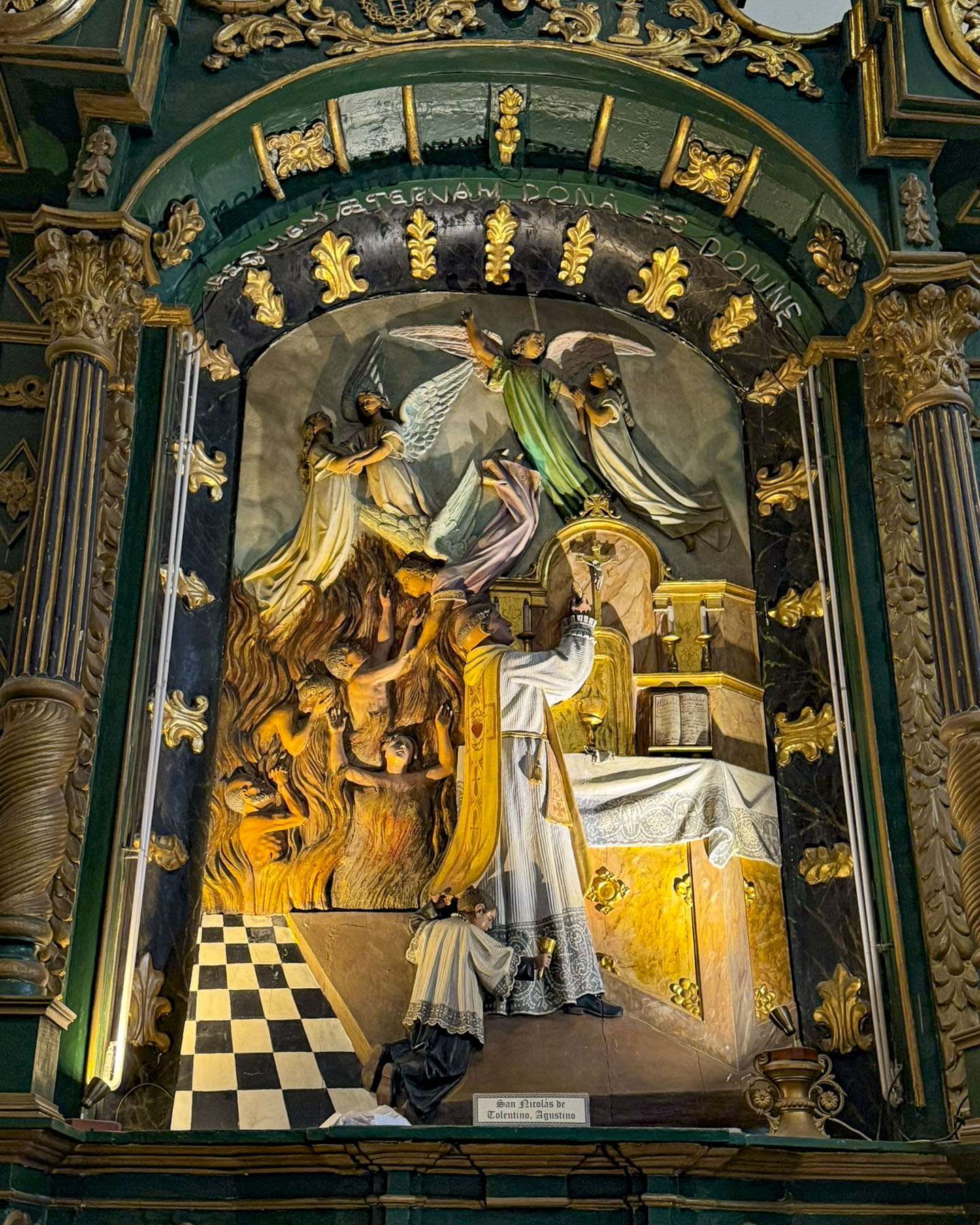
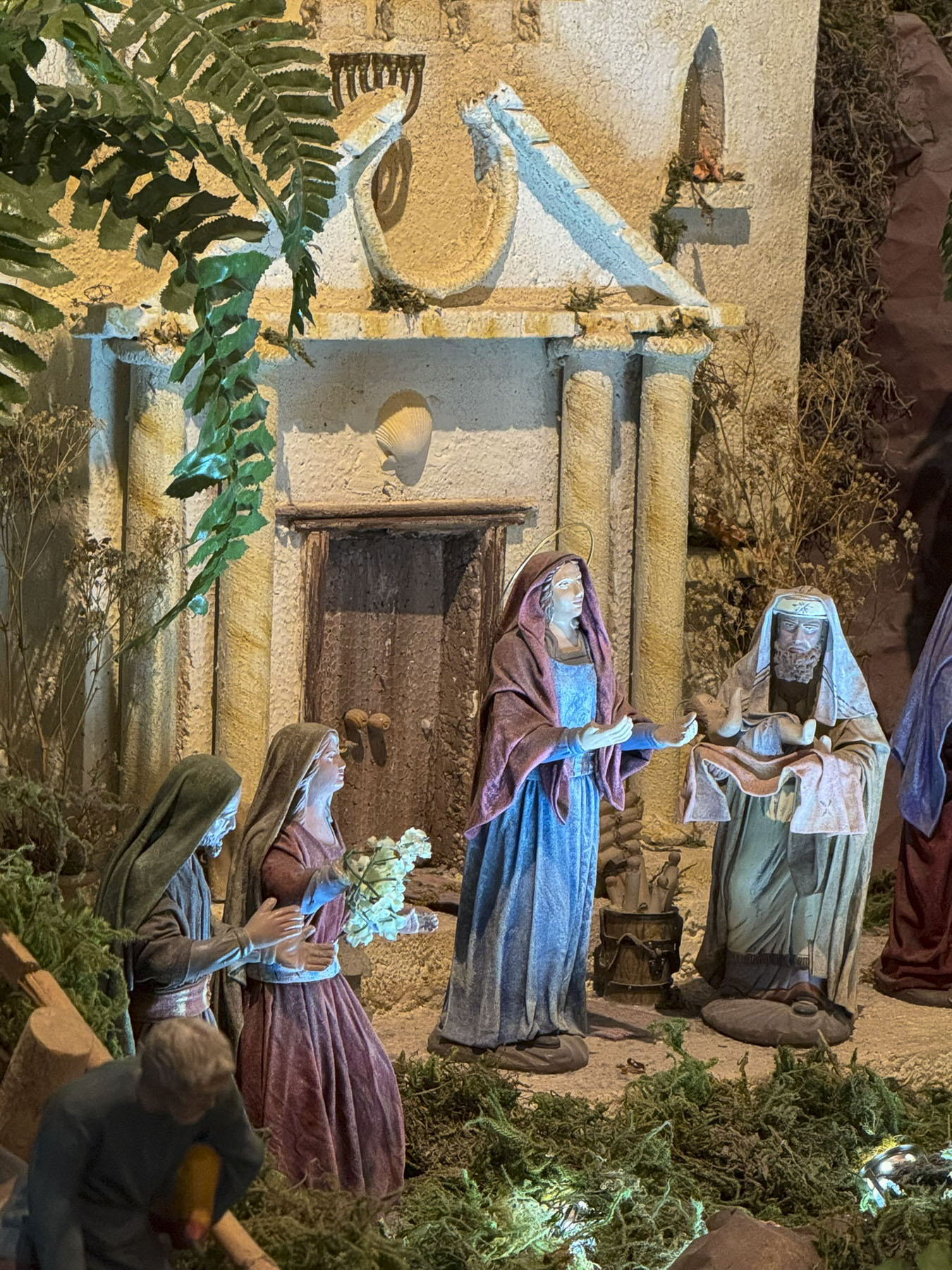
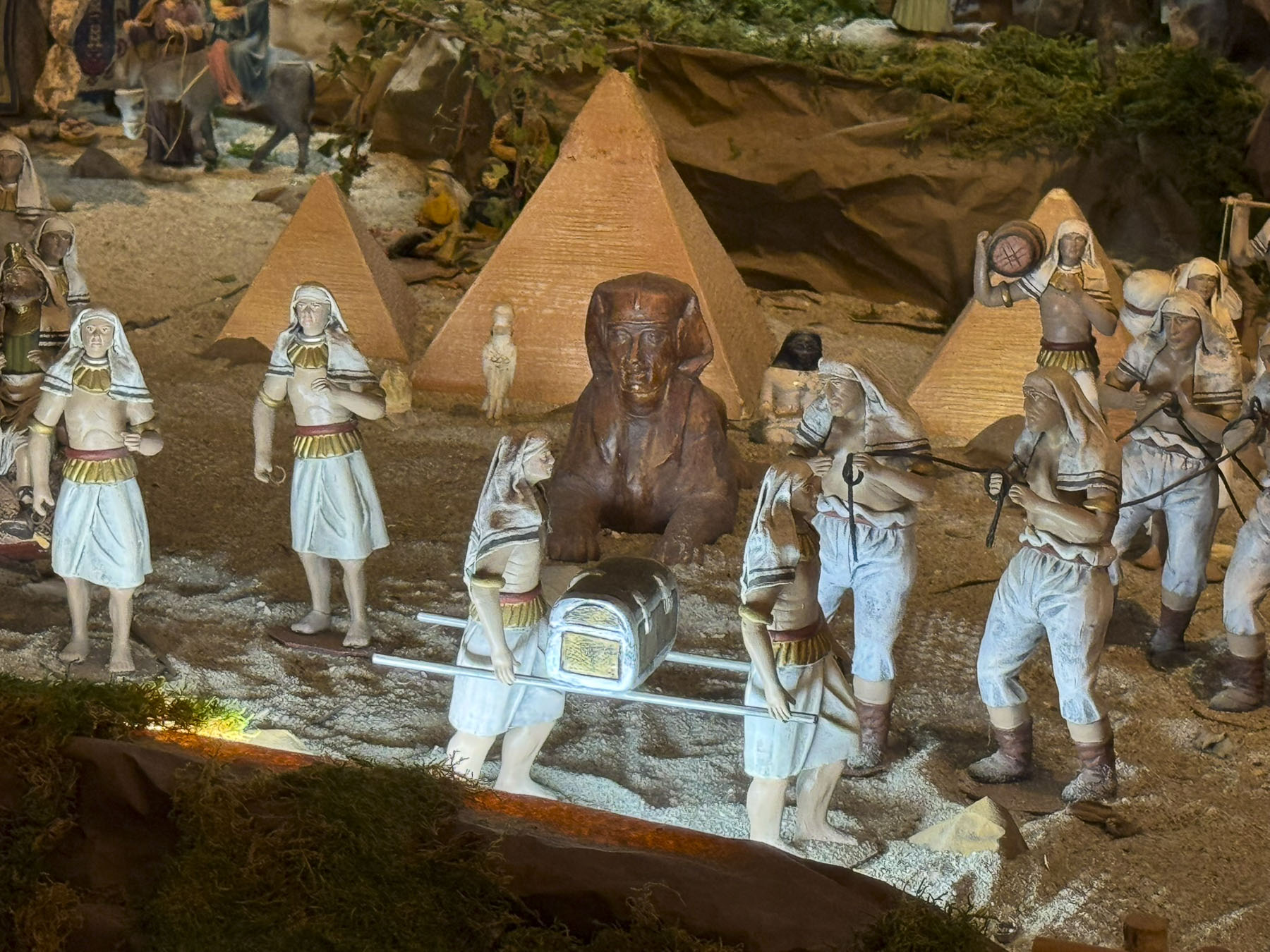
A block away was the Iglesia de San José. The 1670s church is notable for its ornate gold altar, that legend believes was saved from Morgan’s pirates by a priest who painted it black to hide its importance. There is also an interesting collection of religious sculptures and nativity scenes in a side chamber.
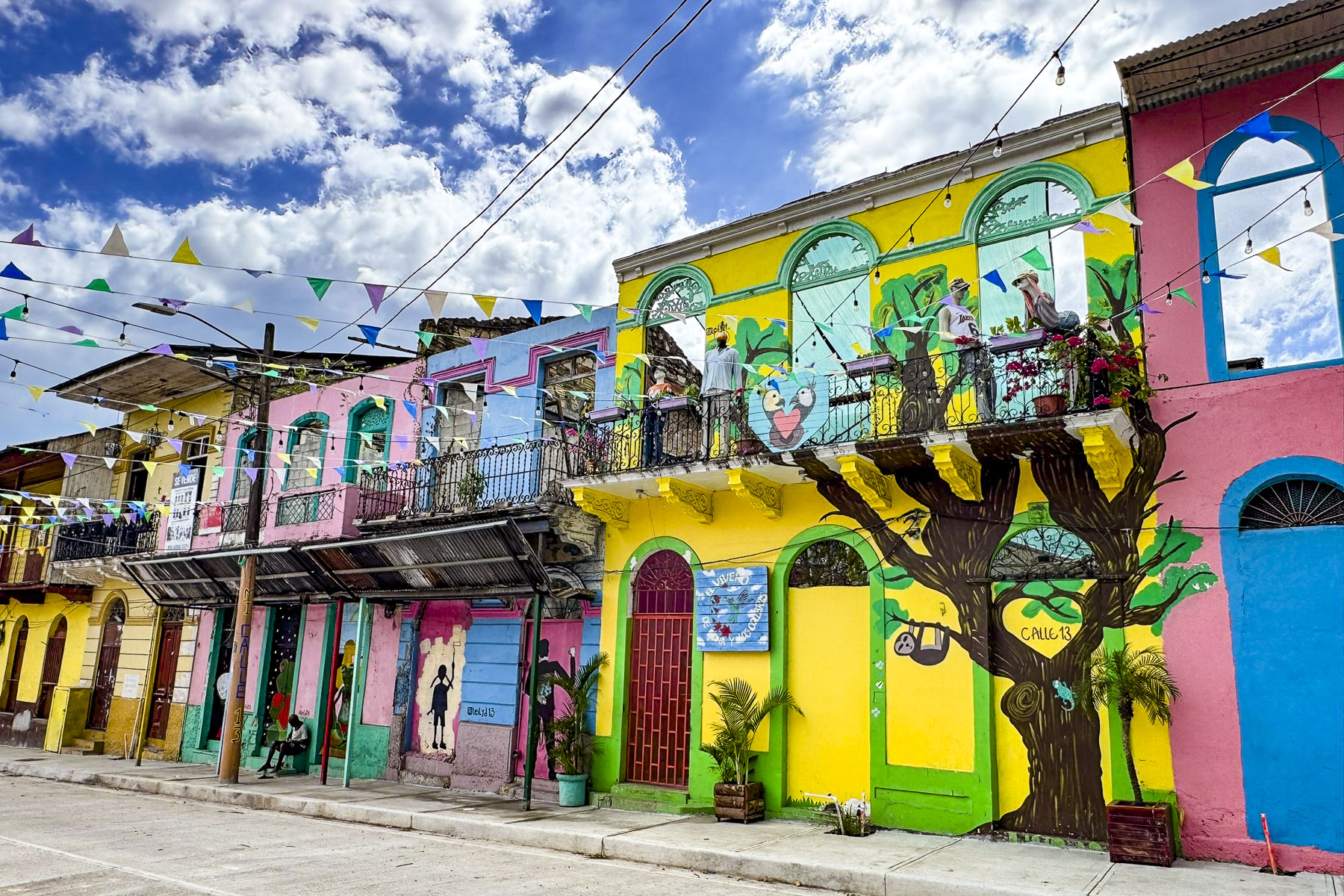
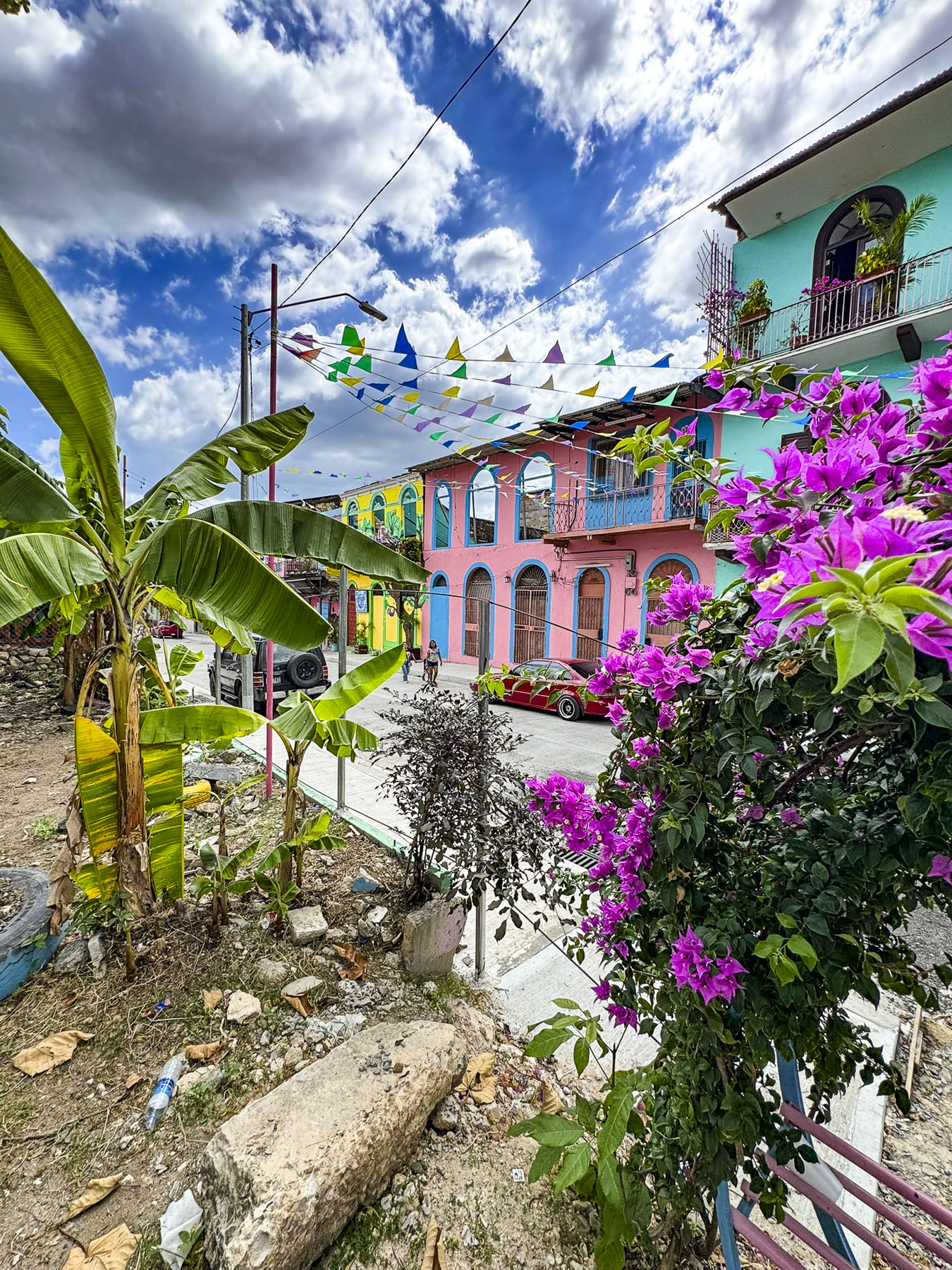
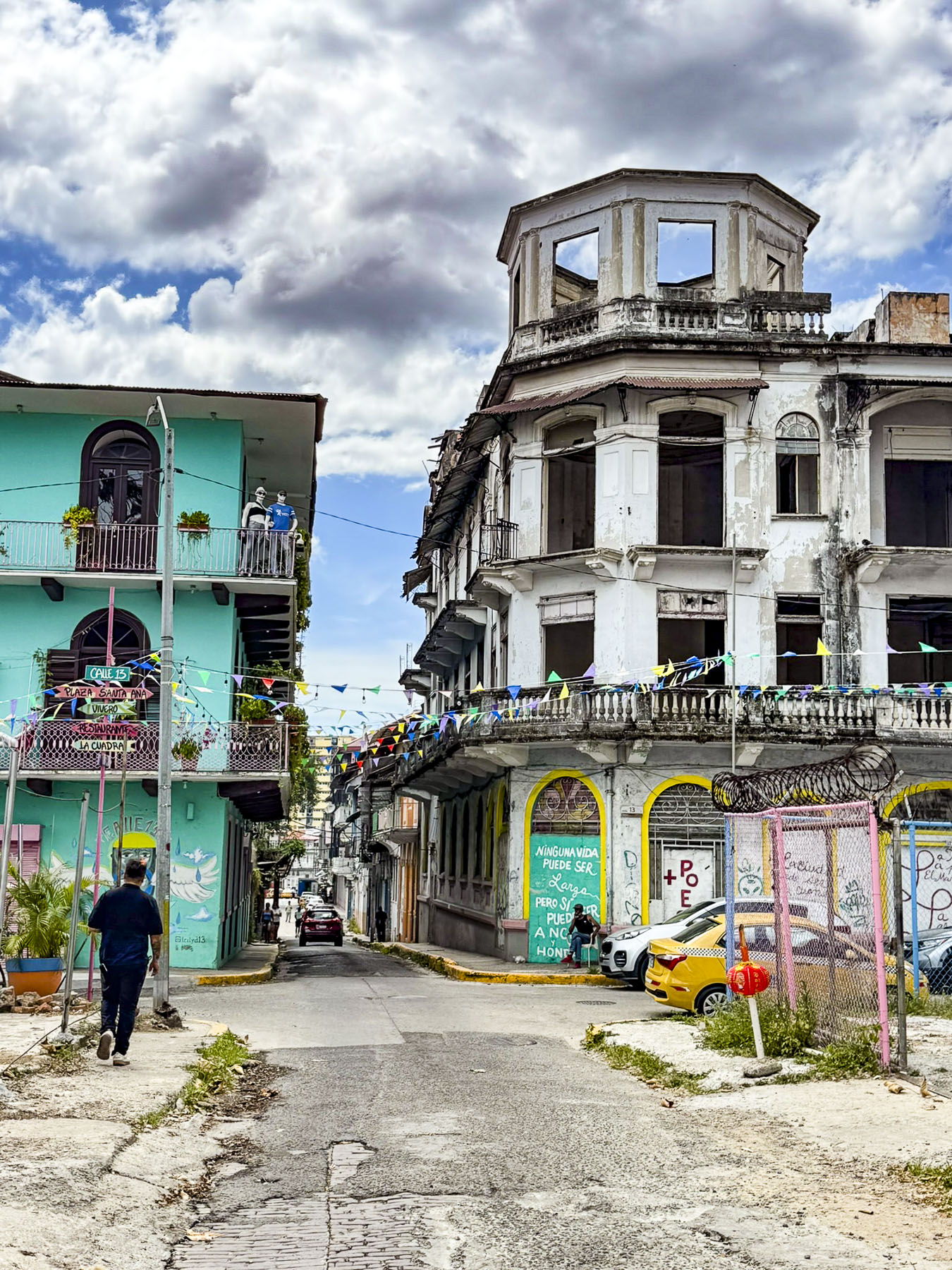
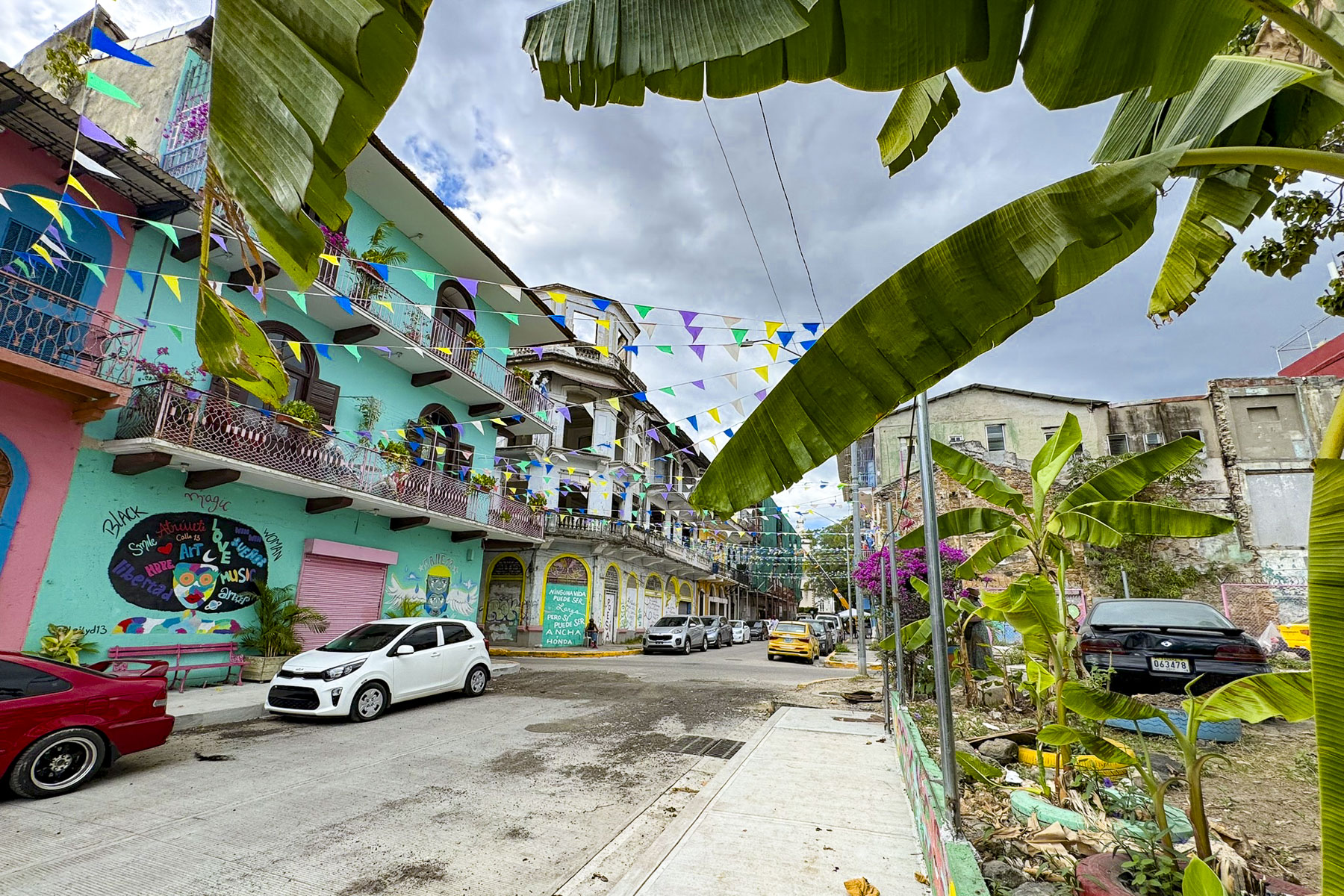
Afterwards we headed to the Santa Anna neighborhood, which was outside the walled citadel. While parts of it are in the UNESCO protected area of the Casco Antiguo; most of it is not. We had read that the area has great potential with many older buildings needing renovation, but were surprised by the quick transition from one neighborhood to another. While hopes are high for the barrio, many of the buildings we passed were only colorfully painted facades, with the sky above showing through the windows of roofless buildings.

Returning to Old Town we passed the Iglesia de la Merced, the only church to survive, fully intact, the destruction of Panama La Vieja during the pirate’s 1671 attack on the town. After the attack the church was disassembled by Franciscan monks and moved stone by stone to the new town, where it was painstakingly rebuilt, and is believed to be several years older than Iglesia de San José.

Our “walk a little then café,” beckoned when we happened upon Café Unido, a local coffee shop that pridefully specializes in Panamanian grown coffee, which they consider the best in the world.

A delightfully warm March day wandering the colorful streets of the Casco Antiguo was the perfect way to end our week in Panama. Between the beauty of the countryside and the coast, along with the warm hospitality of the Panamanians, we can understand why the country is a warm weather haven for expats from all across the northern hemisphere.

Hopefully, we will get the opportunity to explore more of the country in the future.

Till next time,

Craig & Donna

Argentina – Buenos Aires: Empanadas, Tombs & Tango

The ferry vibrated gently as the engines were switched into reverse as we approached the Buquebus ferry terminal in Buenos Aires. We had departed earlier from Montevideo, Uruguay, and hoped to view the Argentinian coastline from the Río de la Plata estuary, as the first Spanish explorers did in the early years of the 16th century. But we hadn’t expected the ferry not to have an open observation deck, and instead had to contend with the view, or lack of view, through hazy saltwater-etched windows.

Seasoned travelers on this route between Montevideo and Buenos Aires had already called for the ride share services of Cabify, inDriver, Didi, Easy Taxi or BA Taxi and waited curbside in front of the terminal. By the time the ferry docked there were no available drivers for 45 minutes. We were among the last to leave the port that morning.

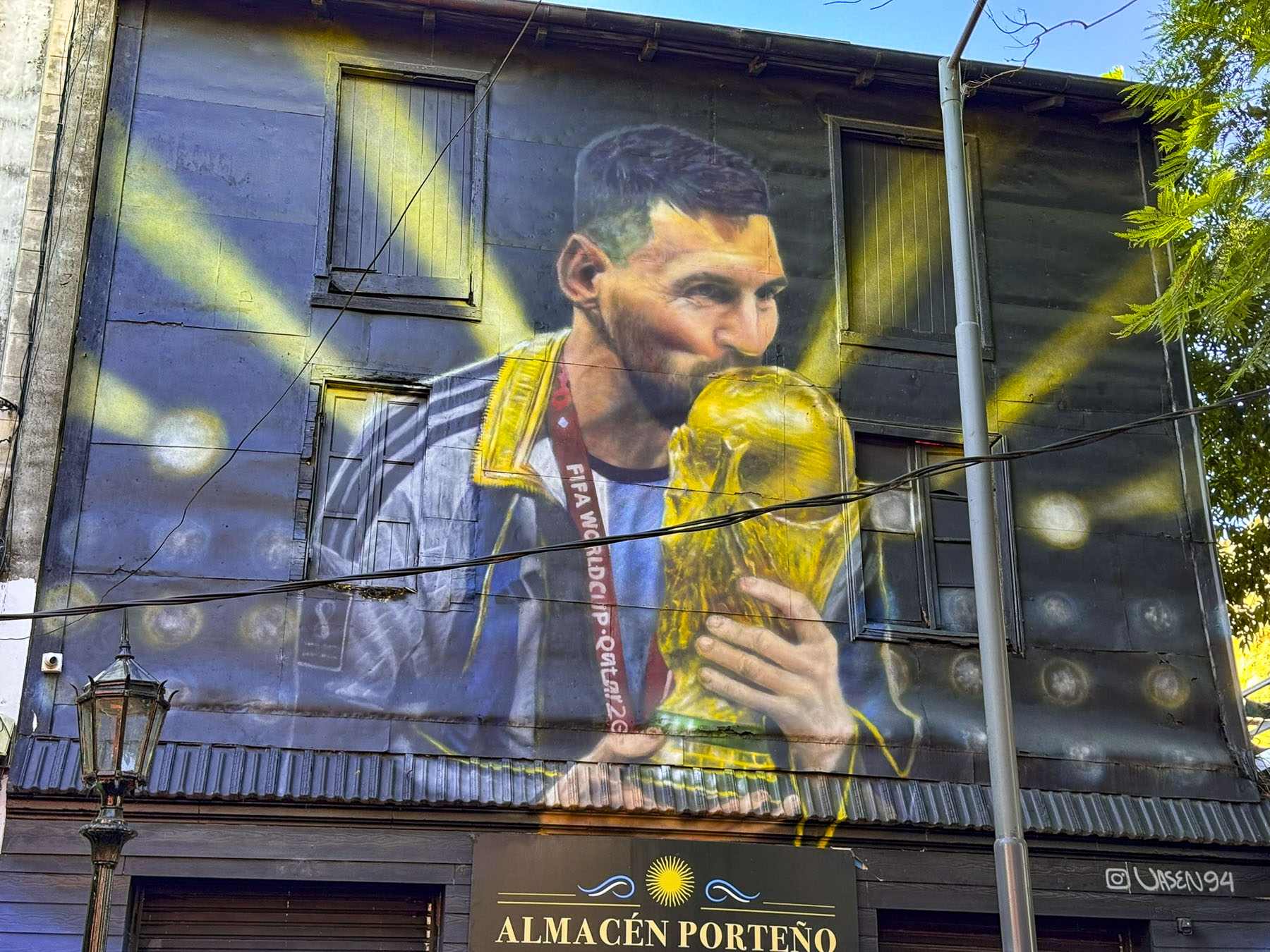
Our first impressions of this wonderfully cosmopolitan city were formed along the 16-lane wide – yes, 16 lanes – Av. 9 de Julio. Despite its width it is a pleasant tree-and park-lined esplanade, that extends for 27 blocks through the city and reminded us of the area around Central Park in Manhattan. Older buildings from the 18th and 19th century shared the skyline with more modern buildings than we expected, as well as the first of many street murals dedicated to the football player Lionel Messi #10 for Argentina national football team, and the country’s superstar at the moment. The sidewalks were bustling with activity. We wondered how we would ever cross 16 lanes of traffic on foot.

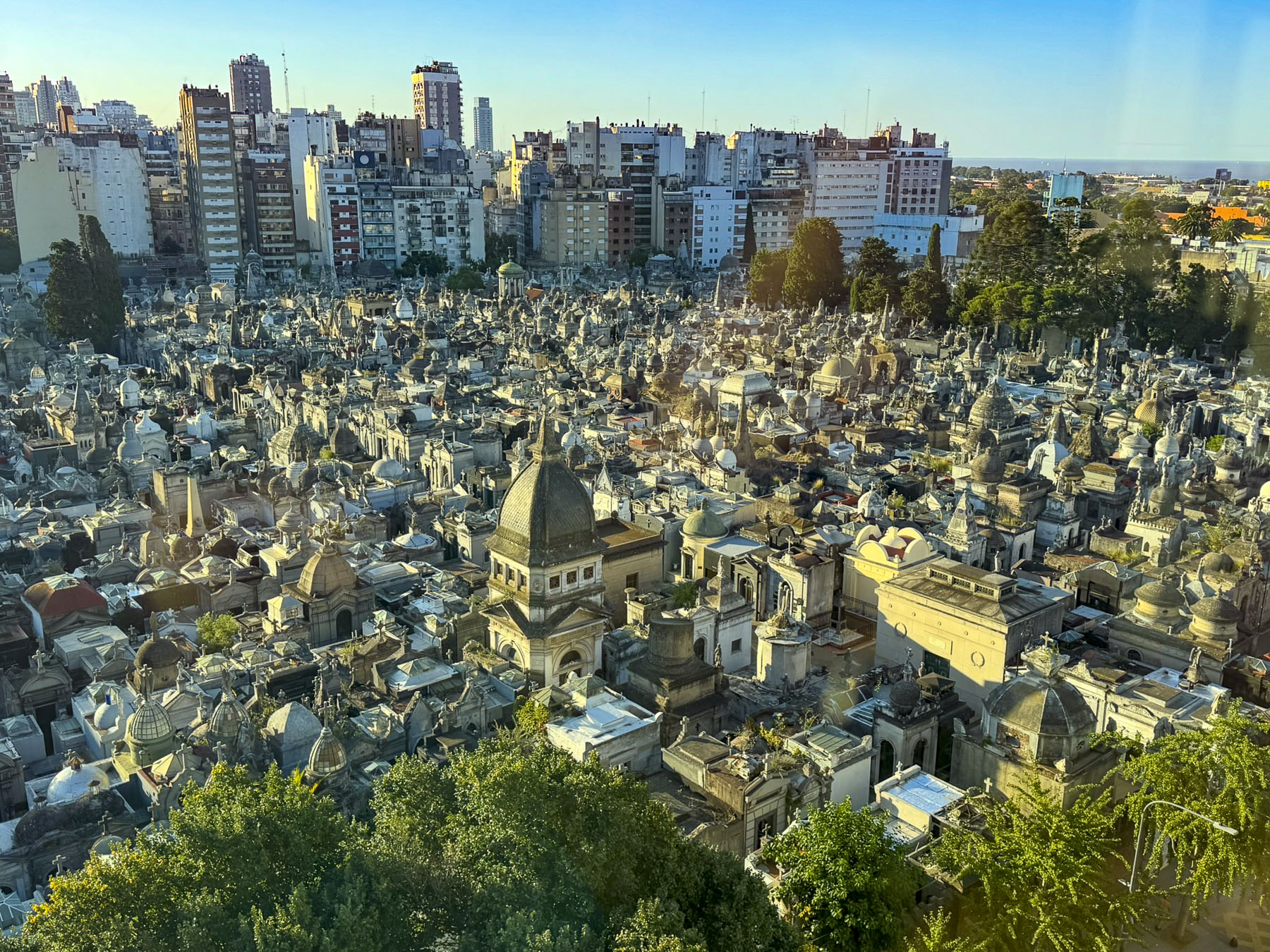
Our hotel for the next six nights, Urban Suites Recoleta, was across the street from Buenos Aire’s historic Cementerio de la Recoleta. We soon learned that most landmarks and hotels in the neighborhood ended with Recoleta in their name. The cemetery from our balcony looked like an ancient lost city.

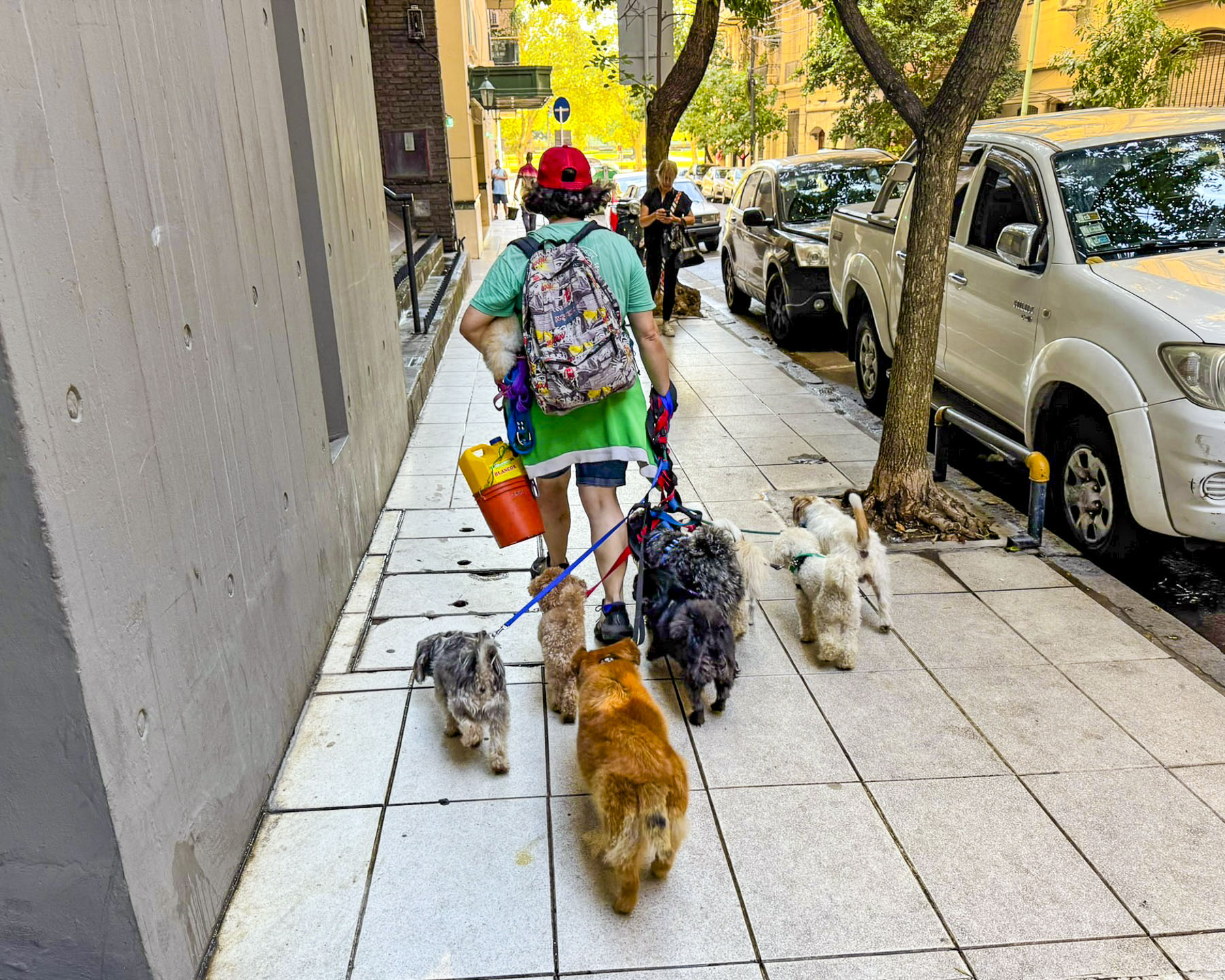
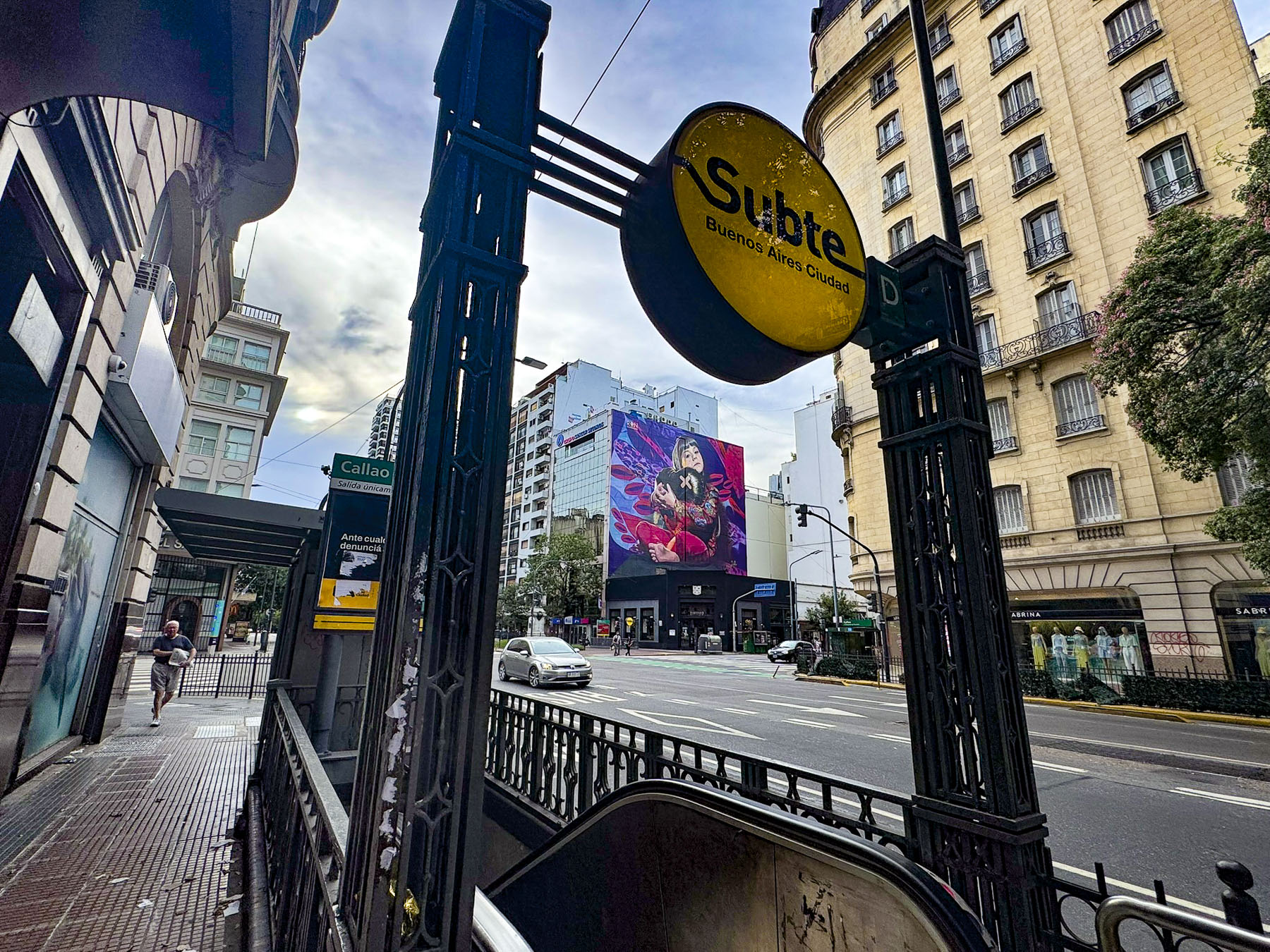
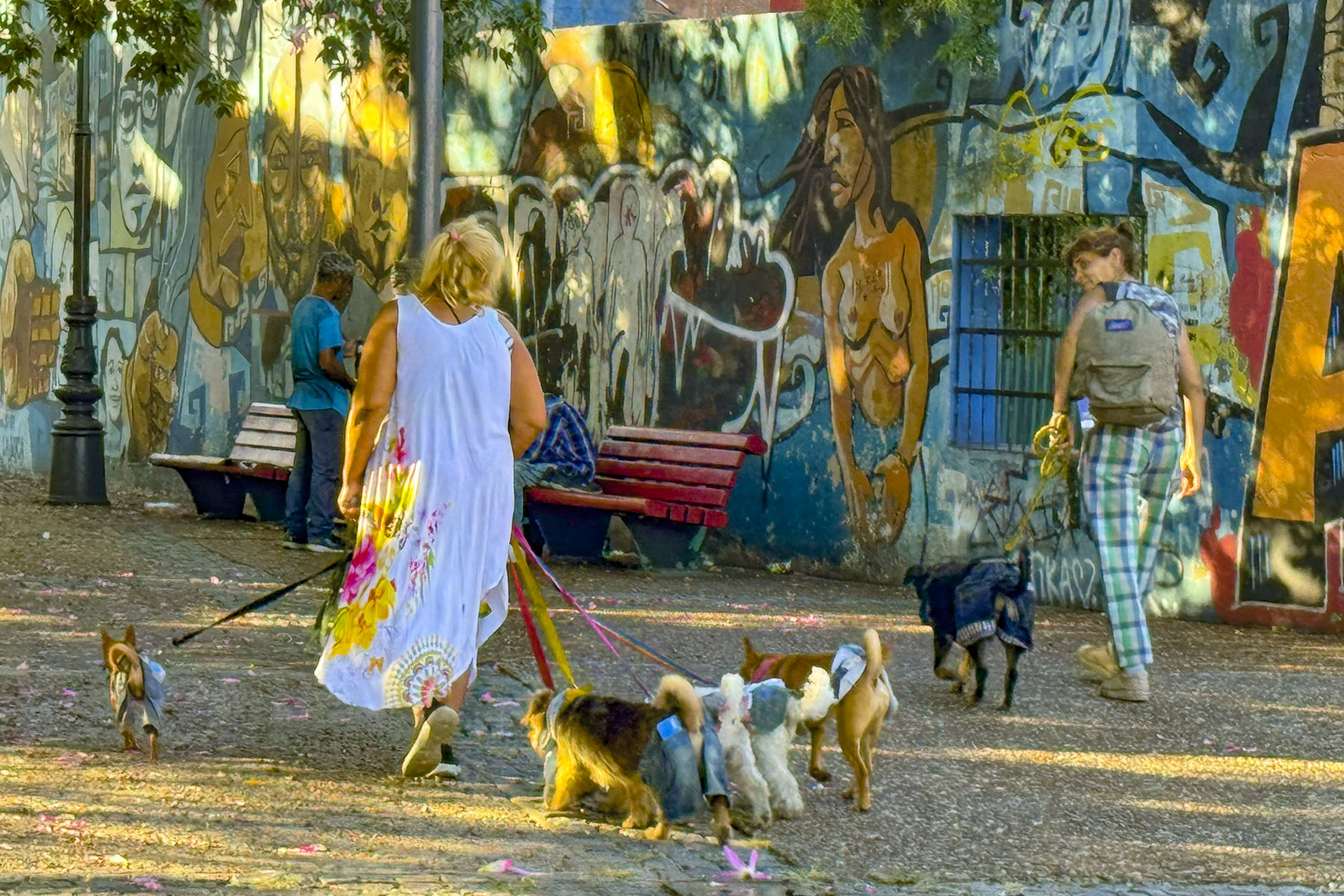
The next morning, we explored the immediate neighborhood around the hotel that was full of activity with delivery trucks off-loading produce and dog walkers leading their packs of small dogs to the parks. We eventually crossed the Puente Peatonal Dr. Alfredo Roque Vítolo, a brightly painted footbridge across the roadway that connects the parks around the Museo Nacional de Bellas Artes to the Universidad de Buenos Aires. The Facultad de Derecho subway station is located at the foot of the bridge. It is a terminus on the H-Line, one of Subte’s (from Subterráneo de Buenos Aires) six lines, that can get you nearly anywhere in this sprawling metropolis. Opened in 1913, Buenos Aires had the first subway in South America.

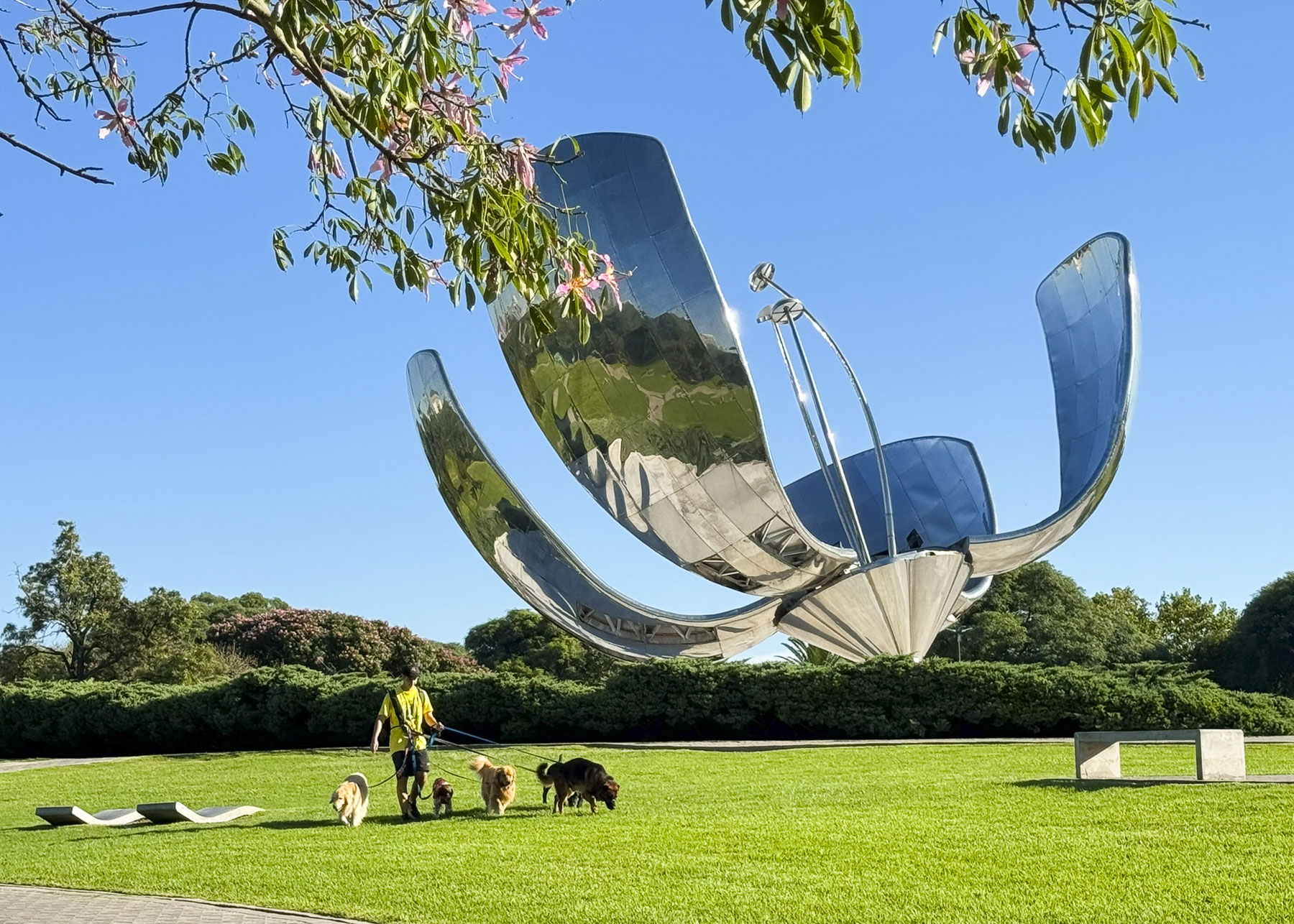
The Floralis Generica, a unique abstract aluminum sculpture, an iconic symbol of the city, centered the Plaza de las Naciones Unidas next to the school. The 23m (75ft) tall mechanical flower with six petals which opens in the morning and closes at night was a gift to the city by the Argentine architect Eduardo Catalano in 2002. Walking paths circled the sculpture and offered different viewing perspectives of the flower that the sculptor visualized to “represent all the flowers in the world.”

Walking back towards our hotel we veered down Avenida Alvear, seven blocks that were once Buenos Aire’s Park Ave or Champs-Élysées at the turn of the 20th century.  It is known for the art nouveau-influenced Belle Époque architecture of the old mansions along the street that have now been converted into hotels and embassies. Unfortunately, many of the building facades were hidden by the trees that line the street.

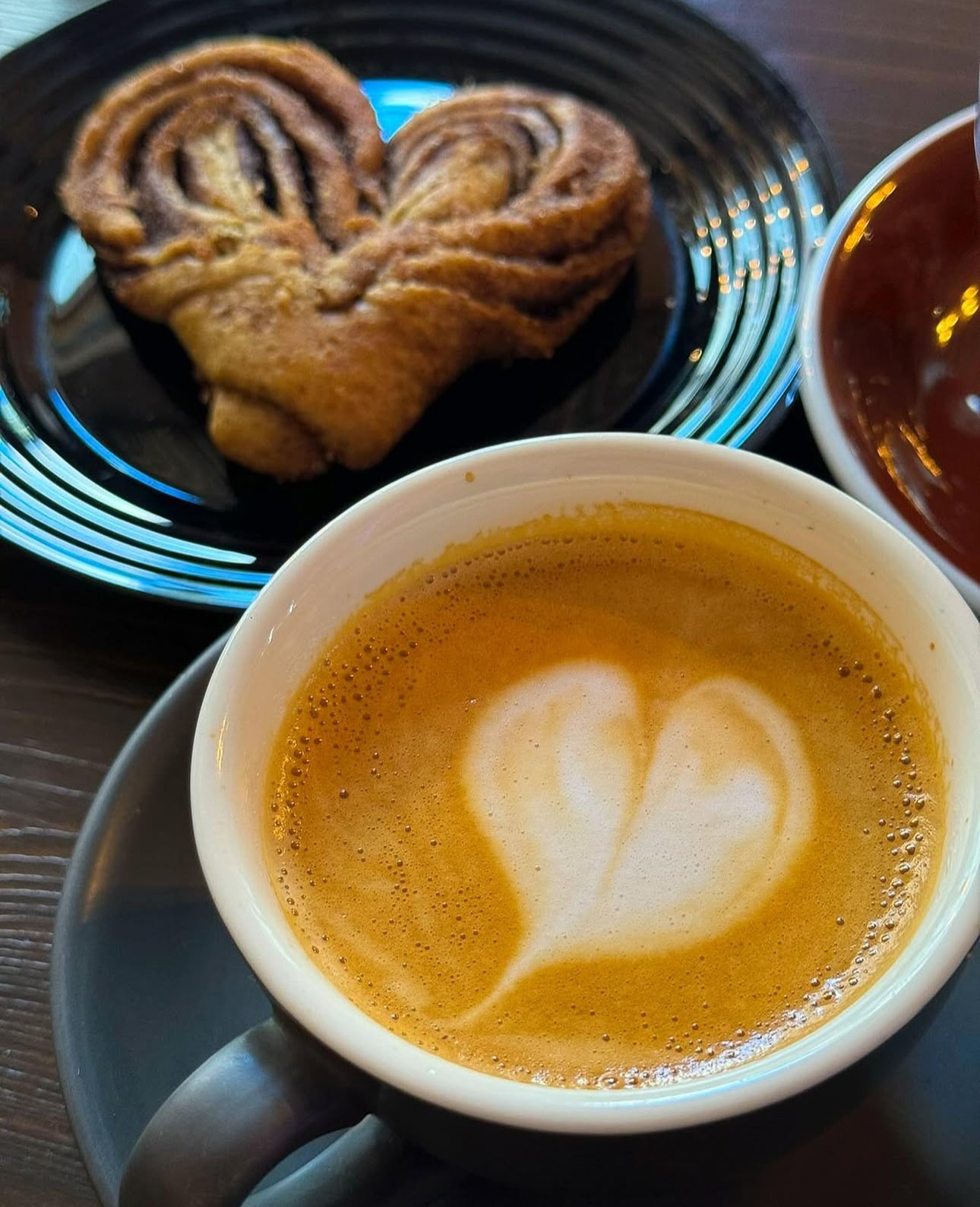
Long before Starbucks was a thing, the Porteños, “people of the port,” as the citizens of Buenos Aires are called, developed a strong coffee culture that coincided with the arrival of several waves of Italian immigrants that began in the mid-1800s. The result is a city where it’s nearly impossible to get a bad cup of coffee. One block over from Avenida Alvear on Av. Pres. Manuel Quintana our “walk a little then café” philosophy was easily satisfied at La Fleur de Sartí, Confiserié Monet, and Cafe Quintana 460, where espresso-based coffee drinks rule.

When we travel, our mid-afternoon lunch tends to be our big meal of the day, so we end up looking for supermarkets to buy crackers, cheese and fruit to snack on later. Near our hotel there was a large Carrefour Market on Av. Vicente López. Around the corner from the supermarket was a block of traditional shops with two butcheries, a fish monger, fruit stands, and a cheese store. Though our best find in the neighborhood was Möoi Recoleta, which had a pleasing interior and excellent food. To our surprise it’s part of a small local restaurant chain.

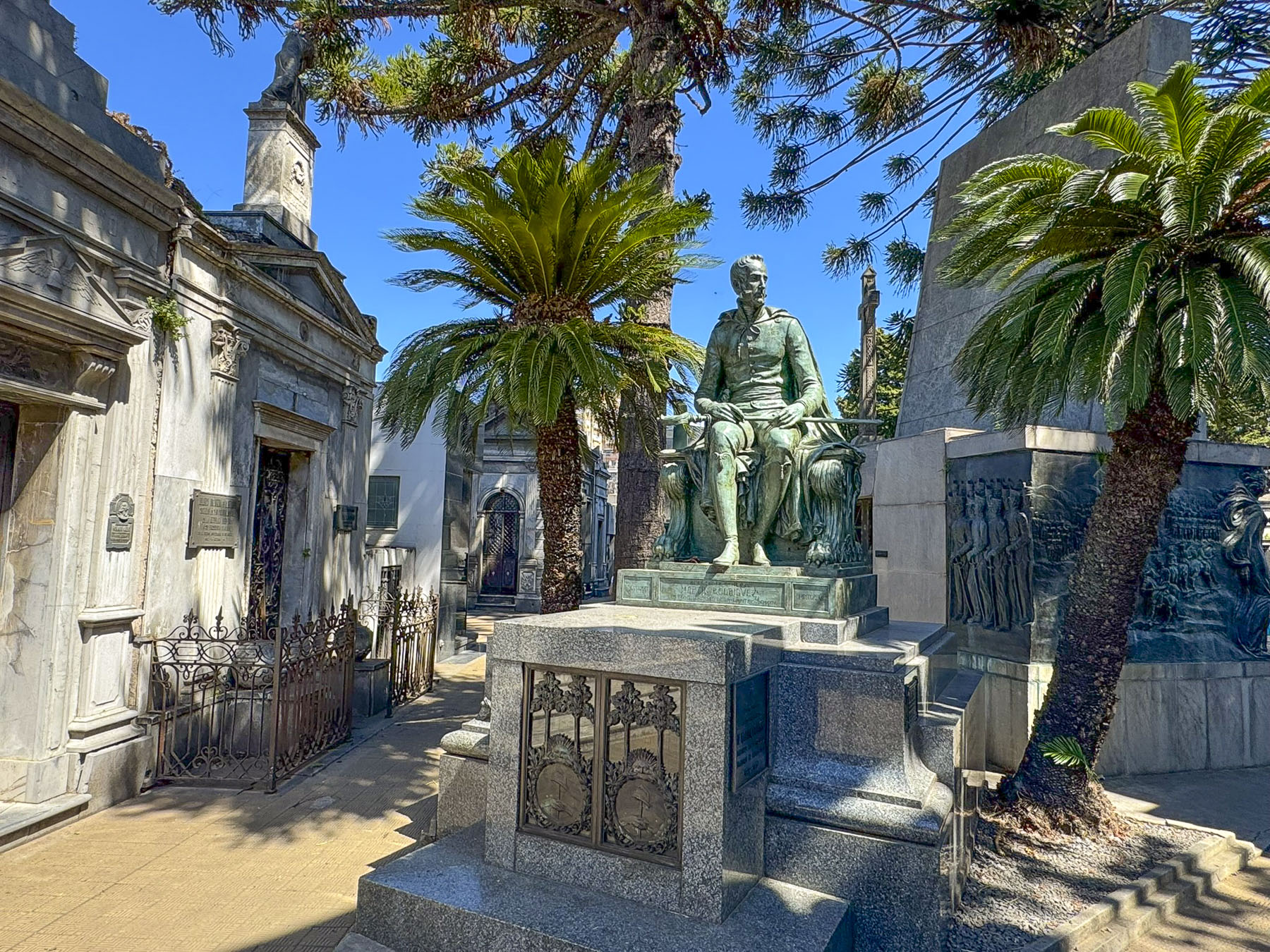
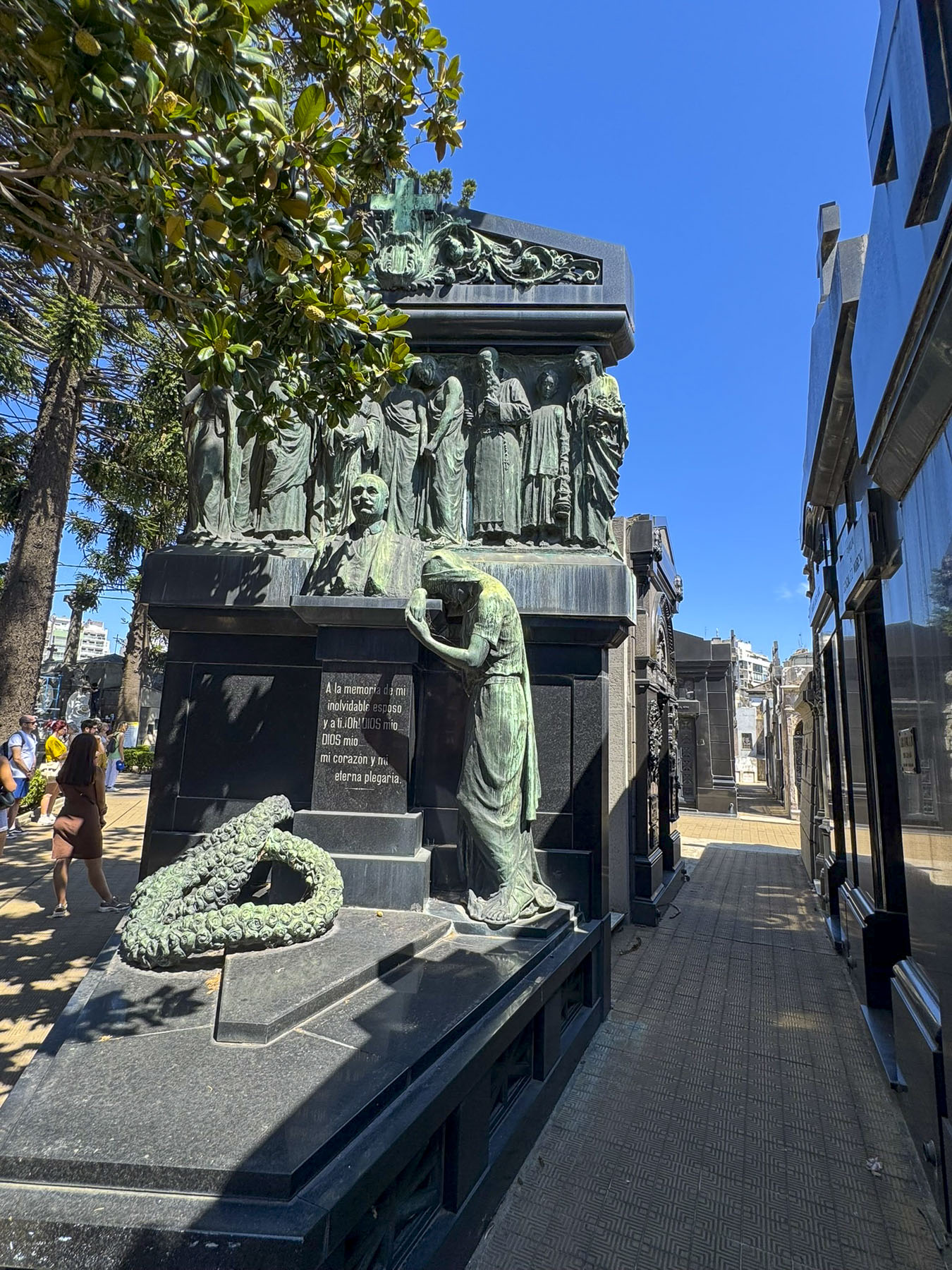
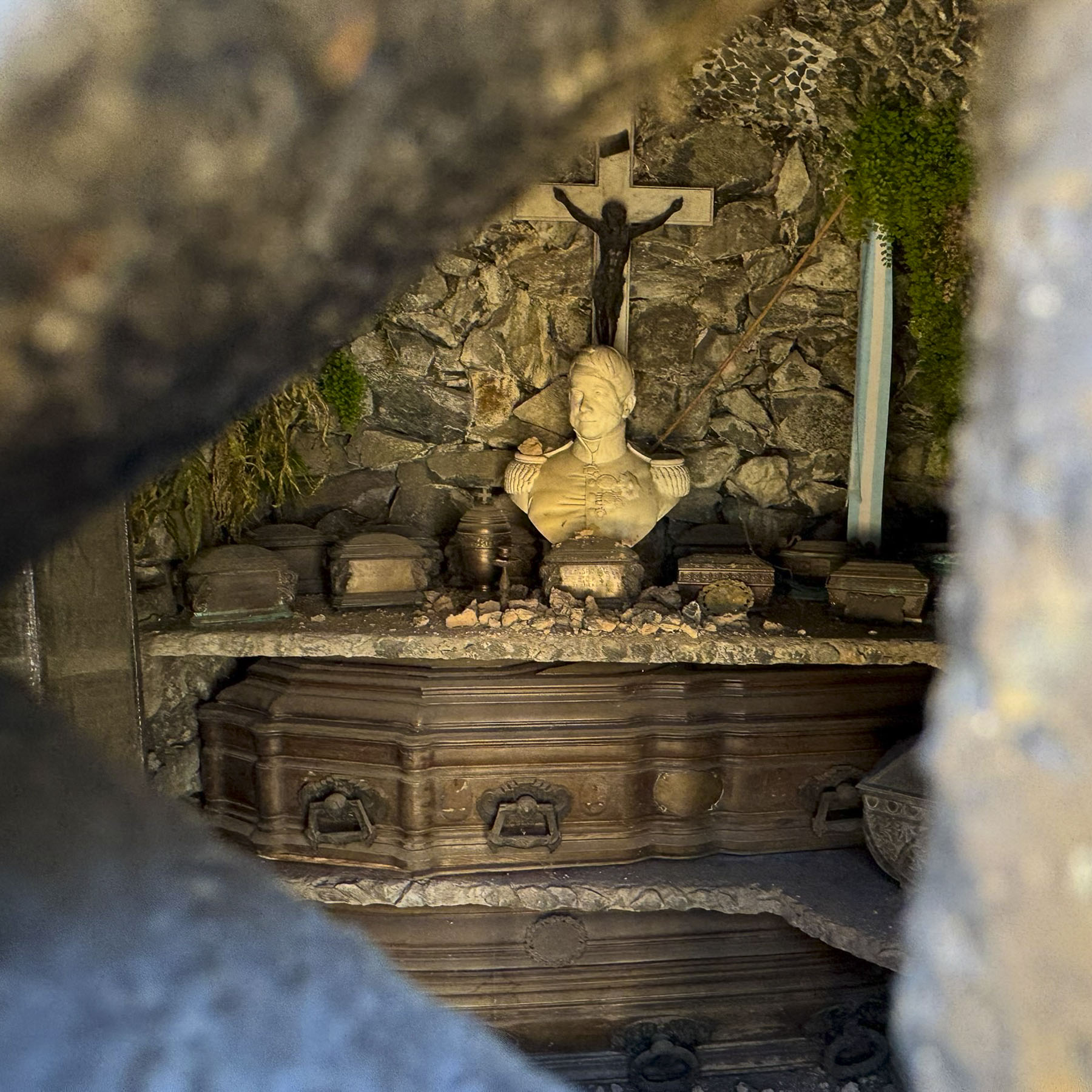
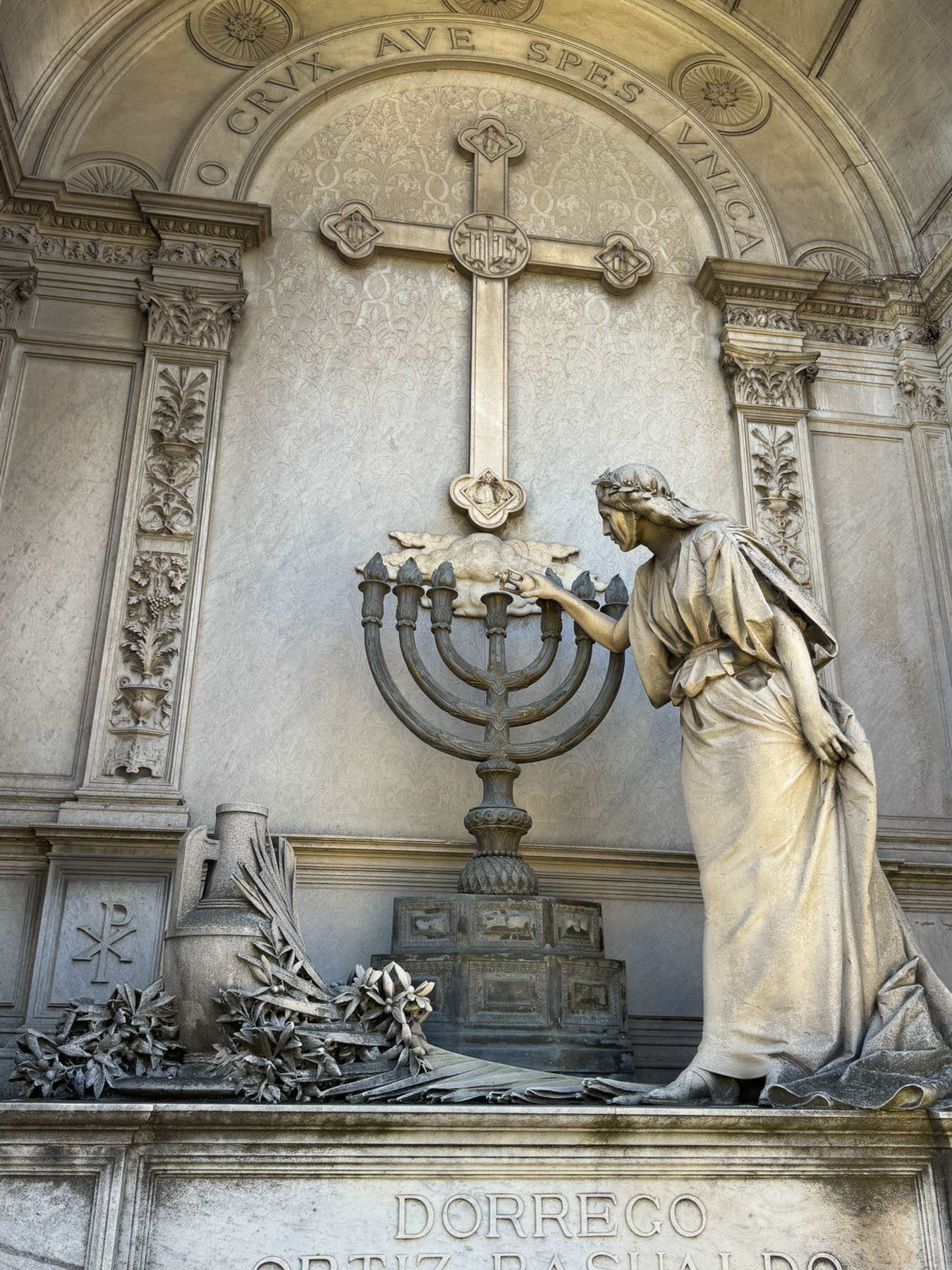
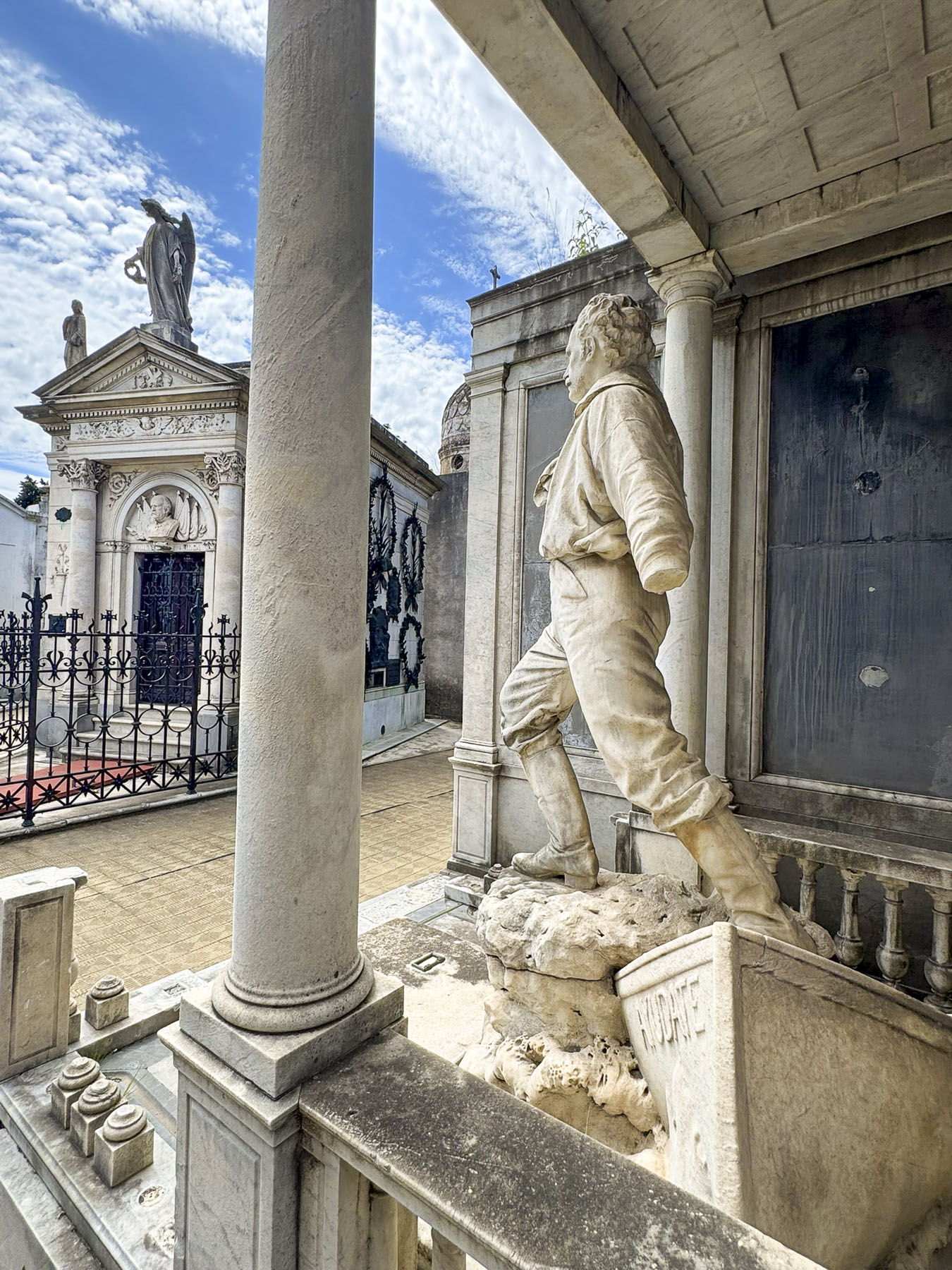
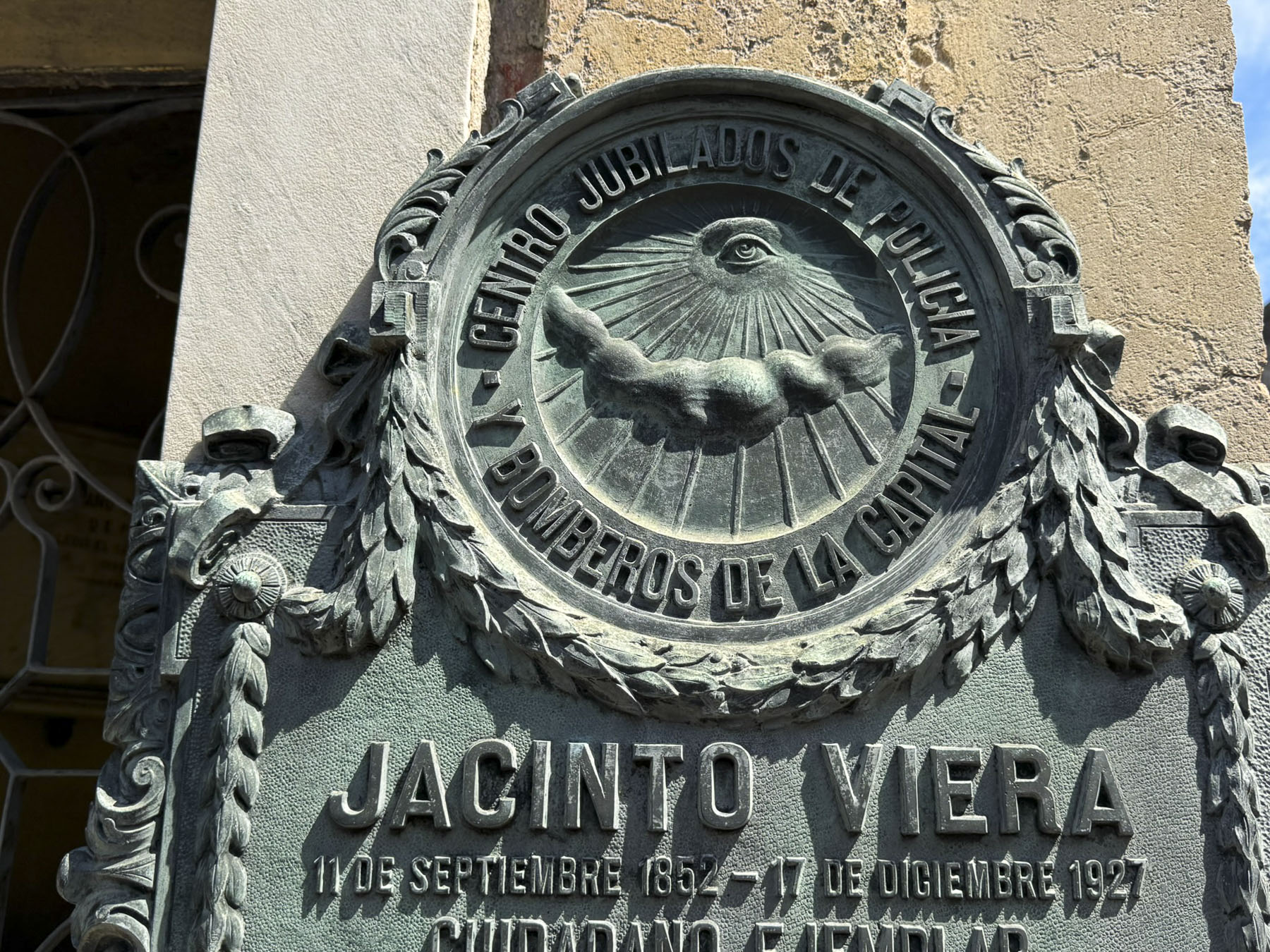
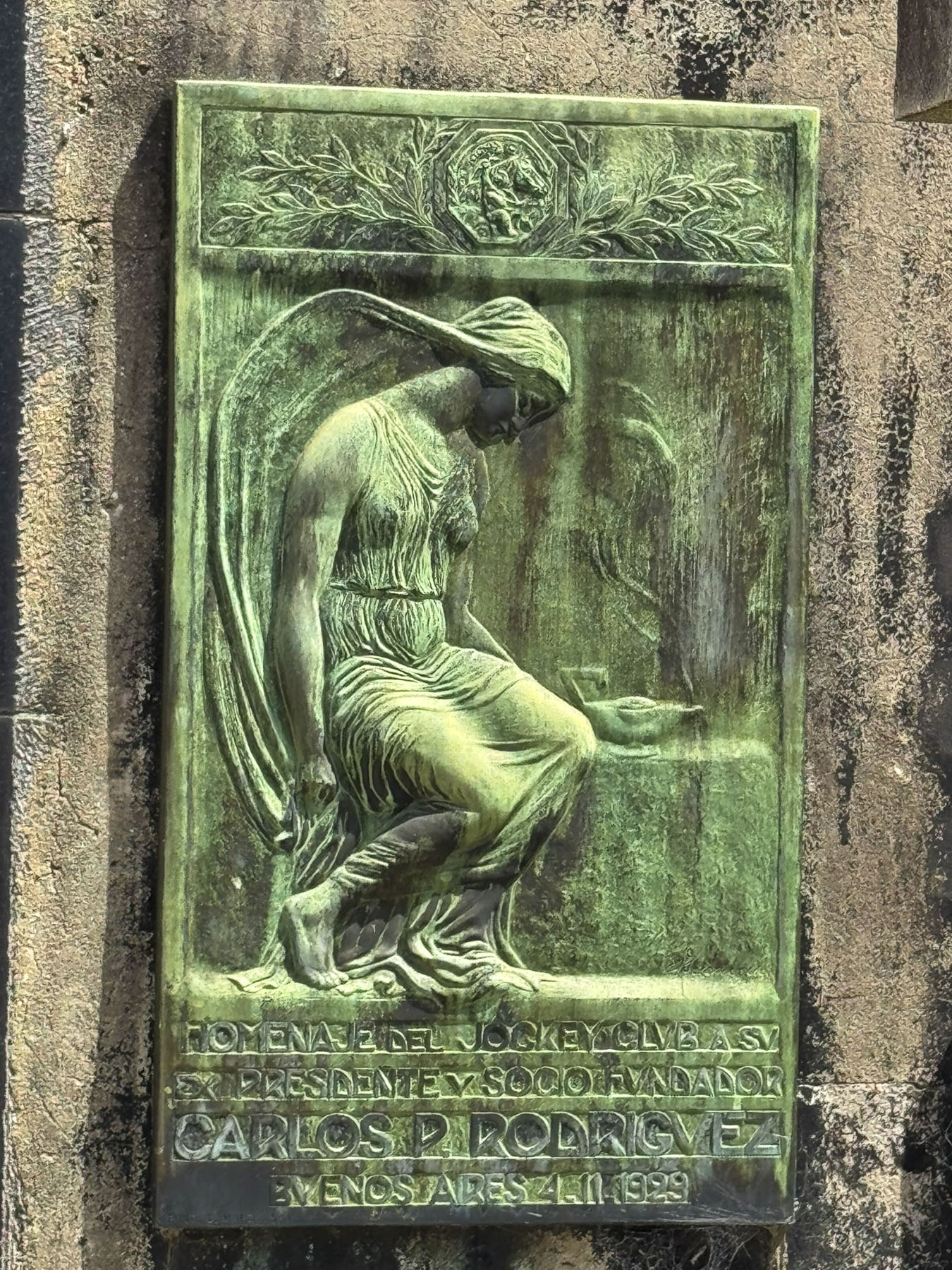
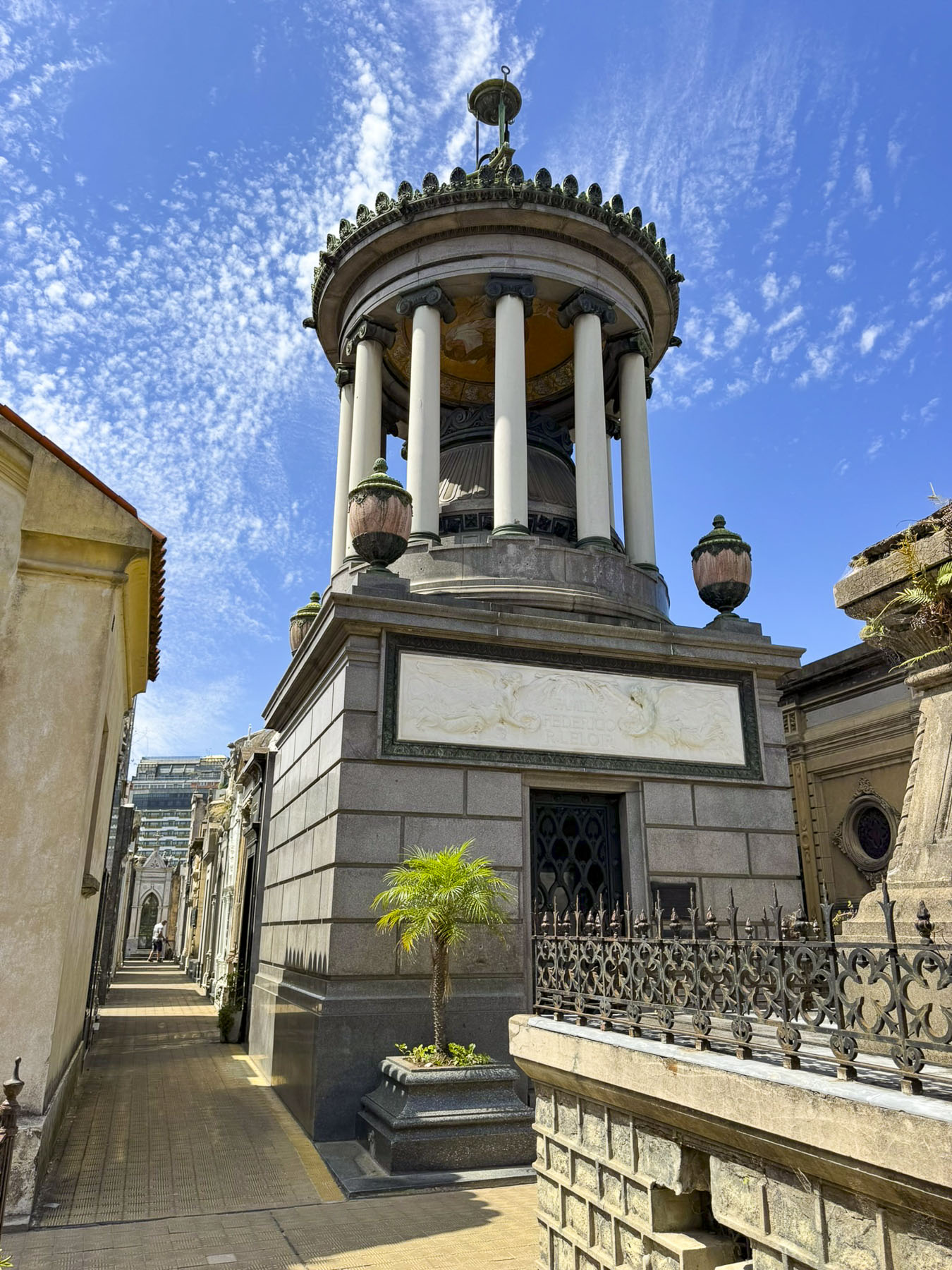
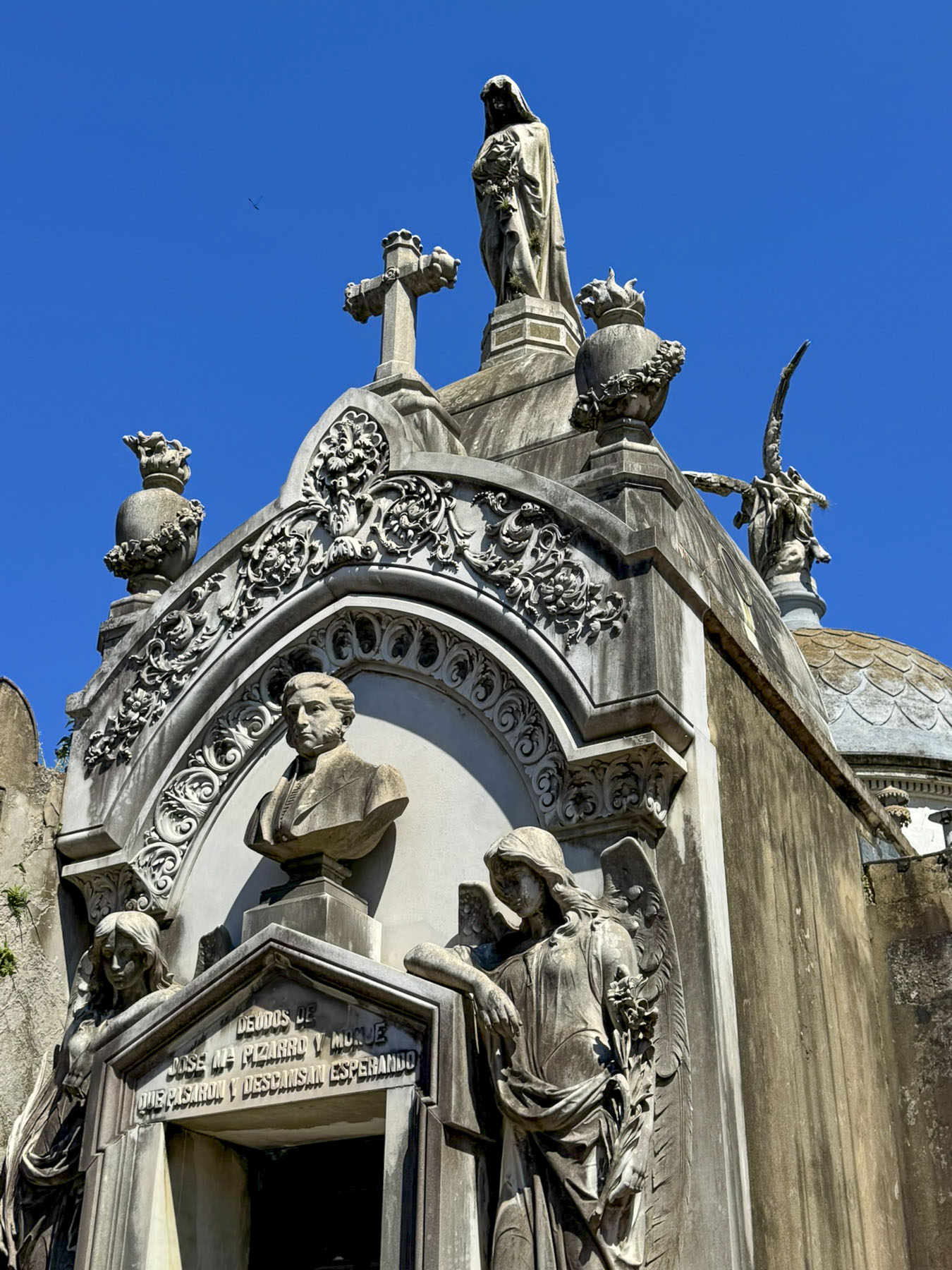
That afternoon we timed our visit to the Cementerio de la Recoleta after the surge of the morning’s tour buses had departed. It’s a huge cemetery with a labyrinth of narrow passages through the grand mausoleums of Buenos Aires’ who’s who of notable citizens and wealthy families.

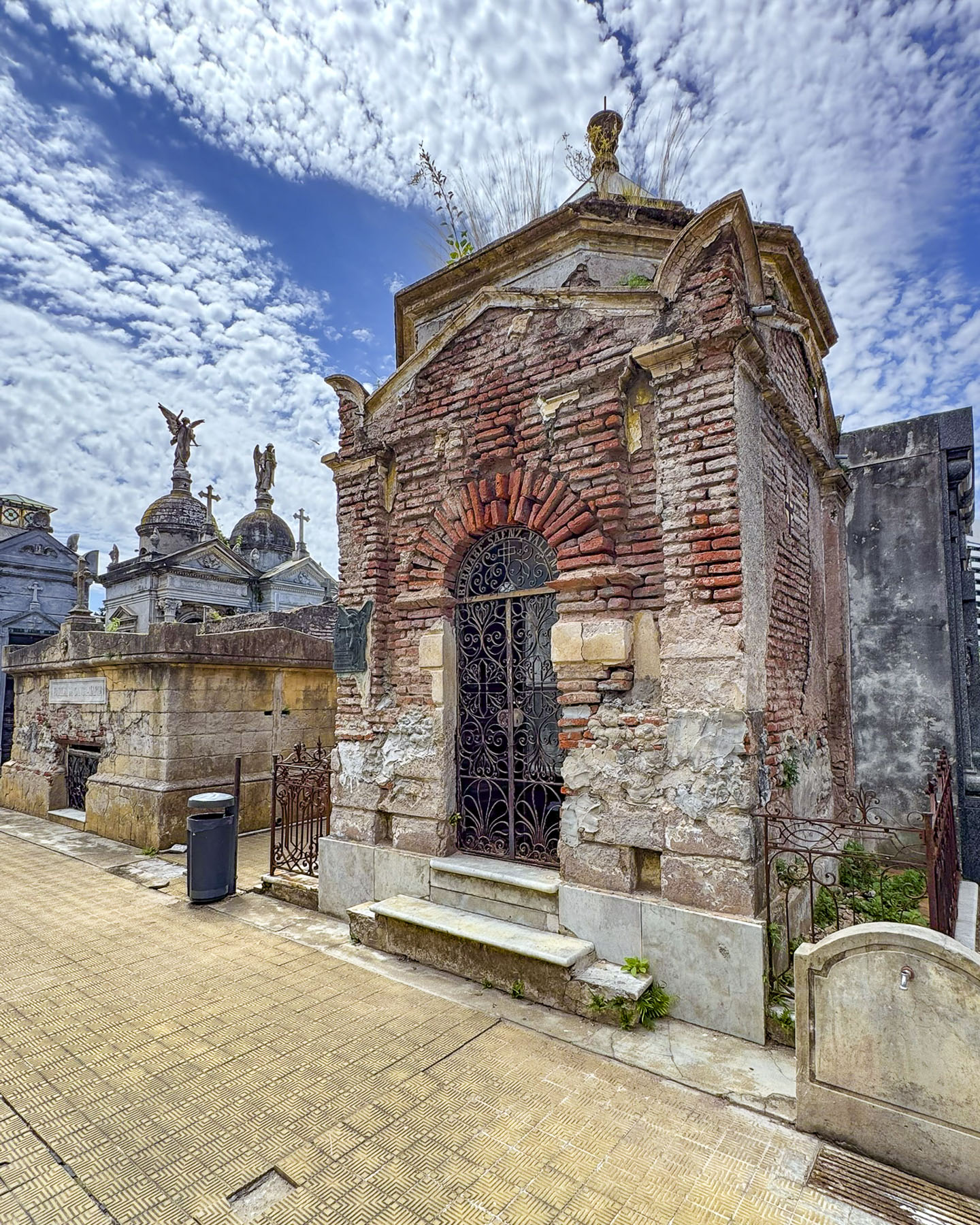
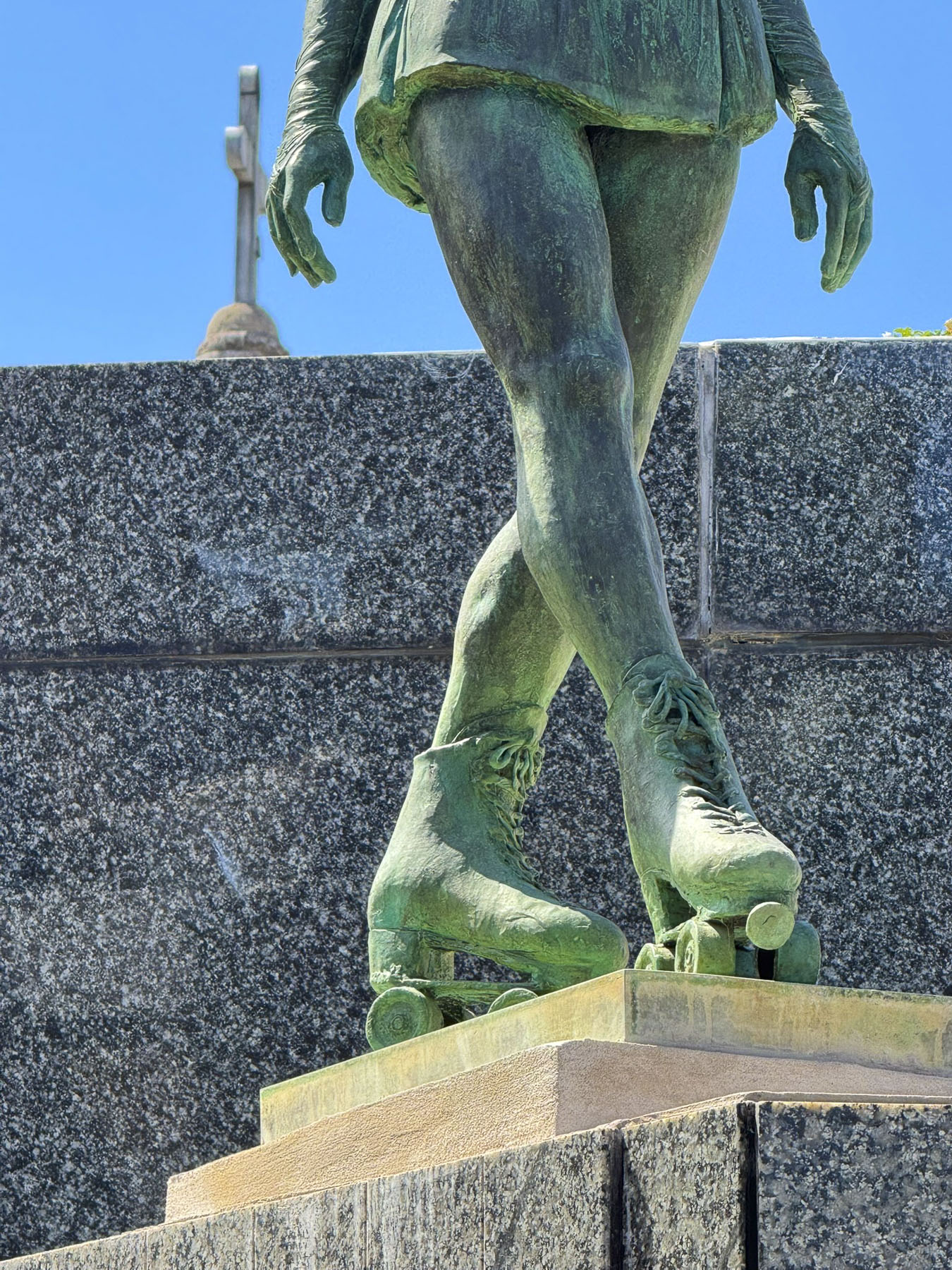
Some were very well kept, while others were under renovation, and a number appeared forgotten, with their doors broken and façades crumbling, as if the family line had ended or a once great fortune had been lost. One was highlighted by a whimsical statue of a woman roller skating atop her own tomb.

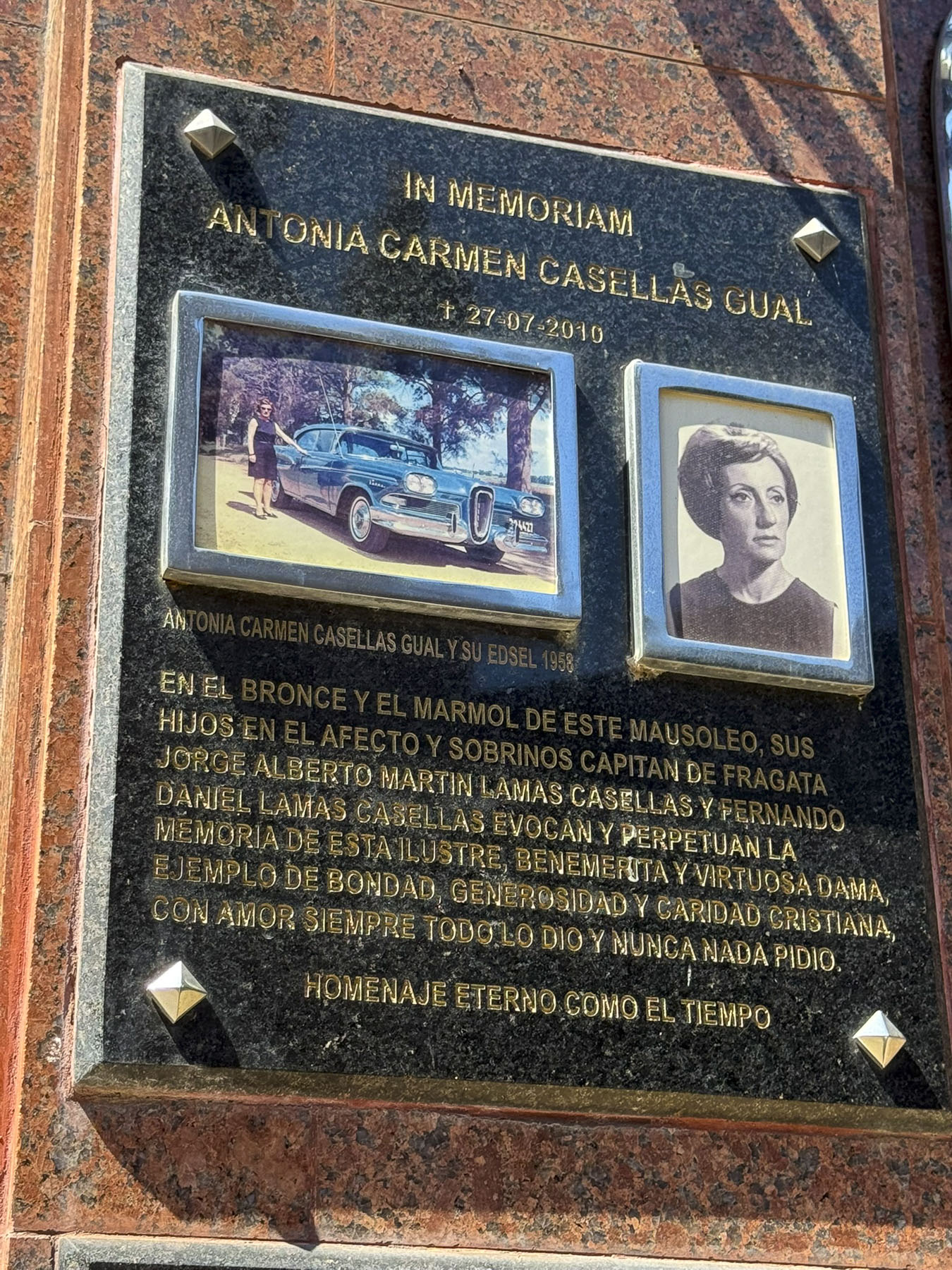
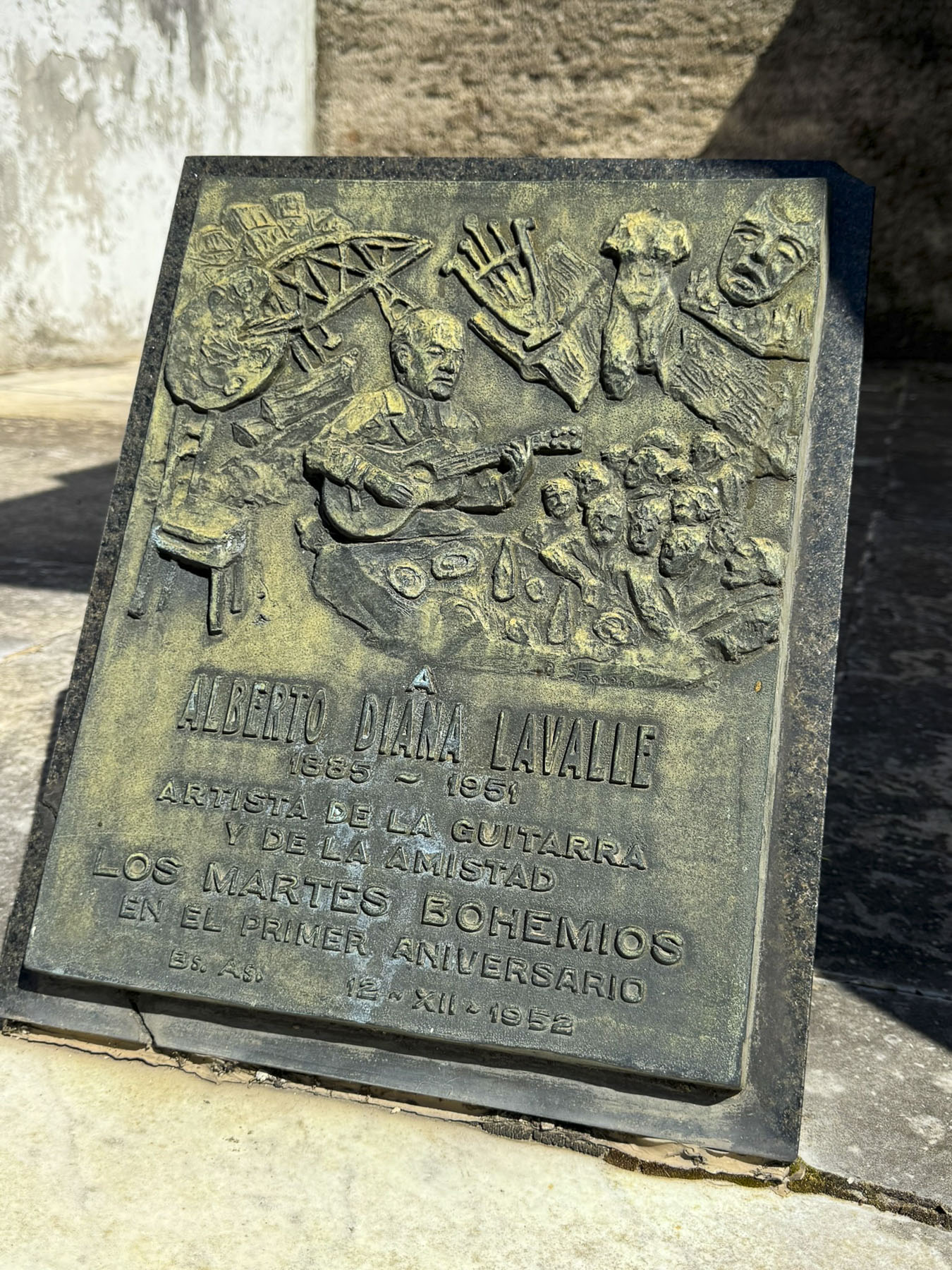
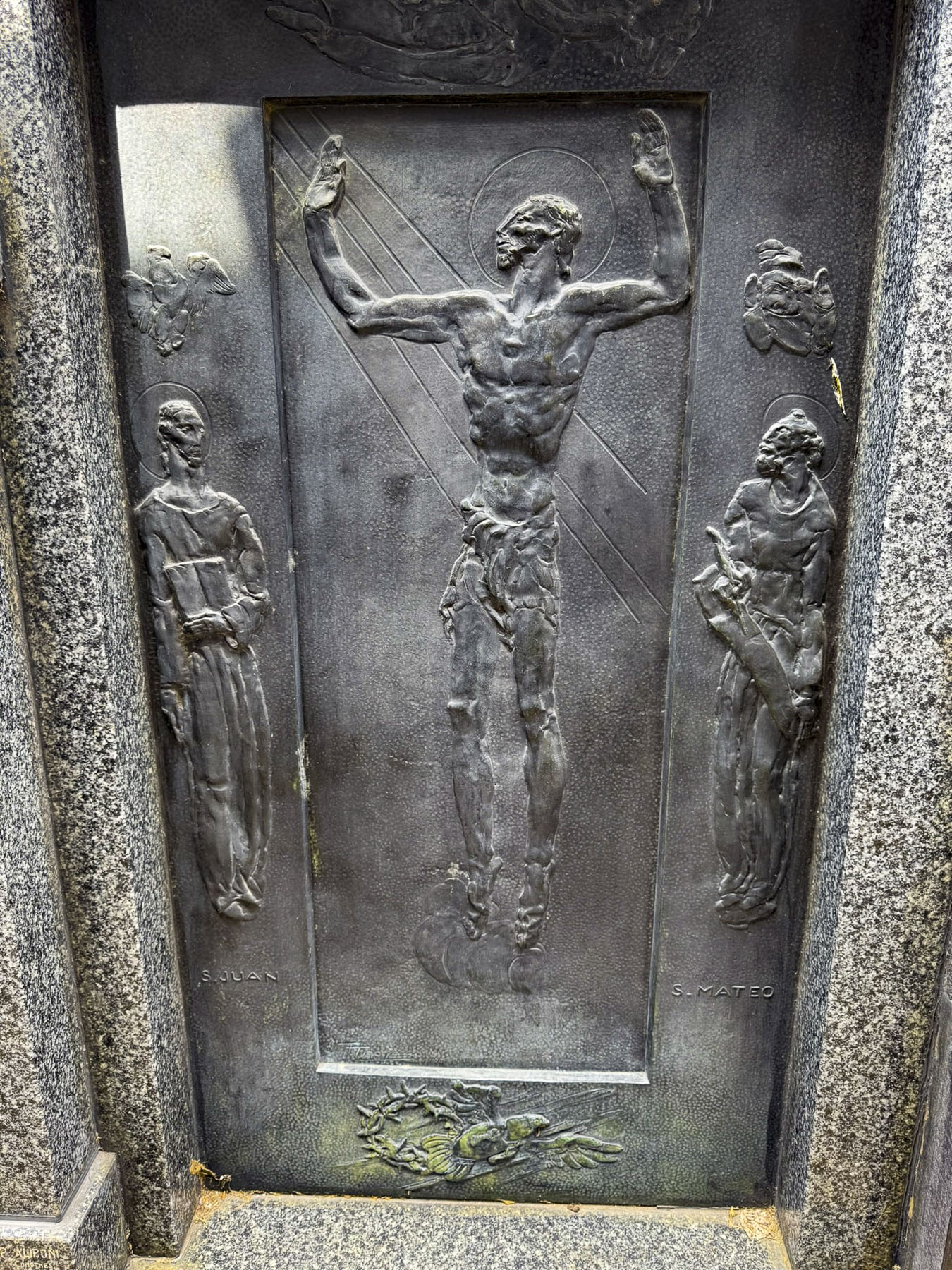
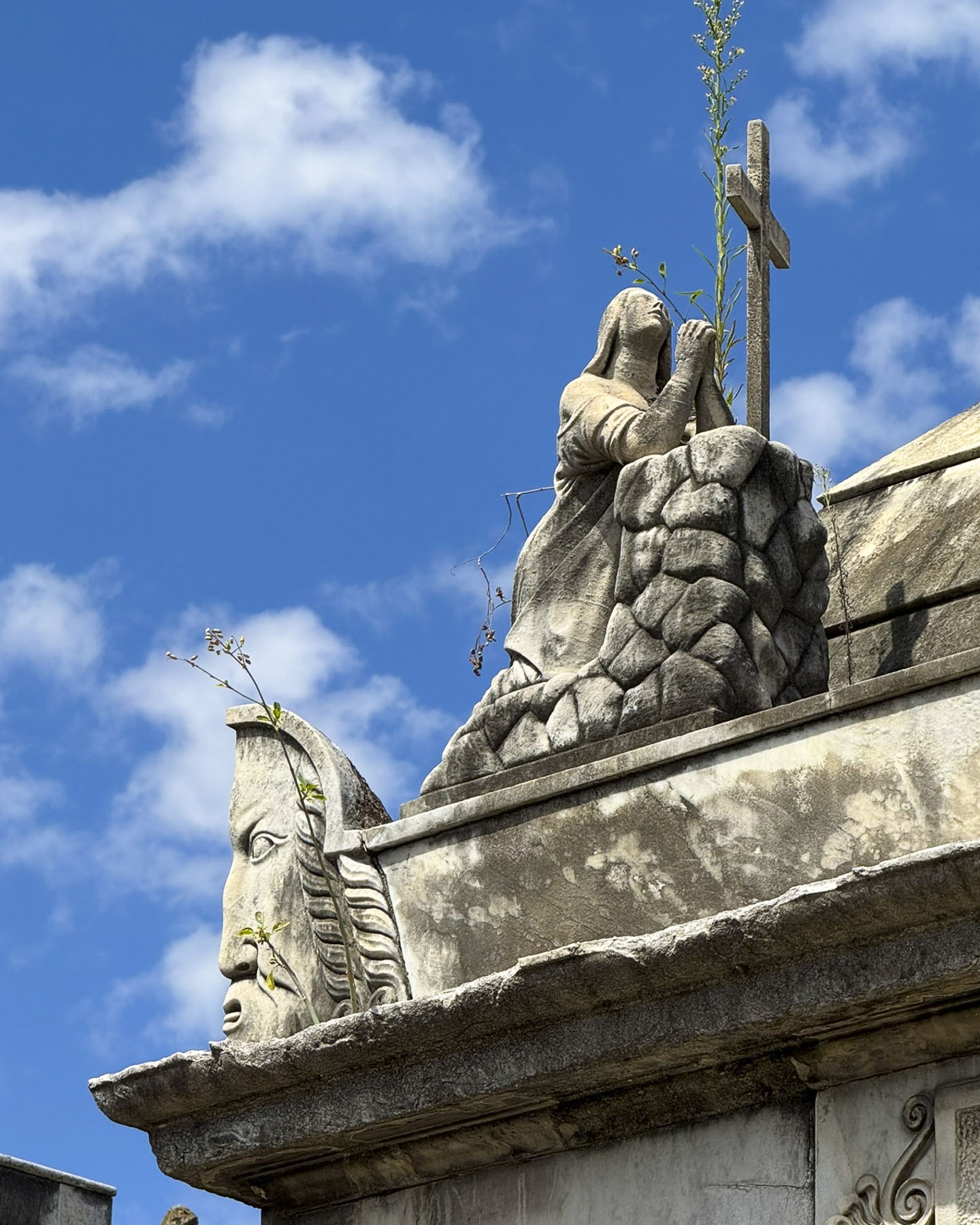
Many had small bronze plaques attached to the side of their tomb, hinting at the deceased’s illustrious career. Several had death masks protruding from the side of their mausoleums. The first one we happened across suddenly as we rounded a corner, and the very life-like stone face protruding from the side of a tomb, literally scared the wits out of me.

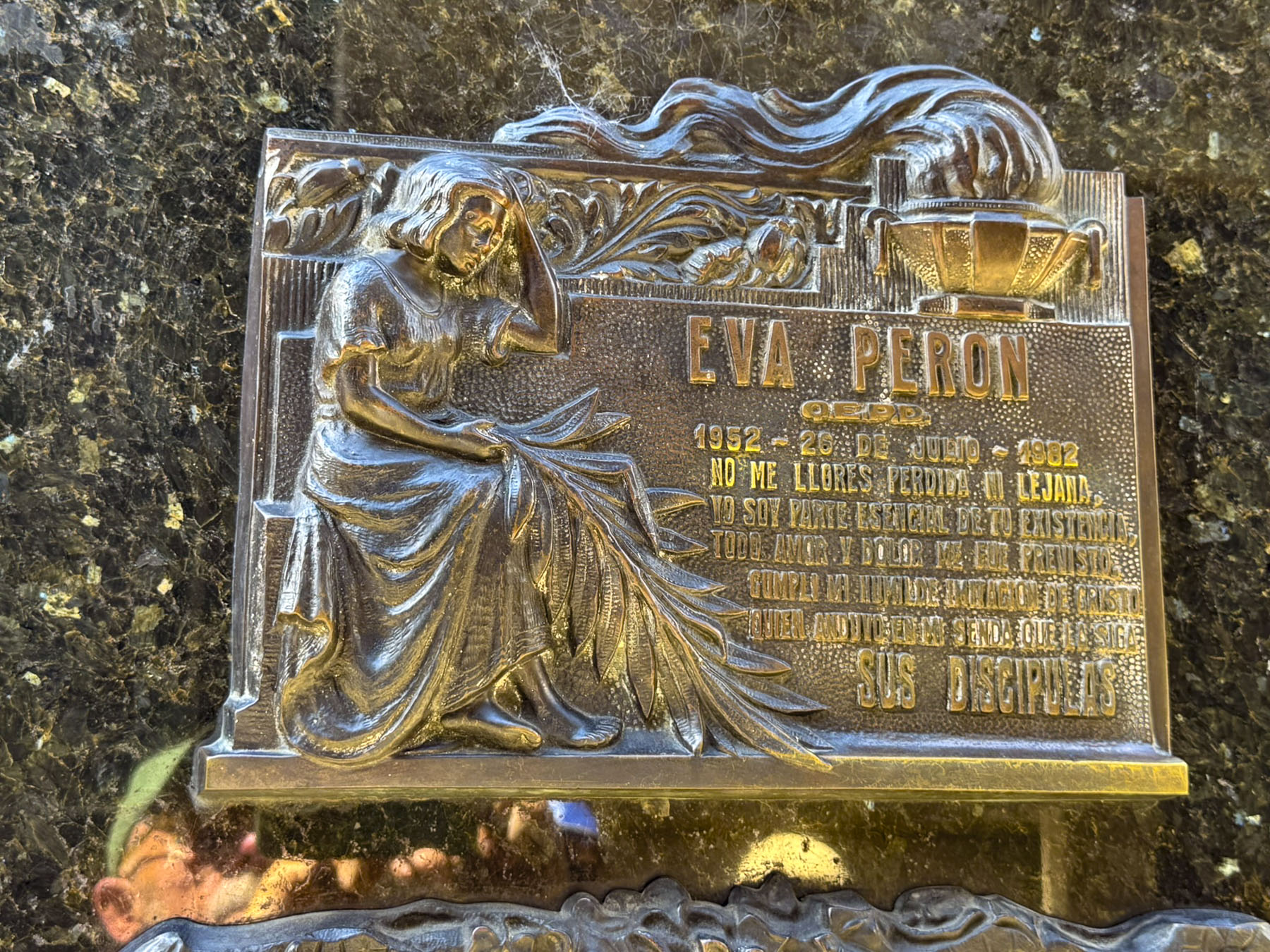
Surprisingly, Evita Peron’s tomb was one of the simplest structures. Immortalized since the Broadway musical “Evita,” by Andrew Lloyd Webber and Tim Rice opened its curtain in 1976, and the following 1996 movie starring Madonna, folks have been intrigued by the controversial legacy of Eva Duarte. It is the rags to riches story of a poor country girl, the illegitimate daughter of a wealthy rancher, who moved at the age of 15 to Buenos Aires and found fame as a radio and film actress, which resonated in the barrios of the “Paris of South America.” She found love at the age of 26, marrying 48-year-old Colonel Juan Perón, in 1945, two years before he was elected President of Argentina.

Passionate and combative, as Argentina’s First Lady she used her influence to champion social justice and worker’s labor rights, and was endeared to the less fortunate who saw her as the voice of the people. Her early death at the age of 33 from cancer saddened the nation and calls were made for her canonization. Flags across the country flew at half-mast for ten days. Blocks around the Presidential Palace were filled with mourners, and an estimated 3 million people watched the horsedrawn caisson carry her coffin through the streets of the city during her state funeral. Her embalmed body in its glass coffin was displayed for two years in her office in the Ministry of Labor building, as plans for a memorial that was taller than the Statue of Liberty were made.

After a 1955 military coup Juan Perón fled to exile in Spain, and the new military dictatorship secretly disappeared Evita’s corpse for 16 years. First it was secreted away in various locations across Buenos Aires until one “officer mistakenly shot his pregnant wife while guarding the corpse in his attic.”  The military dictatorship then enlisted the “covert help of the Vatican” to hide her body away in a crypt in Milan, Italy’s famous Cimitero Monumentale, for 16 years under a false name. In protest “Where is the body of Eva Perón?” was spray painted on walls all across Argentina.

In 1971, Evita’s body was exhumed and flown to Spain where Juan Perón and his third wife allegedly kept the “coffin on display in their dining room.” In 1973 Peron returned to the Presidency of Argentina, with his third wife as Vice President, but died a year later. The saga continued to get weirder when an anti-dictator revolutionary group, the Montoneros, “stole the corpse of General Pedro Eugenio Aramburu, whom they had also previously kidnapped and assassinated,” to use as a bargaining chip to get the third Mrs. Peron to return Evita’s body to her beloved country. Subsequent governments have gone to great lengths to secure Evita’s hopefully final resting place, in a subterranean tomb with trap doors and false caskets to deter grave robbers, within her father’s Duarte family mausoleum in Cemeterio de la Ricoleto.

Across the street was the Gomero de la Recoleta – Árbol Histórico, a majestic 225-year-old rubber tree planted in 1800. Over the decades its huge buttress trunk has grown to support a 50m (164ft) wide canopy, with tree limbs so long that wooden poles and sculptures are needed to support their weight.

Behind it, we found a reprieve from the hot February afternoon, and an early dinner at Bartola, which served an excellent lemonade, and has pleasant décor along with a rooftop terrace.

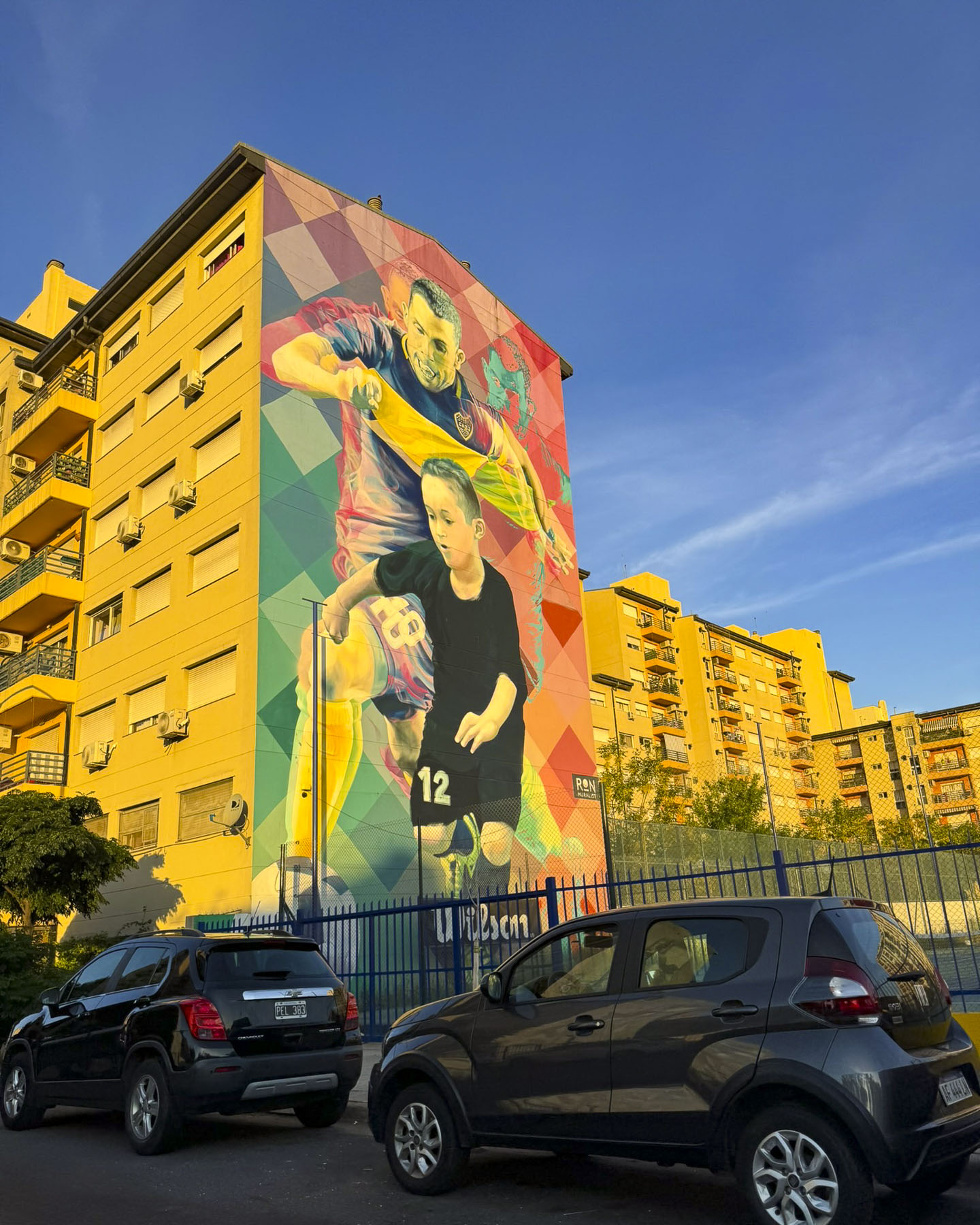
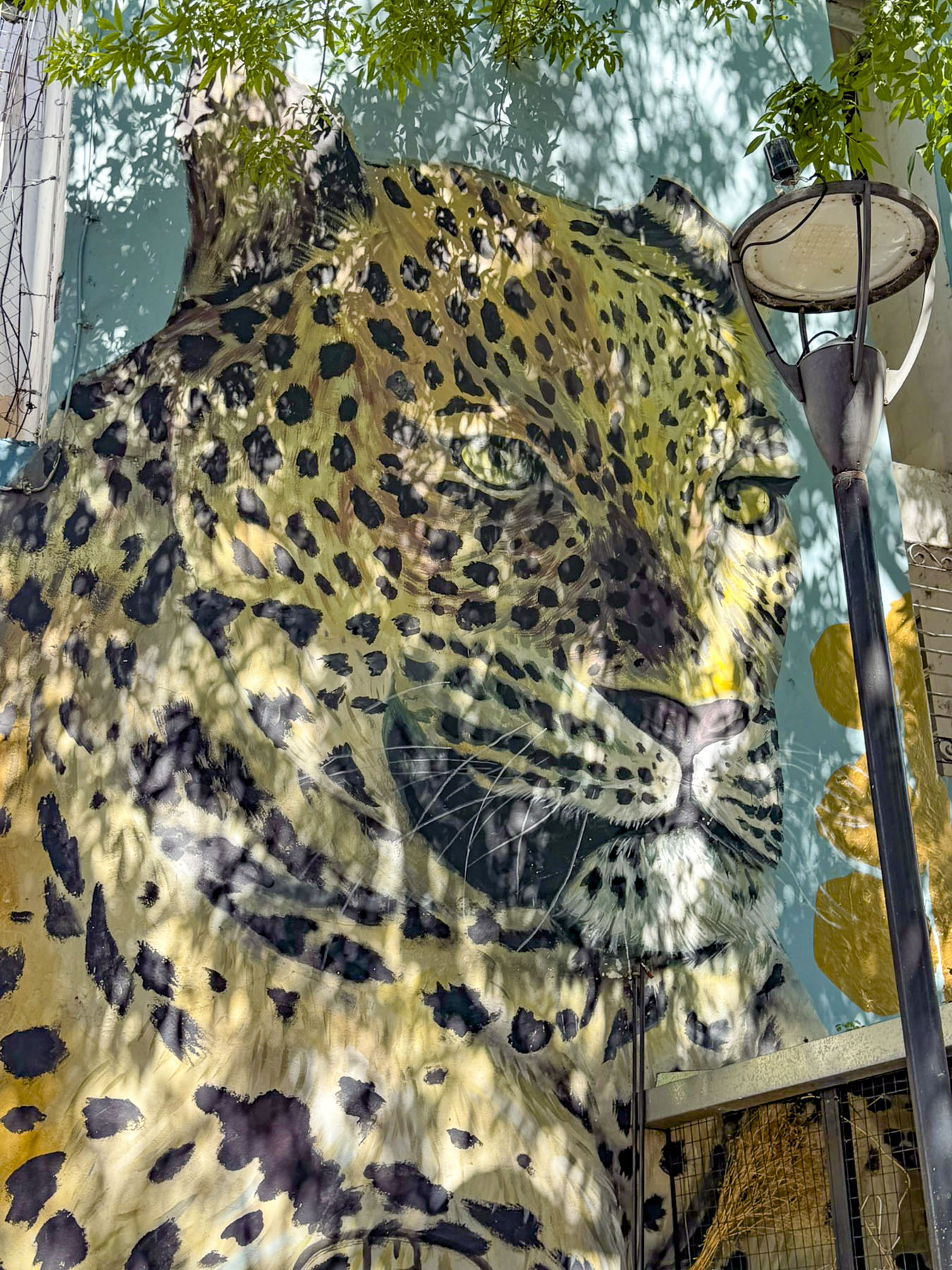
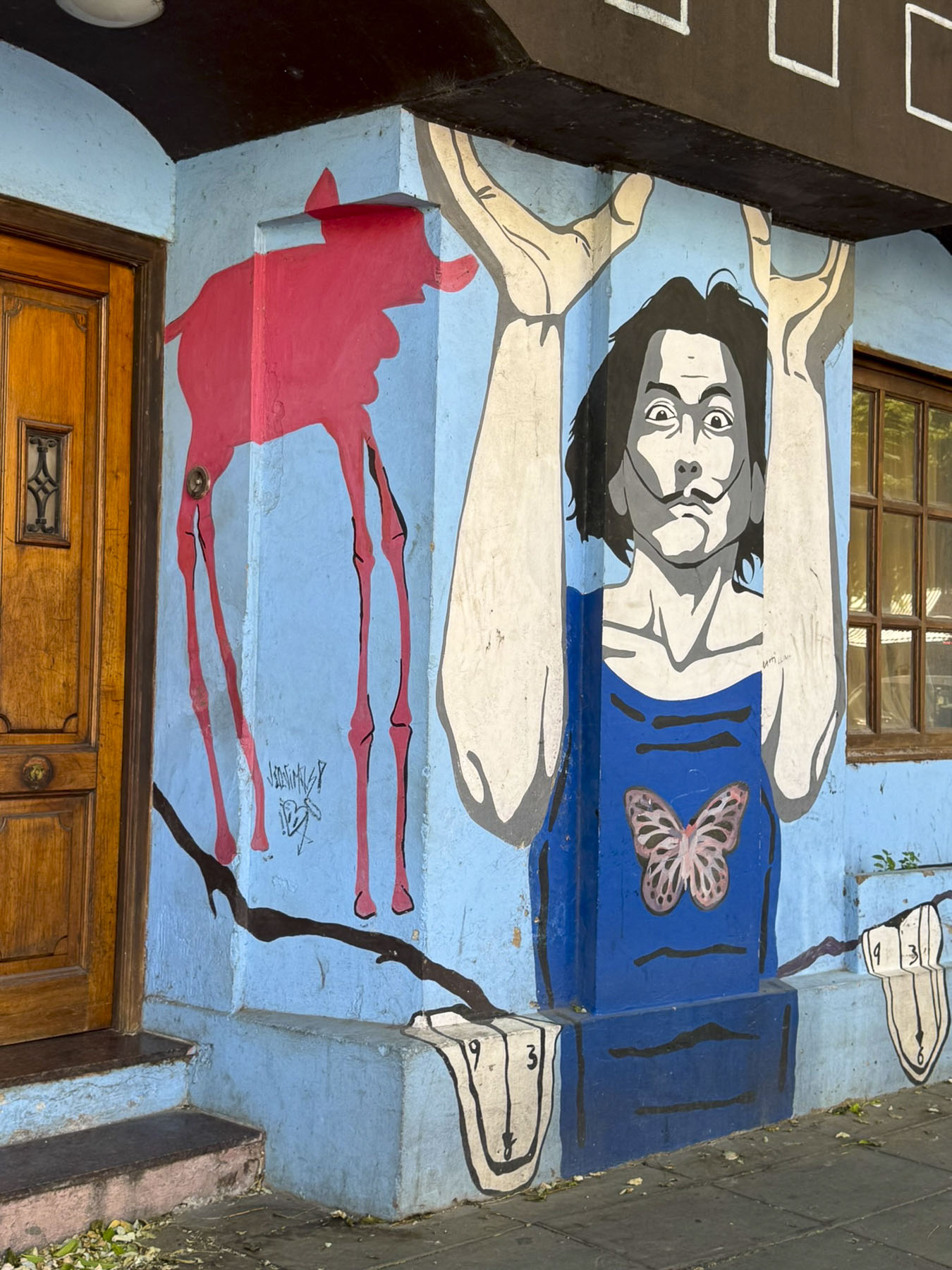
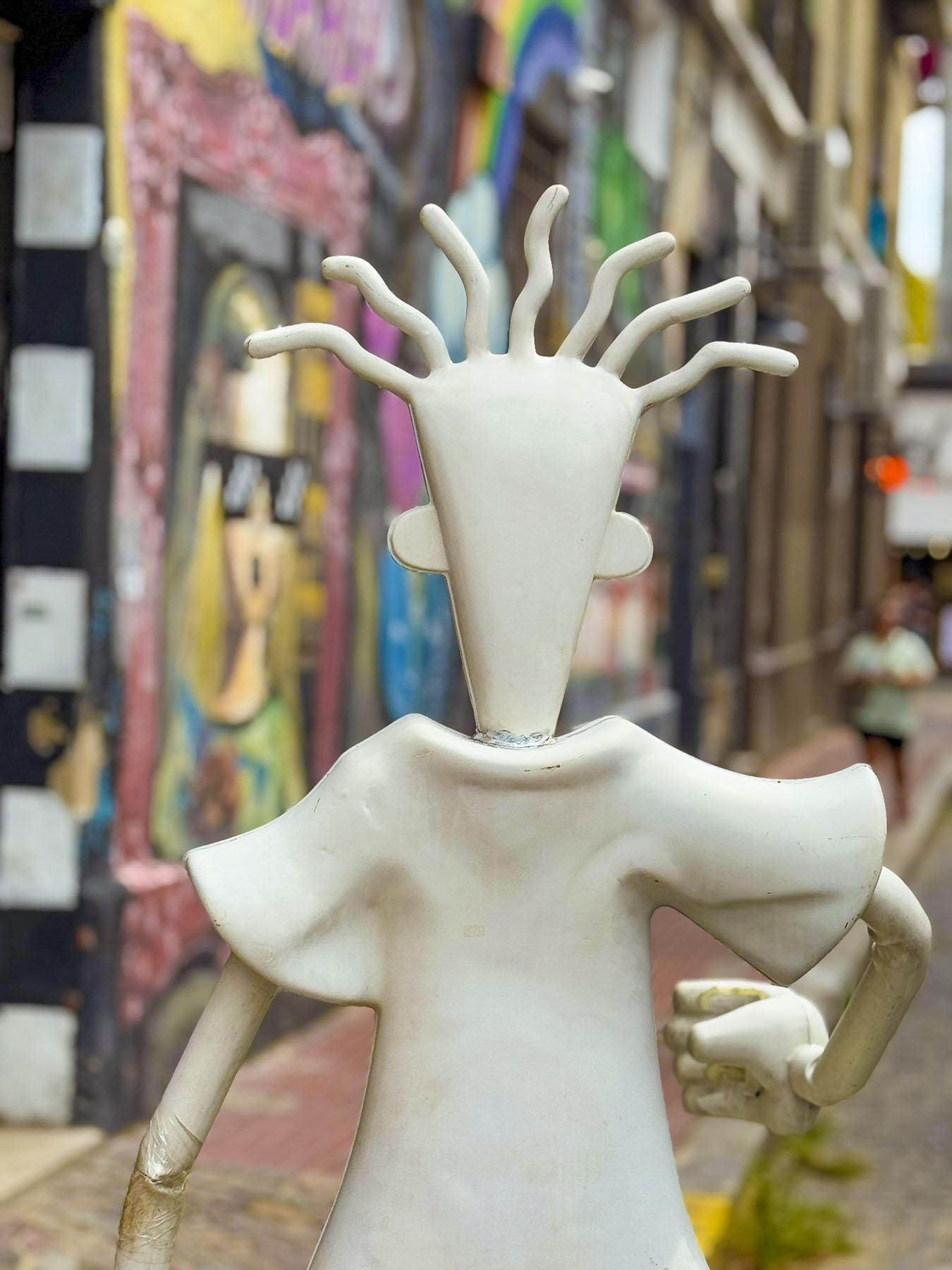
Buenos Aires is full of interesting street murals, and we spent the next morning wandering about searching for them.

That afternoon, after exploring farther afield from our hotel, we took a rideshare across the city to La Boca, a colorful neighborhood that is also the location of La Bombonera stadium, home of the world-famous Boca Juniors football club, the team on which some of Argentina’s legendary football players first played. Our route eventually took us below the elevated portion of Rt1 amidst a forest of concrete pilings painted with a vast array of creative street murals in an area named Silos Areneros. We found the area intriguing, but a tad sketchy, so we kept going.

La Boca was originally Buenos Aires’ first port at the mouth of the Riachuelo River, as it flows into the Río de la Plata. It has always been a bustling working-class neighborhood, “filled with all kinds of people, dockworkers, fishermen, musicians, prostitutes, thieves, socialists, anarchists, and artists.” But it grew substantially with the arrival of new immigrants in the 1800s and early 1900s.  Hastily constructed tenements called conventillos were built with galvanized metal walls and roofs and brightly painted with whatever left over colors were available from the shipyards, in an effort to cheer up the area.

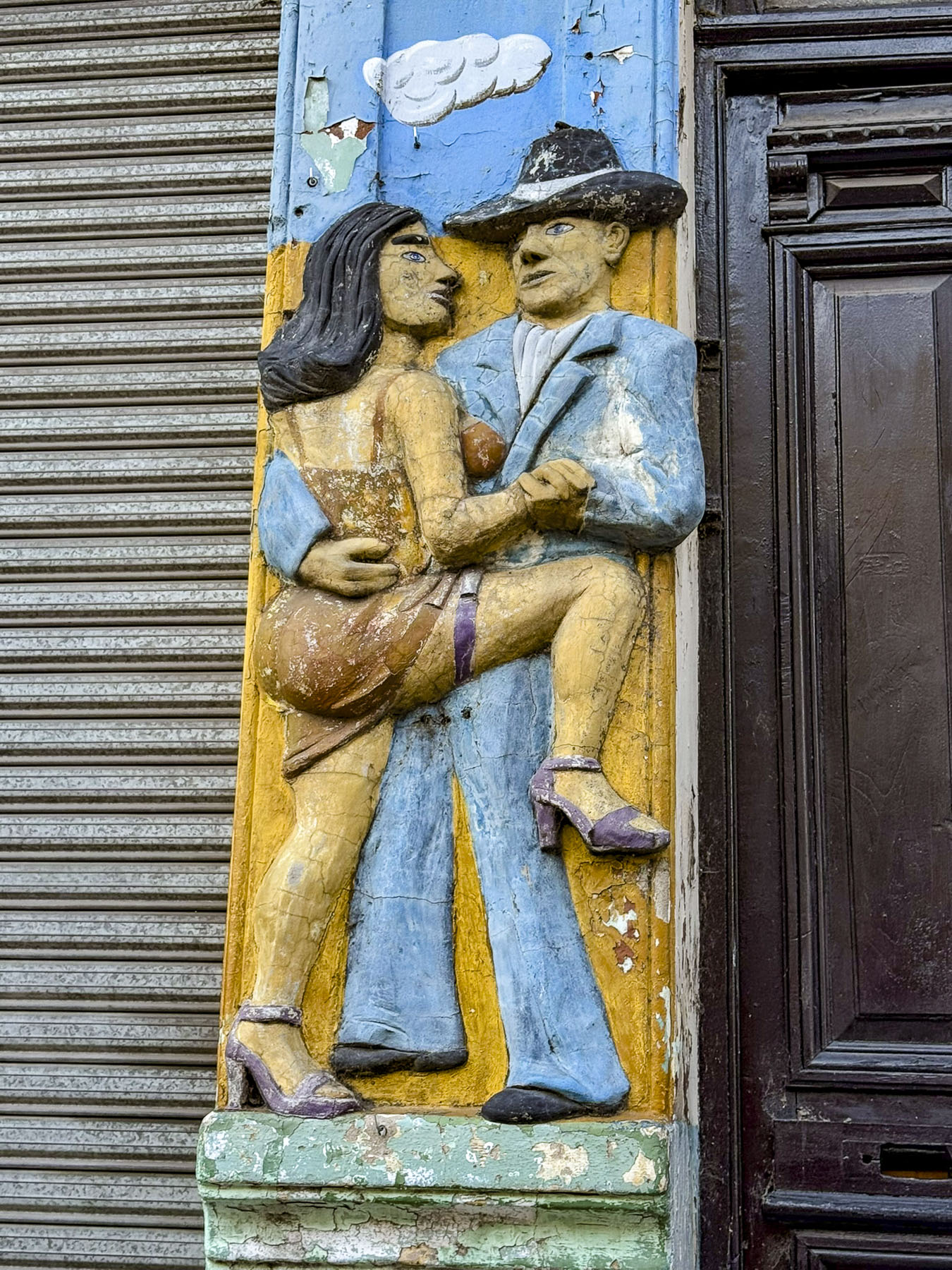
La Boca is one of the city’s vibrant neighborhoods where tango originated on its streets during the hot summer months and was perfected in the bars along Caminito and Magallanes during winters of the late 1800s.

Today, satirical figures adorn many of the balconies along Caminito and the adjacent streets, and poke fun at politicians, rival football teams or celebrities. Though we think you need to be Argentinian to fully appreciated the humor behind them.

A mural at the end of Caminito commemorates the Bomberos Voluntarios de La Boca (La Boca Volunteer Firefighters), Buenos Aires’ first fire brigade, formed in 1884.

Sadly, we found the wonderfully colorful area was oversaturated with cheap tourists’ shops heavily devoted to everything football, especially Lionel Messi’s #10 blue and white football shirt, which was available everywhere.

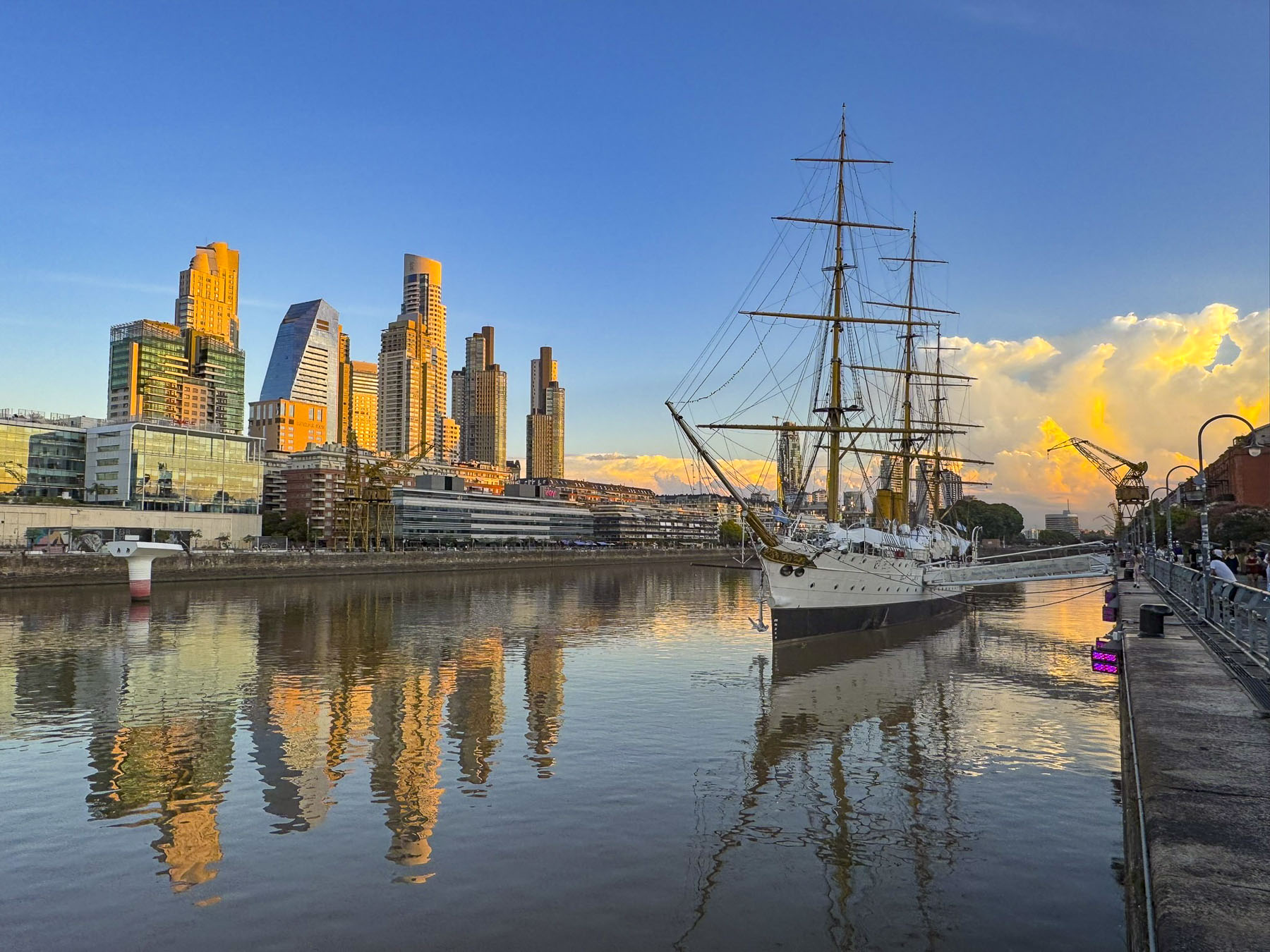
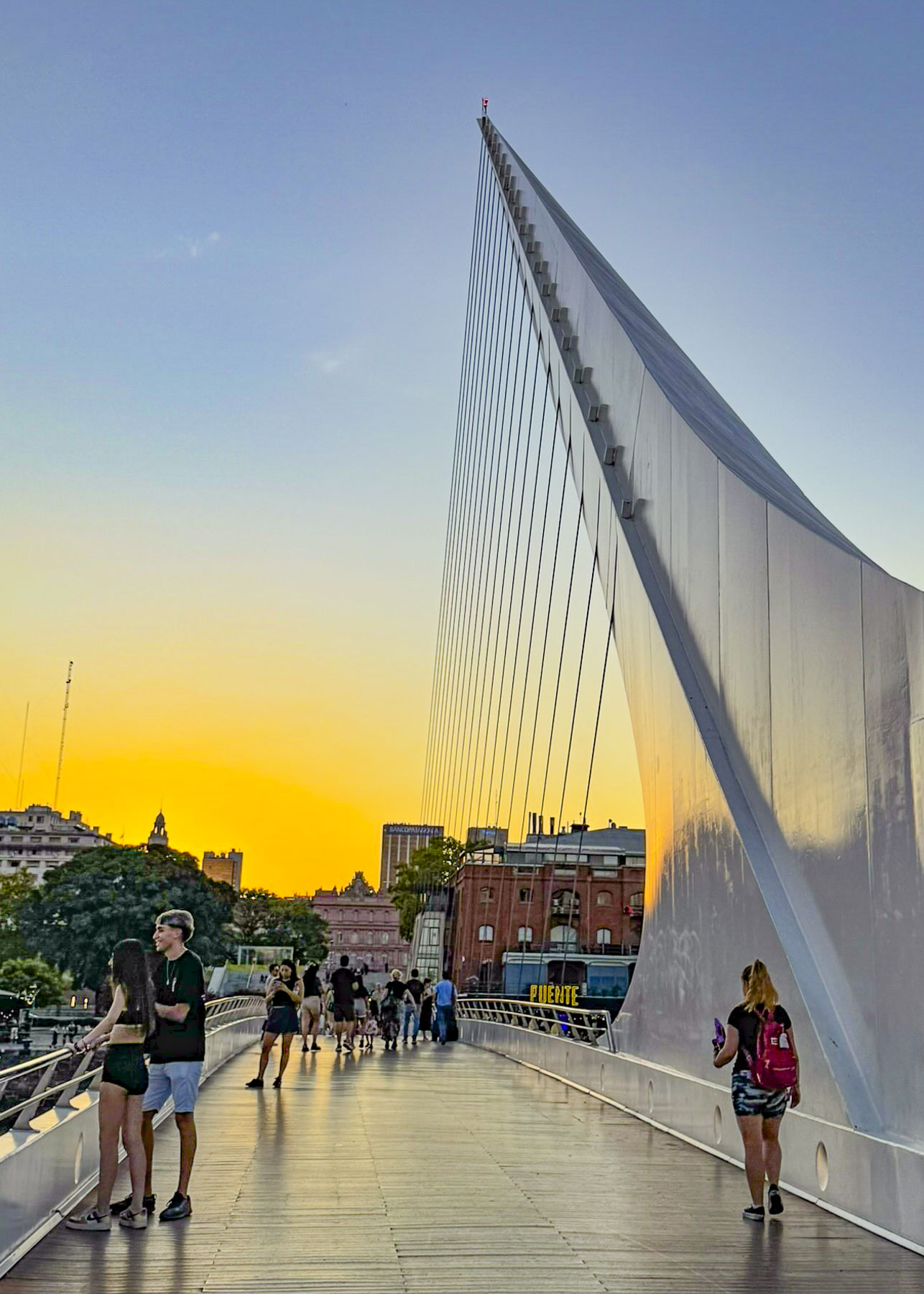
Afterwards we headed to the dockside area of Puerto Madero. Built in the late 18th century the port helped support Argentina’s economic growth during WWI and WWII as the country’s beef and food stocks were sent to a war-torn Europe. But the viability of the port declined as the size of merchant ships became larger and containerization took hold, until eventually the port was abandoned for many decades. A masterplan for the port’s redevelopment was realized in 1989 with plans to renovate some of the old warehouses along one side of the quay into restaurants and shops, while land on the other side would be developed into a mixed-use area of offices and residential towers, with the two sides connected by pedestrian-only bridge.

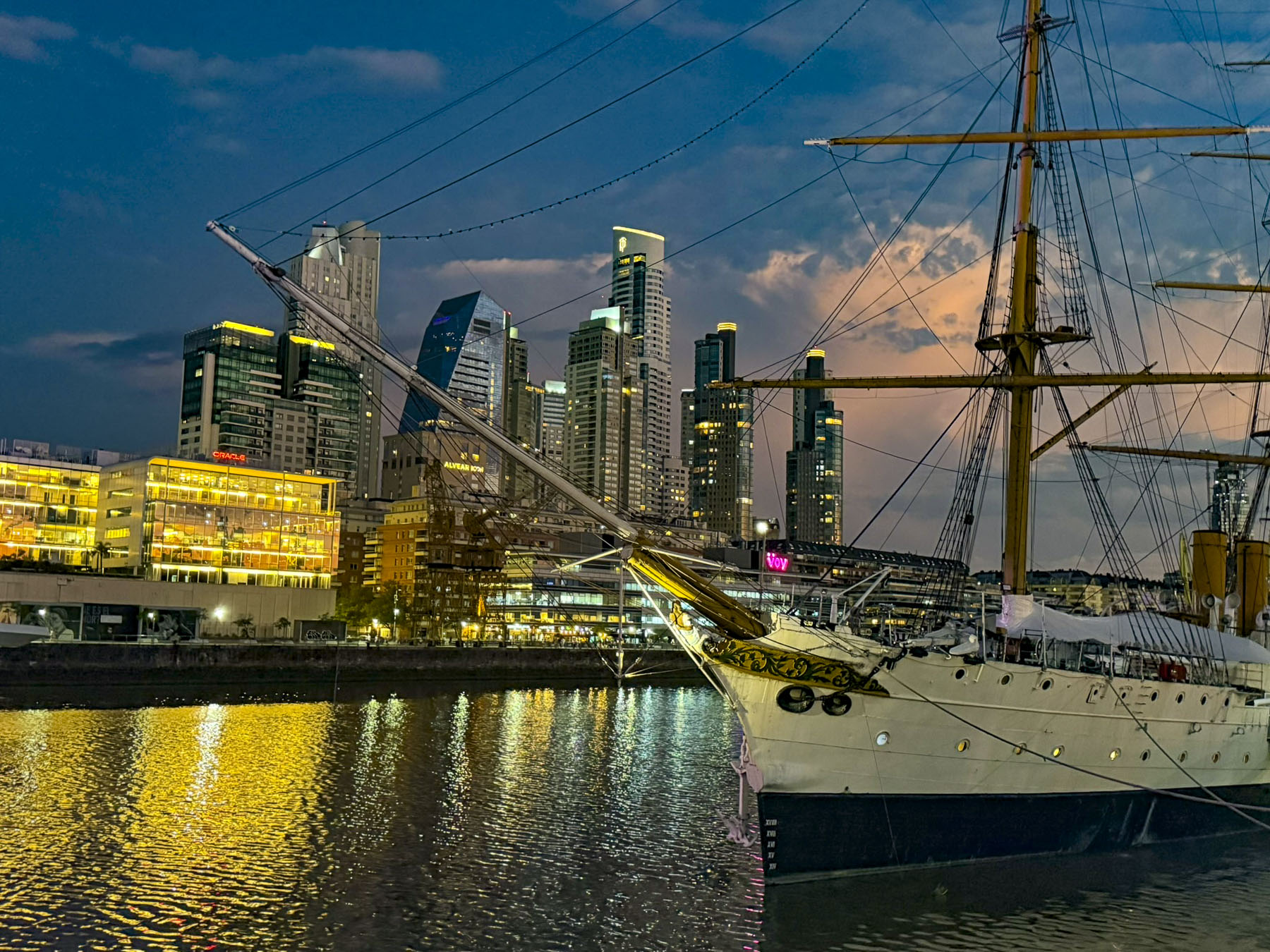
The redevelopment along the Puerto Madero waterfront was a great success and created a strikingly beautiful, new waterfront neighborhood. Its reflective skyline and restaurants along the old docks continue to be destinations for both locals and tourists. Us included! It was a great place to people watch as folks strolled along the quay and over the footbridge. Towering cumulonimbus clouds glowed with golden light, as the sunset silhouetted the “Presidente Sarmiento,” an old three-masted sailing ship that is now a nautical museum.

We both grew up in the suburbs of New Jersey and worked in New York City for a while, but living in Manhattan never appealed to us. It wasn’t until we started traveling and experienced living in some foreign cities through short-term rentals that we grew to appreciate the vitality that city life offers.

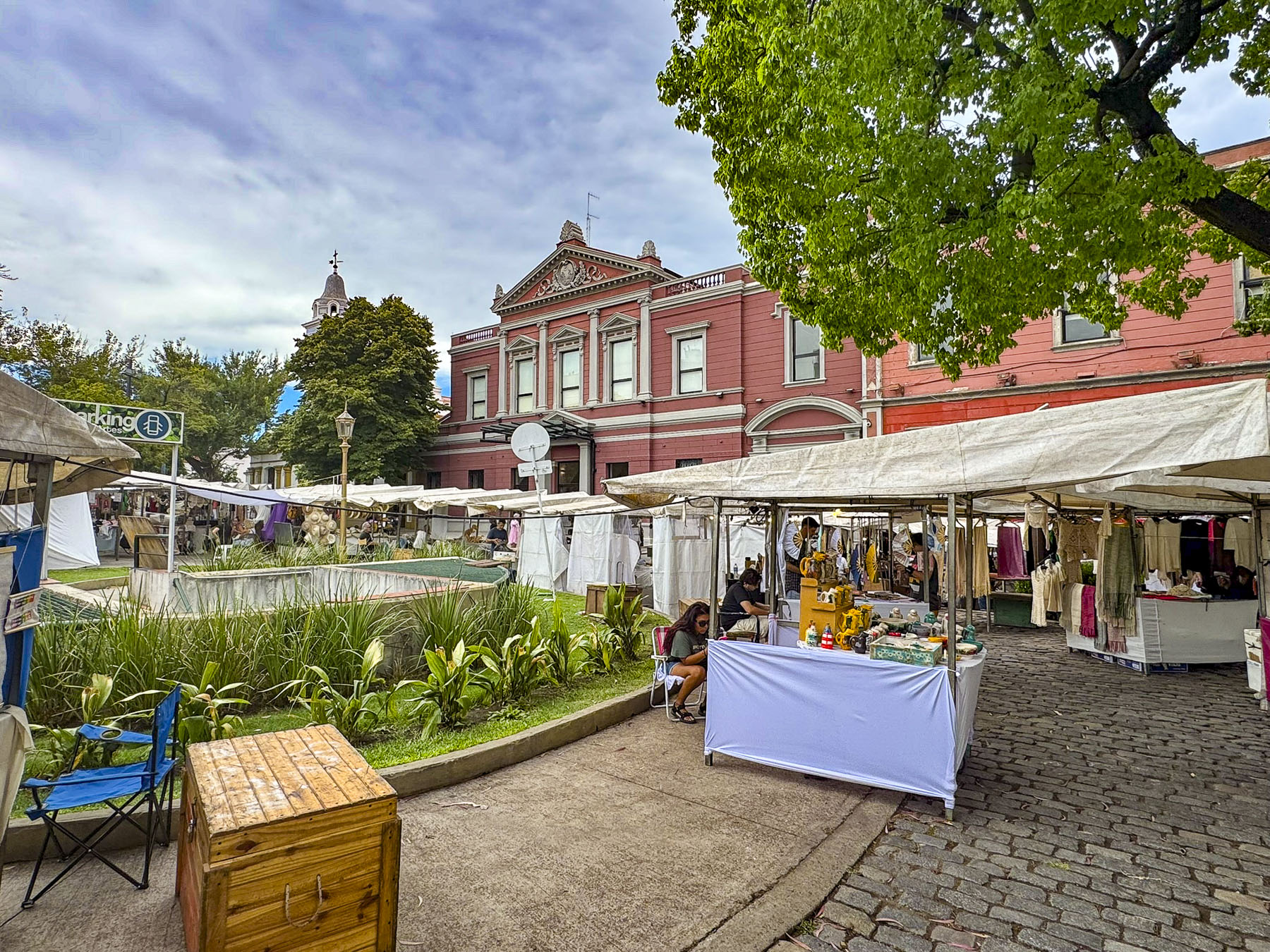
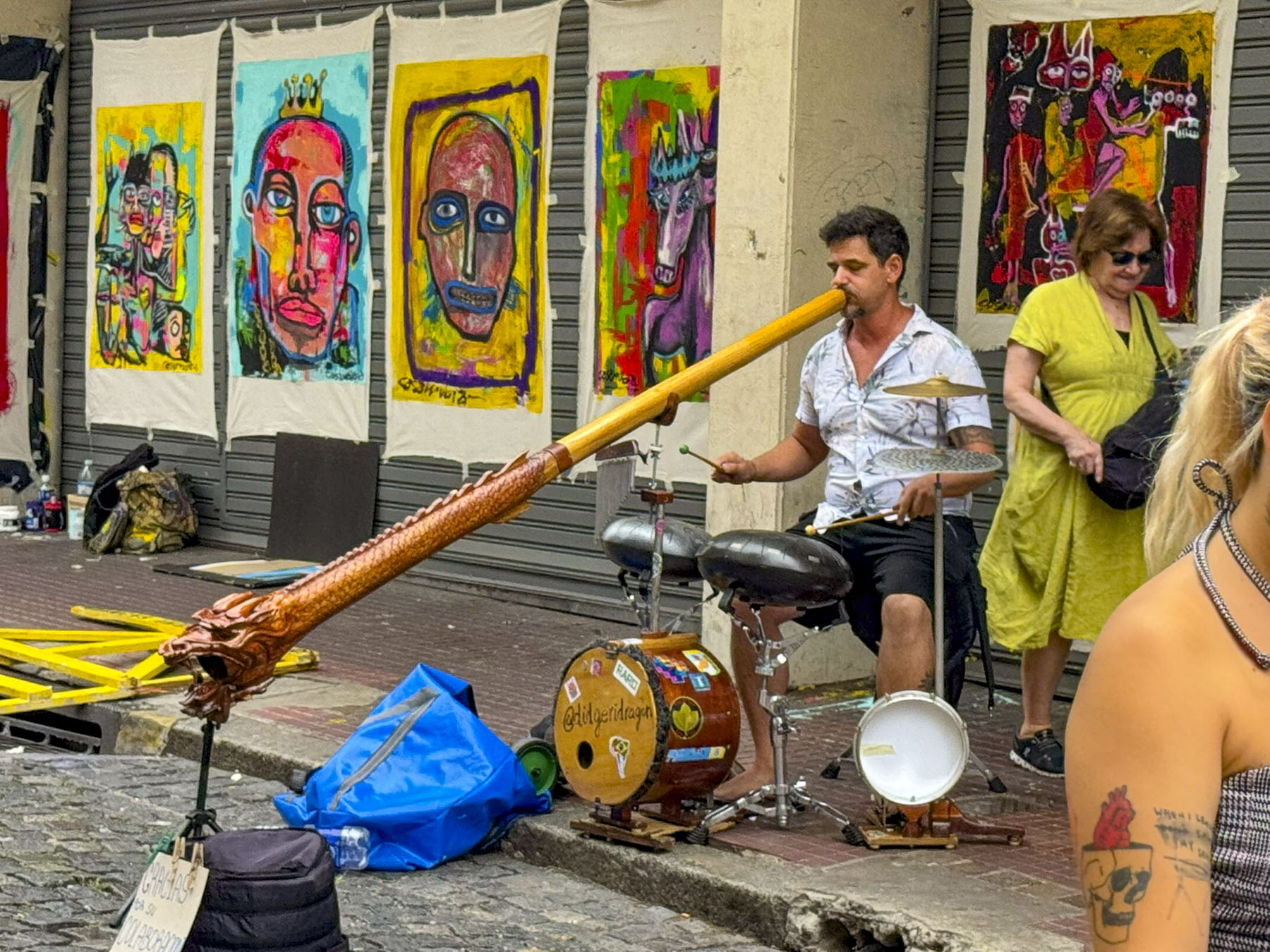
Mysteriously, overnight the Parque Intendente Torcuato de Alvear in front of the historic Centro Cultural Recoleta building was transformed into a sprawling art and crafts festival, that to our surprise happens every Saturday and Sunday. Artisans’ tents and tables lined nearly every path through the sprawling park that was filled with folks shopping and buskers playing to the crowd. This was probably the best crafts market we’ve been to, as the quality and variety of items offered were very impressive. If our suitcases had been bigger we would have made lots more purchases.

For many years the Cultural Center was repainted frequently with colorful murals, which added a nice flair to its otherwise stoic facade. Sadly, this policy was discontinued in 2024, and the building is now covered in a monochromatic “Pompeyan Red.” The decision has received a mixed public reaction, but hopefully the verdict will be reversed in the future. The historic 1732 building was originally the convent of the Recoleto monks, for whom the Recoleta neighborhood is named, as well as part of Our Lady of Pilar Basilica, the second oldest church in Buenos Aires. Over the decades as the influence of the church waned after Argentina’s 1810 May Revolution the building was used as a hospital, military barracks, asylum, and an art school before being renovated into an exhibits and events space in the 1980s.  

That afternoon the tree lined blocks around Plaza Serrano and Plaza Armenia in the charming Palmero Soho neighborhood were so different from the high-rise towers of Recoleta, and reminded us of Barcelona & Madrid, with the wonderful mix of sidewalk cafés, along with trendy shops. Colorful street murals brightened many of the narrow alleys.

Across from Plaza Armenia we passed the Las Petunias restaurant which was full of lively diners at lunchtime.  But we continued our wanderings and returned around 15:00 when the restaurant was quieter, though there were still enough other people dining to make it a nice experience. We shared Los Tablones de Carnes for two. The grilled meats were excellent, and it was the best parrillada we had during our stay in Buenos Aires.

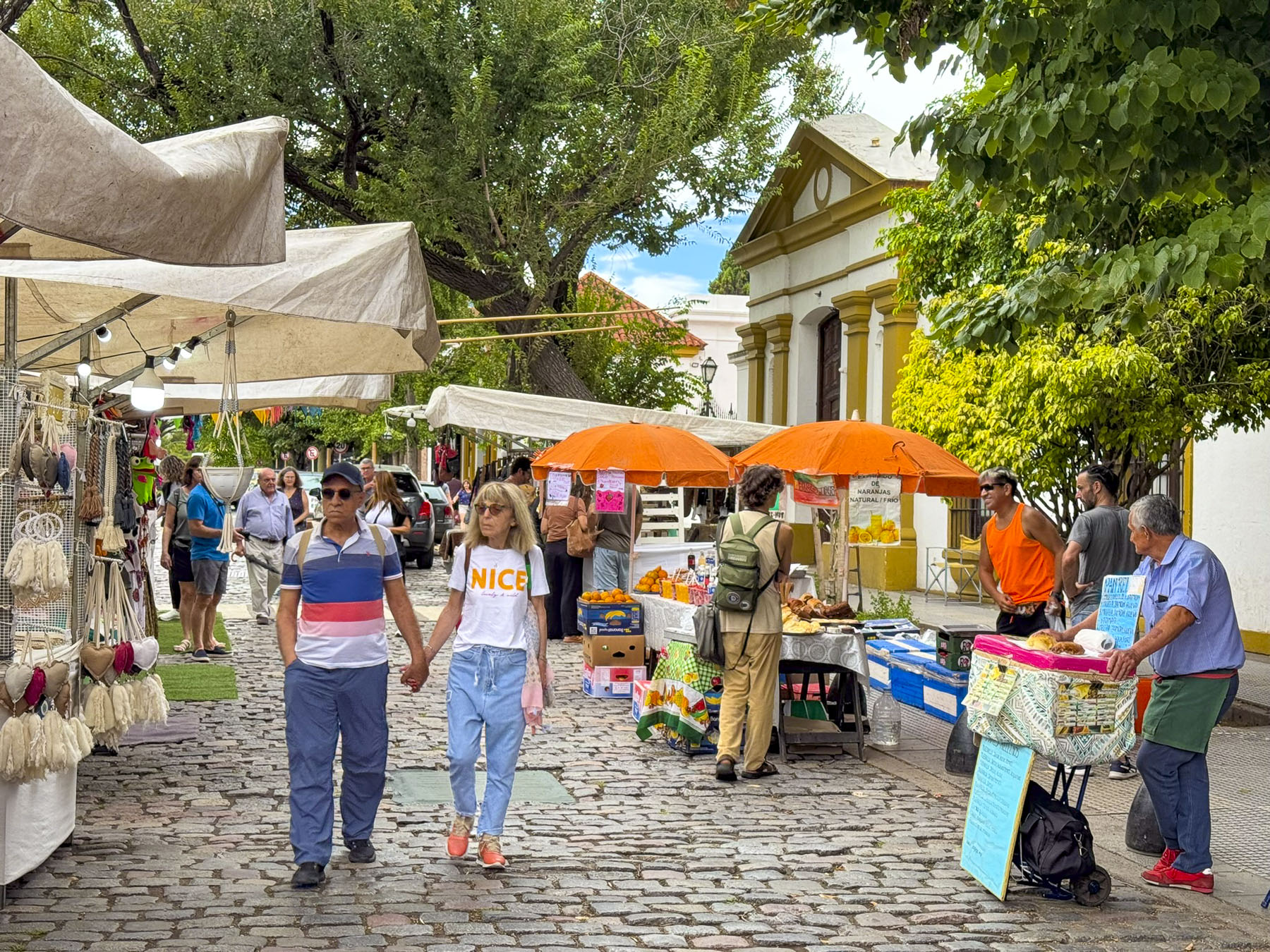
Sunday, we headed to the Feria de San Telmo, a weekly street fair that spans eleven blocks of Av. Defensa, a street known for its antique stores and art galleries. San Telmo is one of the oldest neighborhoods in Buenos Aires and has striven to retain its 19th and early 20th century character with well-preserved buildings.

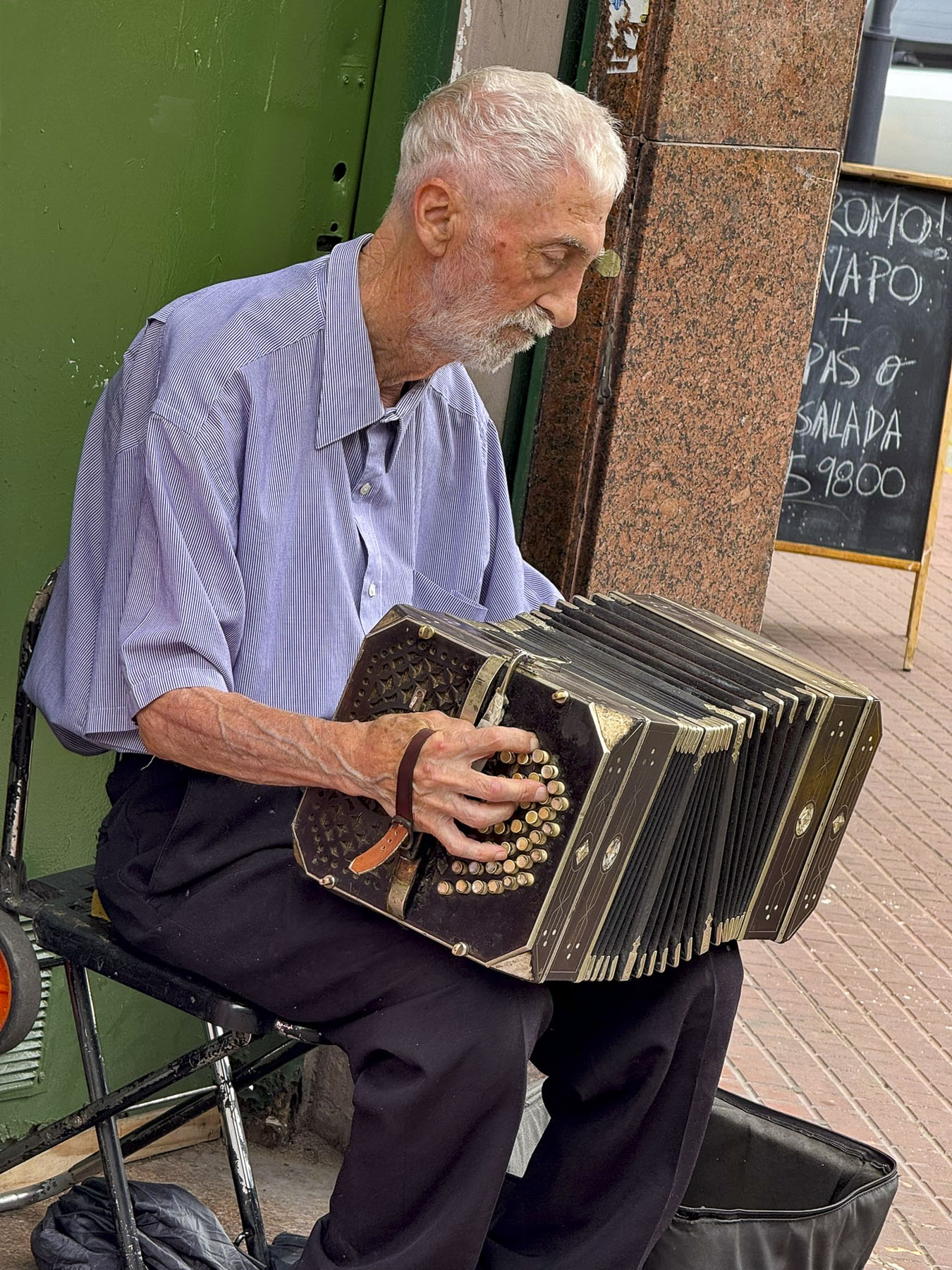
The street was full of activity, but the feira was really more like a flea market featuring clothing and everyday items with only a handful of artists’ and craftsperson’s tables mixed in between. Buskers worked the street corners, and a puppeteer dazzled a young audience. Occasionally a street mural graced a side street.

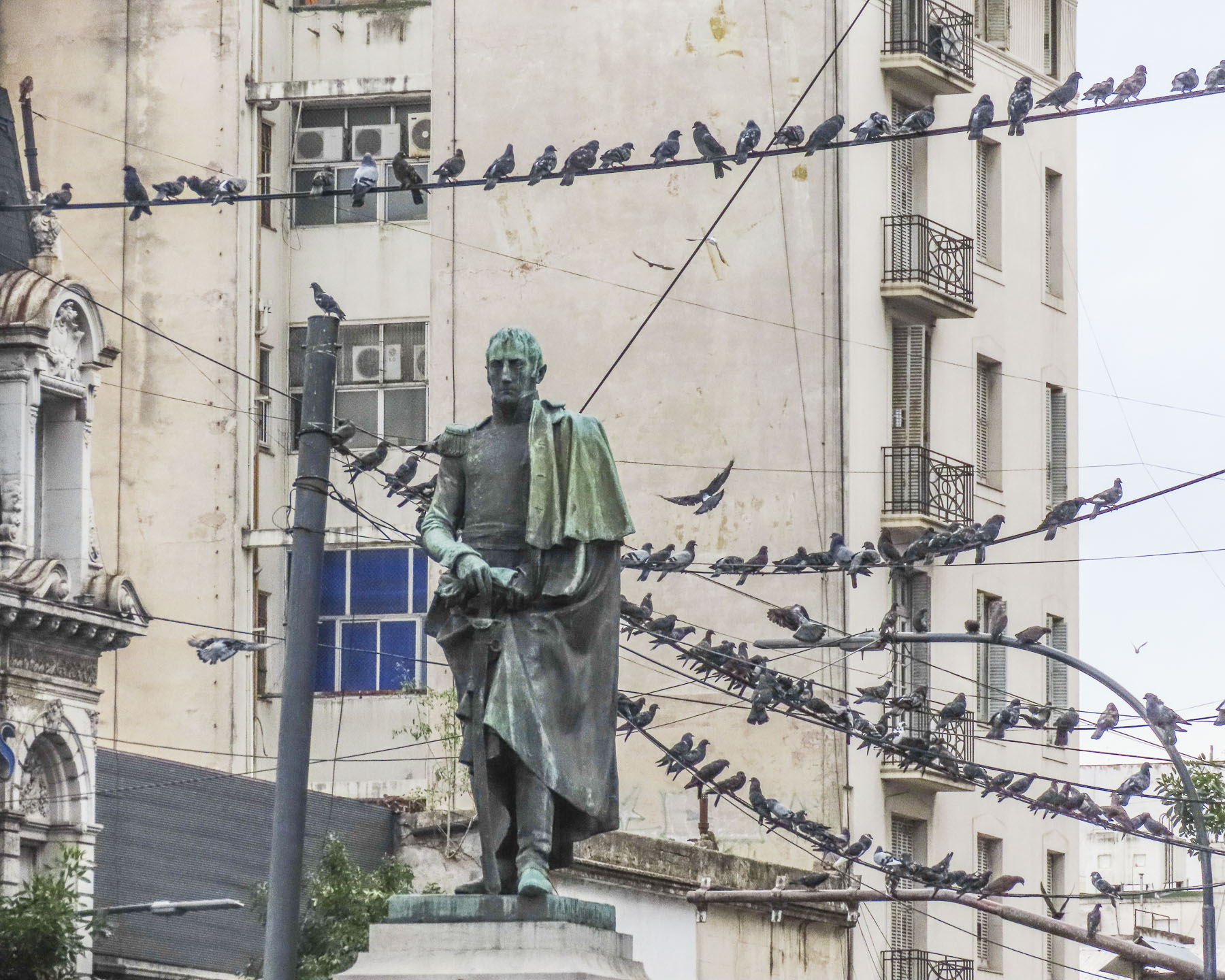
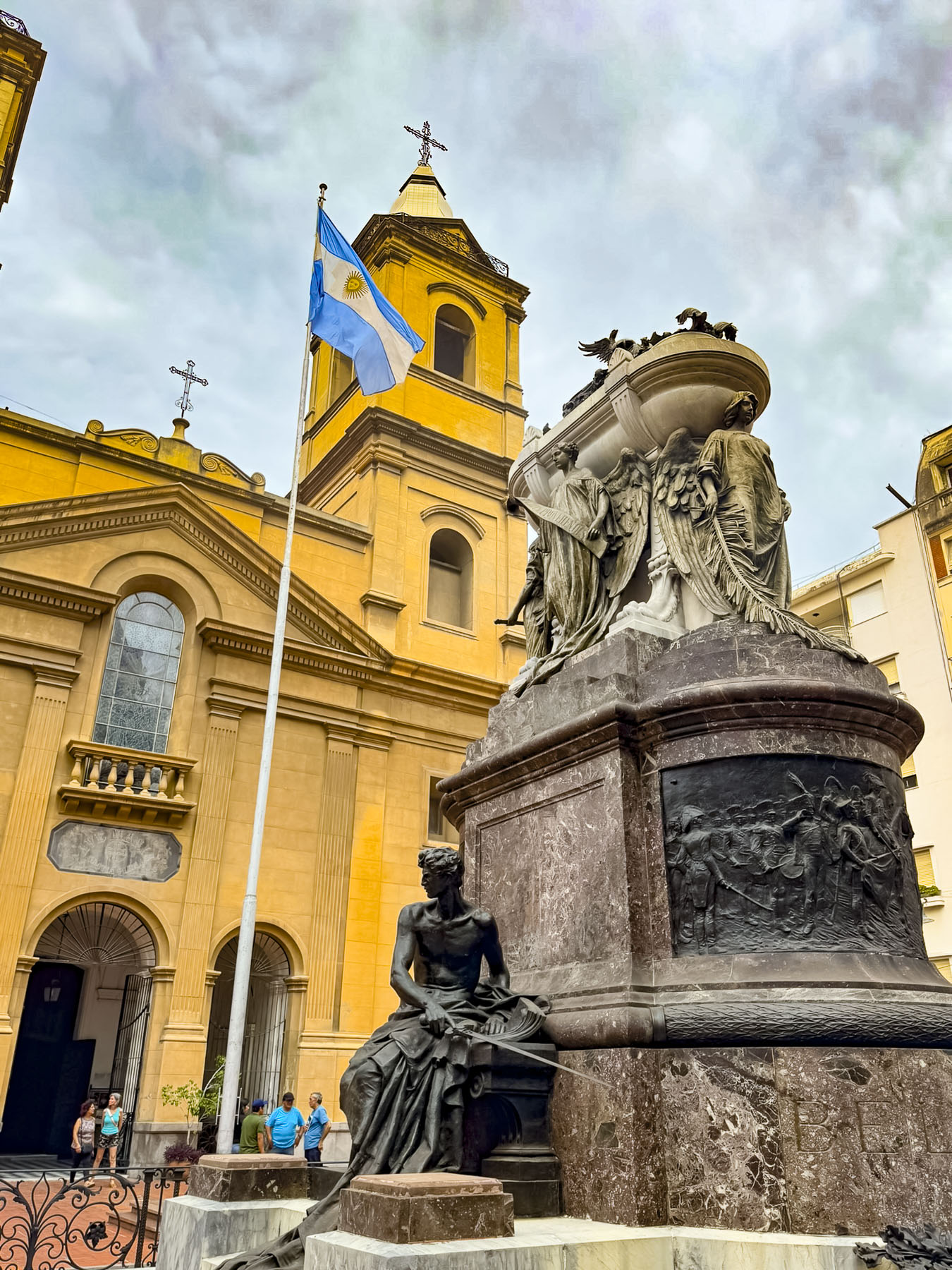
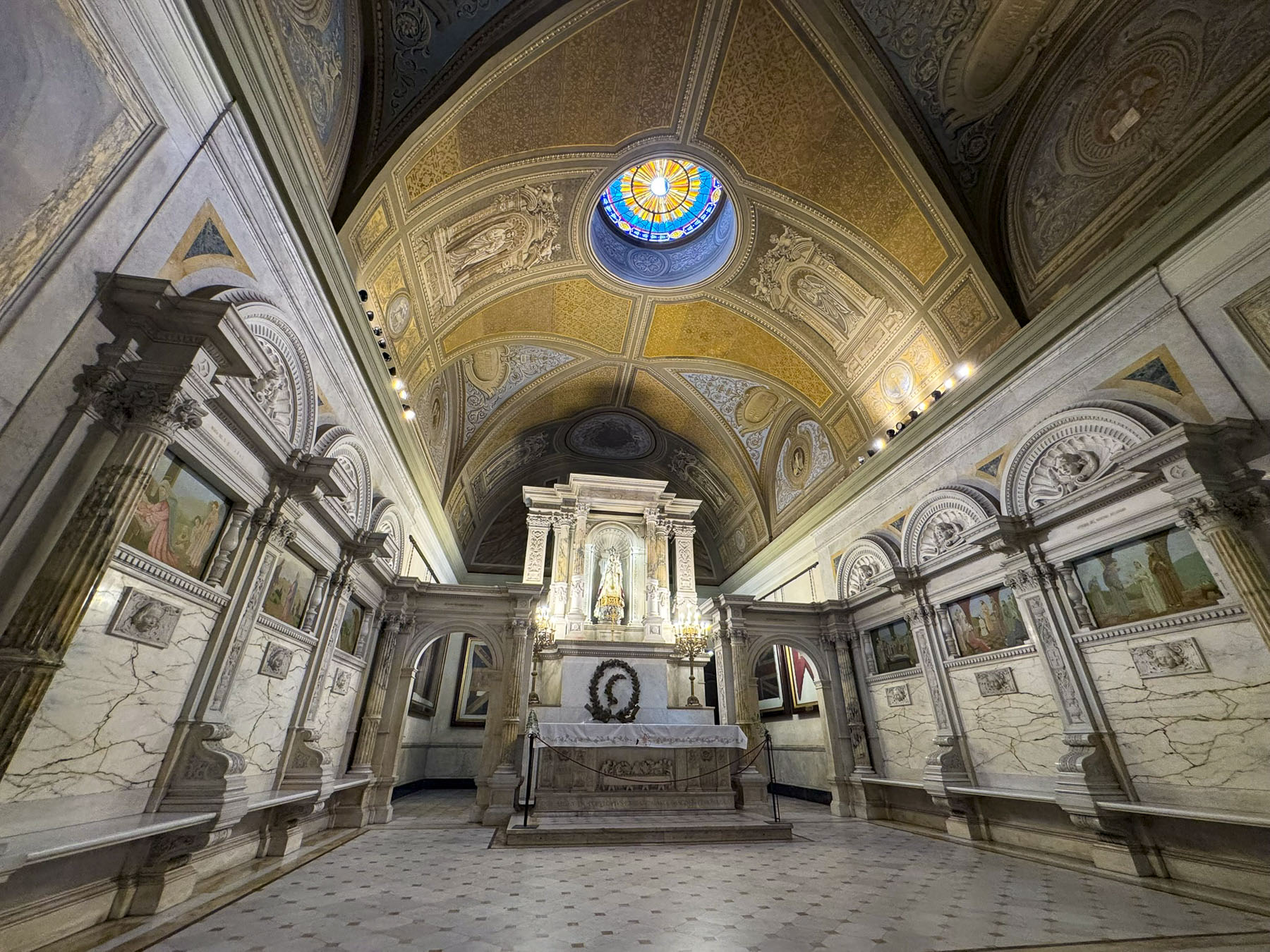
Along the way the ornate mausoleum of General Manuel Belgrano stood beneath the towers of Basílica Nuestra Señora del Rosario. The church was constructed in 1753 and British soldiers sought sanctuary here after a failed invasion of the city in 1807. General Belgrano was one of the founding fathers on Argentina’s independence and is also credited with designing the country’s flag.

The Mercado San Telmo was our destination for lunch. It is a cavernous hall set in an 1897 building that resembles a Victorian era train station with an ornate iron superstructure supporting a glass roof.  The hall’s traditional produce stands, butchers and bakers, now share the space with takeaway restaurants, and antique stalls. But it was crazy with activity on a Sunday afternoon, and we vowed to return if we had the chance. Instead, we ate at Havanna, a small café chain across Buenos Aires, that we had eaten at the day before in Palmero Soho, and enjoyed.

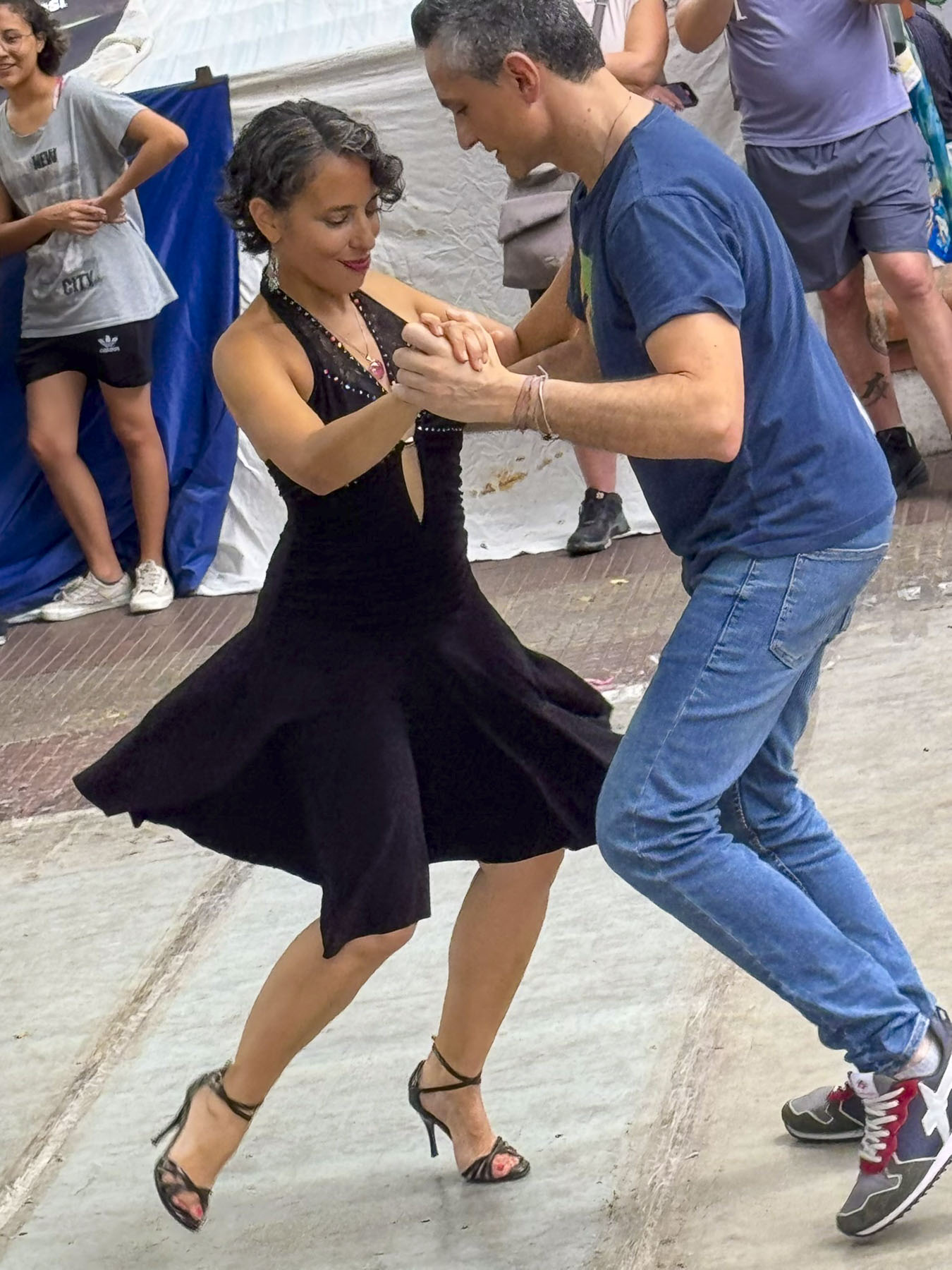
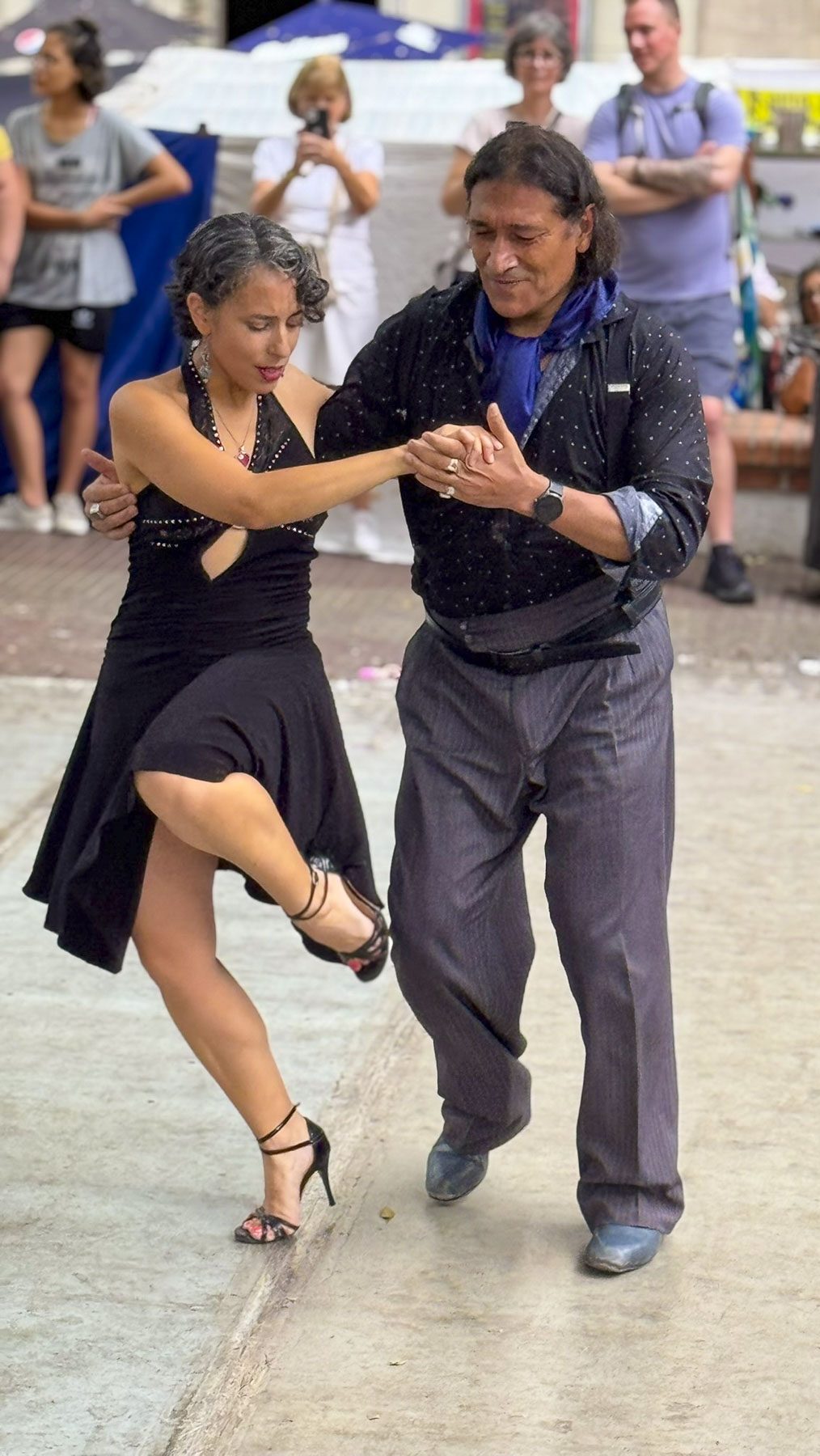
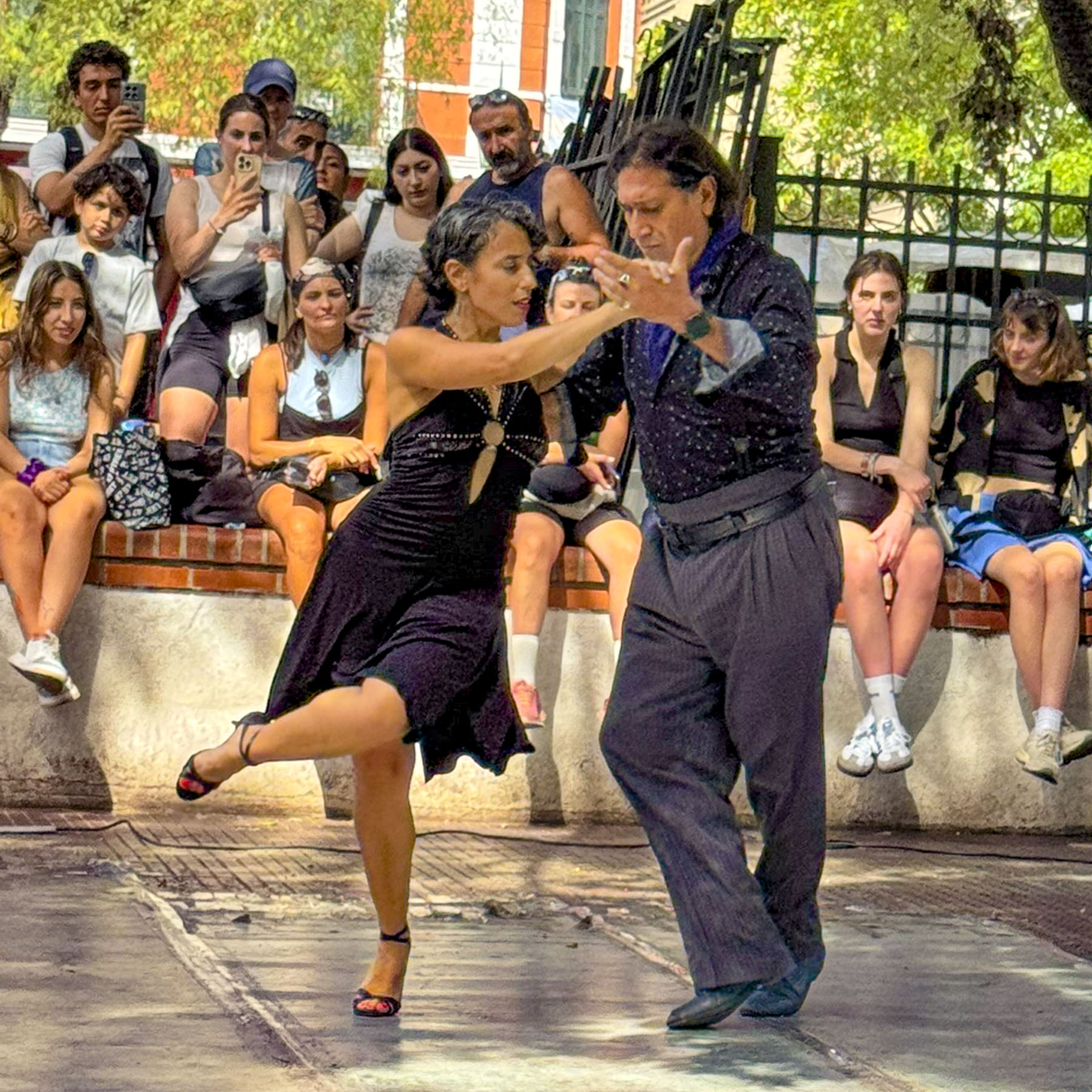
Tango dancers were mesmerizing a crowd with their graceful twists, turns, dips, and kicks at the Plaza Dorrego. Resting between dances, they encouraged folks to come forward and dance too. It was a thoroughly enjoyable afternoon, with a vibe totally different from the craft market in Retiro, and the shaded lanes of Palmero. Every August the city hosts the Buenos Aires Tango Festival & World Cup, a two weeklong dance-off, with concerts and shows where over 400 couples from around the world compete for the top spots in different categories.

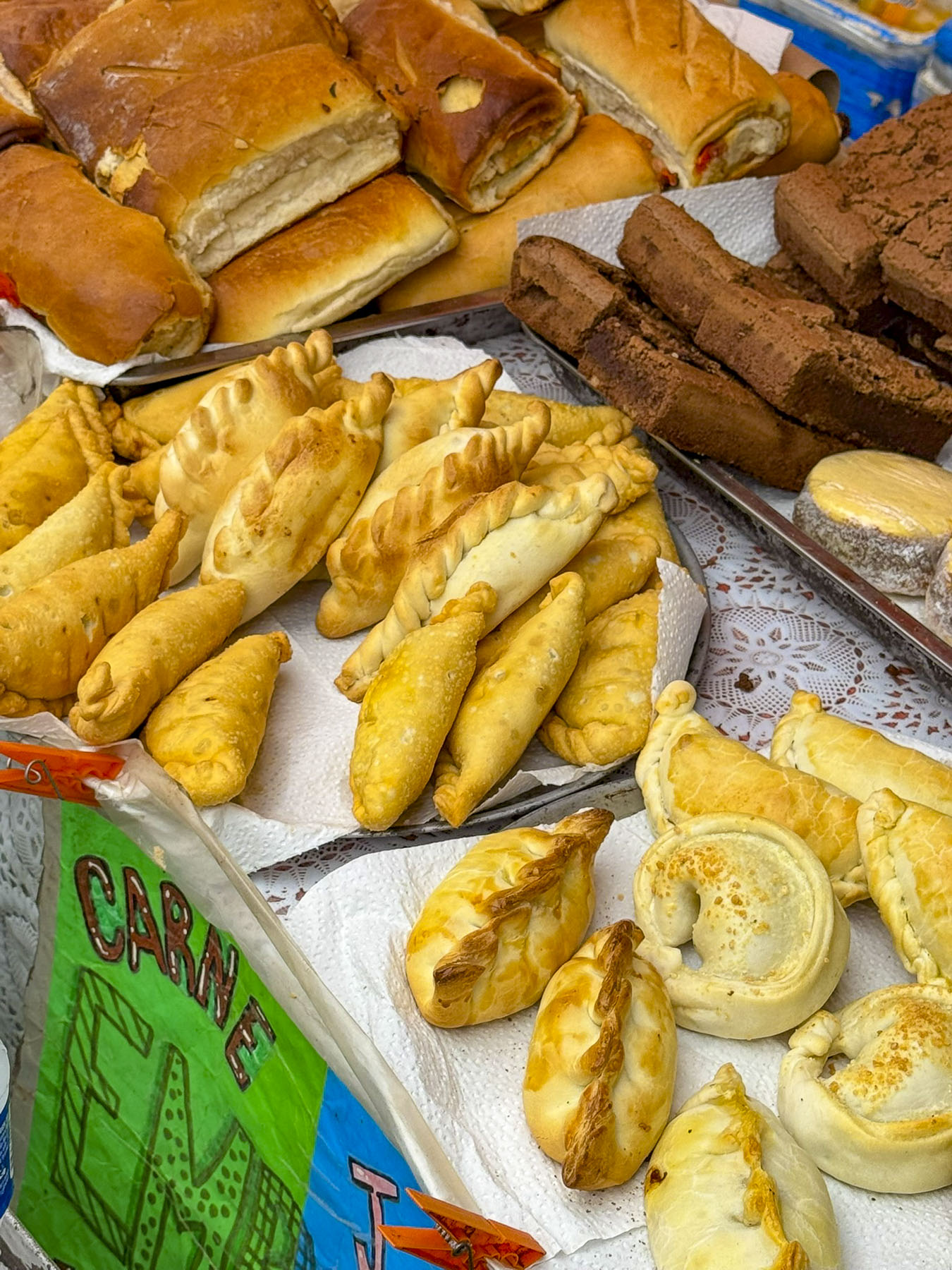
The next day a rainy morning finally cleared as we were on our way to a three hour cooking class to learn how to make those savory pastry meat-filled turnovers called empanadas, and alfajores, a melt in your mouth layered shortbread-like cookie filled with dulce de leche.

Our hosts Tomas and Lala graciously welcomed nine of us into their home; we were from France, Norway, Switzerland, and the United States. The other participants, like us, we learned after introductions all around, were snowbirds escaping a cold northern winter.

Tango music played softly in the background as Tomas divided us into three groups of 4, 2 and 3, the odd man out joining Donna and me. It was very well organized, and Tomas led us through the mixing of ingredients and made sure we added just the right amount of water so the dough was kneadable, but not sticky. Everyone cut their balls of dough and rolled them out into taco size discs, not too thin or too thick. Lala provided a meat filling. The hardest part was crimping the edges of the dough together to seal in the filling. The gal next to us was very good at it and created bakery worthy pockets. The three of us had various aesthetic results, that would improve with practice. Brushed with an egg white, trays of empanadas were put into the oven to bake. The cookie batter was also quite easy to make. We sipped some mate (a traditional herbal drink with lots of caffeine) and got to know our tablemates as we waited for the empanadas. We can see why people like mate (pronounced mah-tay) but I think for us it would be an acquired taste. The empanadas were tender and tasty, though it was obvious which ones my fingers had molded, as they oozed from some thin spots in the crust. This was the first cooking class we’ve ever taken during our travels and found the whole experience, along with the shared camaraderie, very enjoyable.
The next morning, we pulled our luggage behind us as we strolled down Calle Florida, a 10 block long pedestrian walkway in the center of Buenos Aire’s shopping district that runs from the Plaza General San Martín to Plaza de Mayo. It was a very pleasant lane centered with rows of young shade trees, and intermittent sidewalk cafes along the edges. The Galerías Pacífico, an upscale glass domed shopping complex, was our destination.

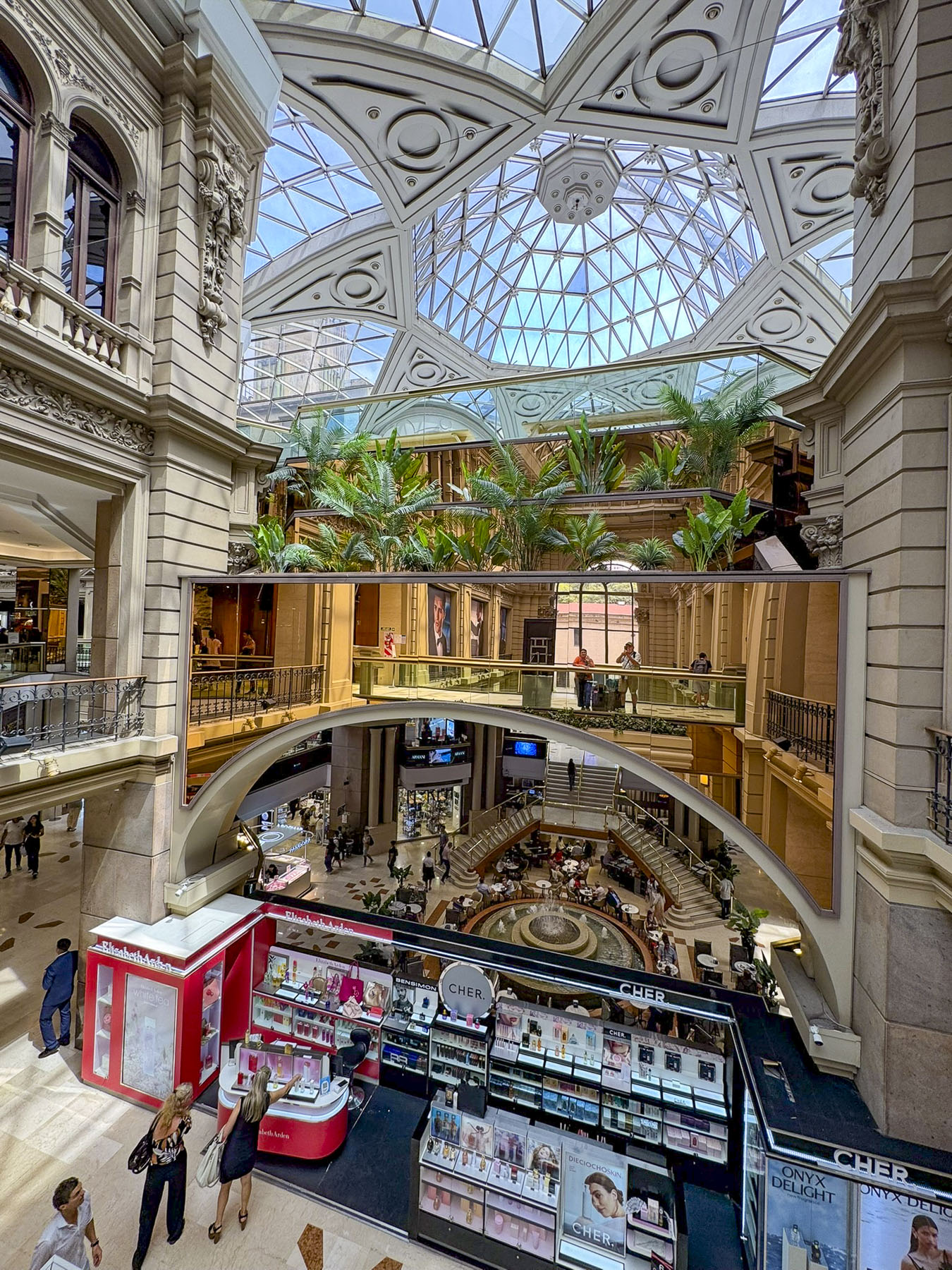
With architectural inspiration taken from the Vittorio Emmanuelle II galleries in Milan, the 1889 building was designed to be a shopping experience akin to the Bon Marche stores in Paris. But a long economic recession in Argentina during the 1890s and early 1900s nixed its realization and the gallery area was used as part of the National Museum of Fine Arts, while the Ferrocarril Buenos Aires al Pacífico acquired part of the building for offices. The company’s presence eventually led it to being called the “Edificio Pacífico,” (Pacífico Building).
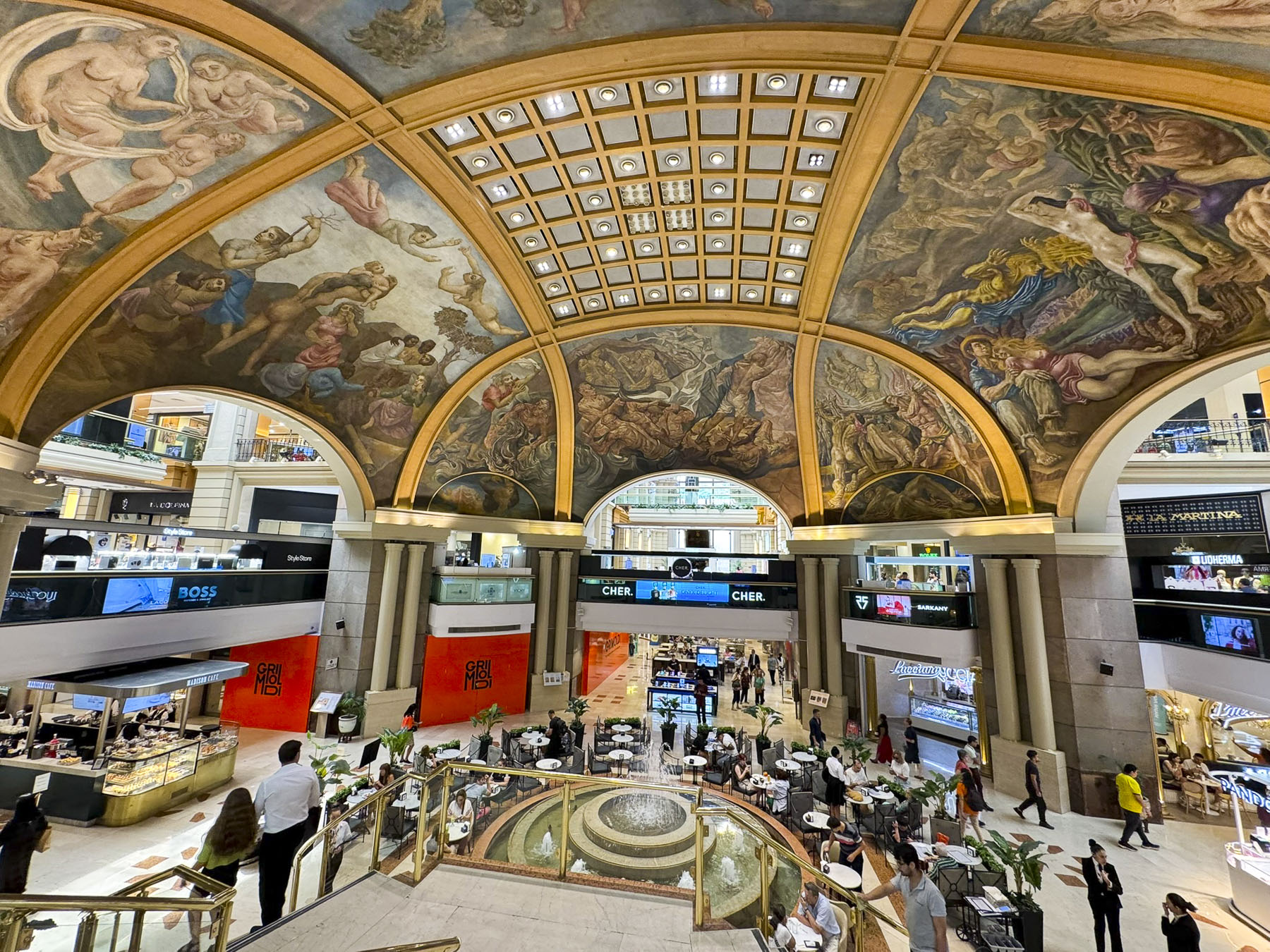
The famous domed lower level over what is now the food court was constructed during renovations in the 1940s and embellished with twelve spectacular murals by the artists Lino Eneas Spilimbergo, Antonio Berni, Juan Carlos Castagnino, Manuel Colmeiro, and Demetrio Urruchúa.

A hundred years later a 1990s renovation finally covered the galleries with a glass ceiling and the “Galerías Pacífico,” became the flagship of Buenos Aires’ shopping district. We really are not into mall shopping, but this is very nice, and an architecturally and culturally interesting spot that attracts a diversity of folks. It was the perfect spot for our “walk a little then café,” break before having an ice cream bar decorated with Lionel Messi’s blue and white uniform.  The Buquebus ferry terminal was only a short walk away for our crossing back to Uruguay and our flight home.

Buenos Aires is a sprawling city with 48 different neighborhoods and three million people. It is a great destination, and we only scratched the surface of the multitude of places to visit, and things to do within this vibrant city. In hindsight, we could have stayed several more days to explore the museums and government buildings, based ourselves in the Palermo neighborhood, and used the subway to get around.

Till next time,

Craig & Donna