

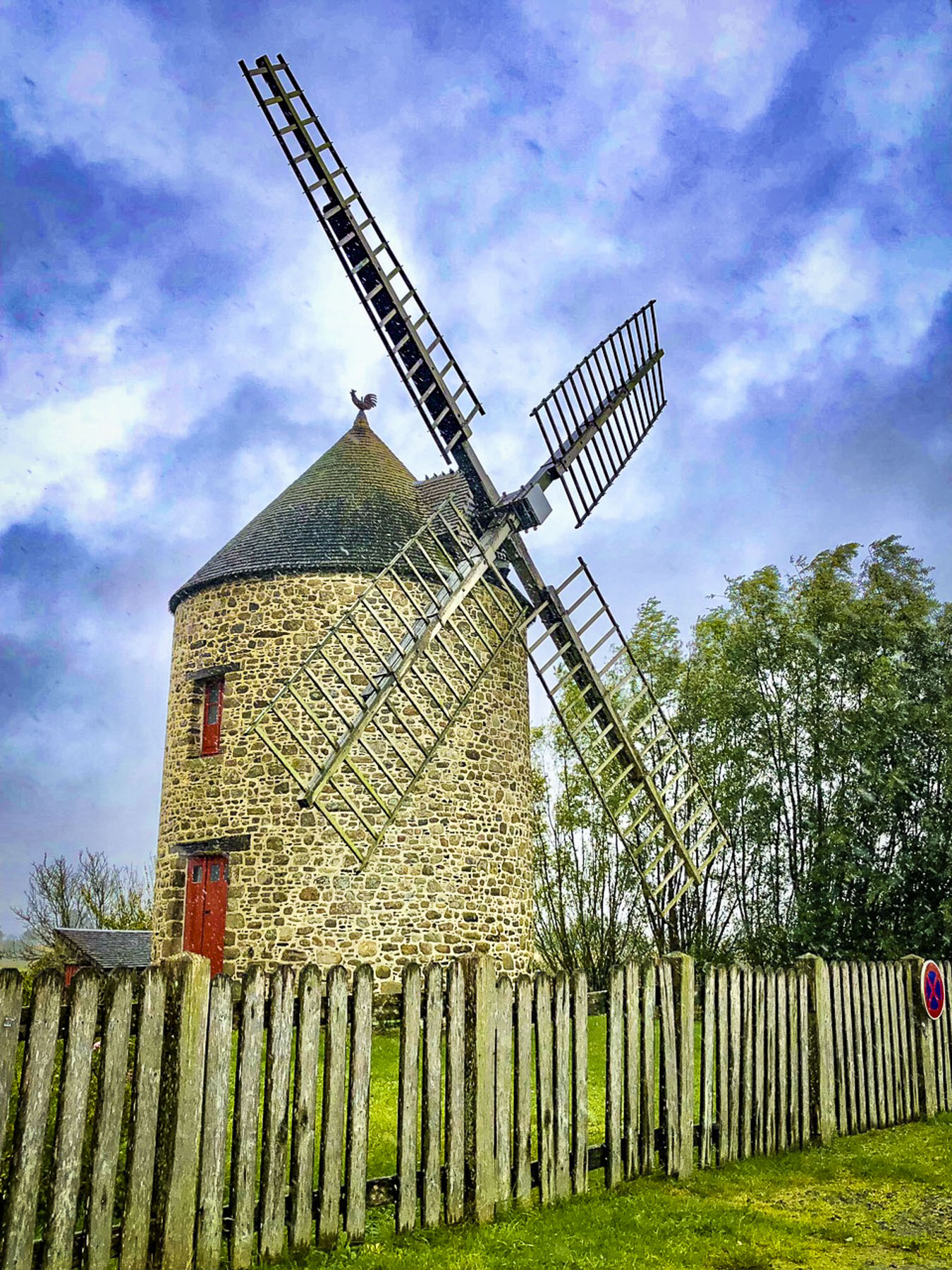
Tractors pulling wagons laden with huitres just harvested from the oyster beds of Cancale Bay now replaced the apple carts we passed two days ago in the Calvados region. Leaving Mont Saint-Michel in Normandy, we had entered Brittany in mid-October at the height of oyster season, which is traditionally considered the months that contain “r” in them, September – April. Our destination was Dinard, after stopping for lunch in Cancale, ground zero for huitres aquaculture in France. We had detoured from our route into Cherrueix to see the wide beach there that is popular for land-sailing, where specially designed three wheeled carts, outfitted with a sail, glide along the flat sand and attain high speed due to the strong winds that blow in off the ocean, filling their sails. But a windless day dampened that activity. The weather was pretty miserable that morning with intermittent squalls at times, limiting our explorations and photography. Our course diversion wasn’t a total loss as we found that the small village had several historic windmills and thatched roofed homes, which lent the town an unexpected Dutch and English feel.

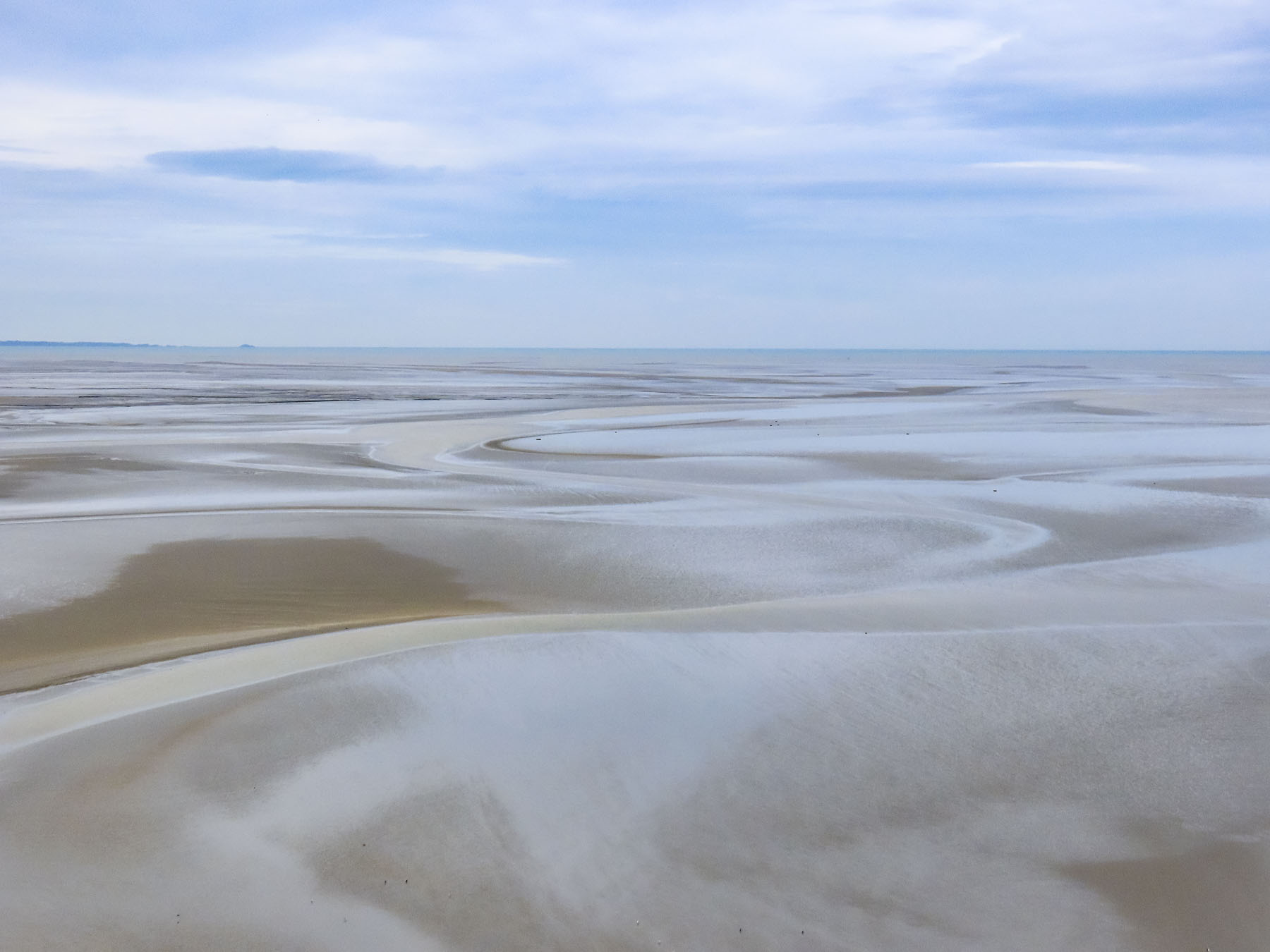
Oyster connoisseurs enjoy Brittany oysters for their unique merroir. Just as wines derive a distinguishable terroir from the soil their grape vines grow in, oysters get their signature flavor from the saltiness and temperature of the seawater they are harvested from. The extreme, fast moving tides, which Victor Hugo once described as “moving as swiftly as a galloping horse,” and cold water of Mont Saint-Michel Bay, which encompasses the ocean from Saint Malo, Brittany to the Cotentin Peninsula of Normandy, impart the oysters grown here with a sweet delicate flavor, which have won them fans the world over. Really, they are the best we’ve ever tasted, and we would order them whenever we saw them offered during our trip. They were also very affordable, which was a delight. Low tide along the coast revealed the extensive network of oyster farm pilings that support the growth of over 5,000 tons of succulent huitres a year.


Oysters have been gathered along the coast of Brittany since this region of France was part of the Roman Empire 2000 years ago. As with all ancient agrarian traditions, women have played a vital role harvesting oysters and Cancale’s town plaza hosts a bronze statue commemorating them. The day we visited, and it took us a while to figure out why, the female figures of the memorial were adorned in pink aprons. Turns out this was in recognition of France’s Breast Cancer Awareness Day, which happens every October. At lunch in a small establishment on the square, of course we slurped a dozen oysters, with just a touch of shallot mignonette sauce. They were divine. On Cancale’s waterfront there is also a daily Marche aux Huitres, surprisingly this oyster market which is open year-round. That old tradition of eating oysters only during the ‘r’ months dates back to King Louis XV in the 1700’s when refrigeration wasn’t possible, and it was unsafe to consume them during the warmer months. It’s also a matter of preference as the texture of the oyster becomes creamier during the warmer months, but today in France they are consumed year-round.

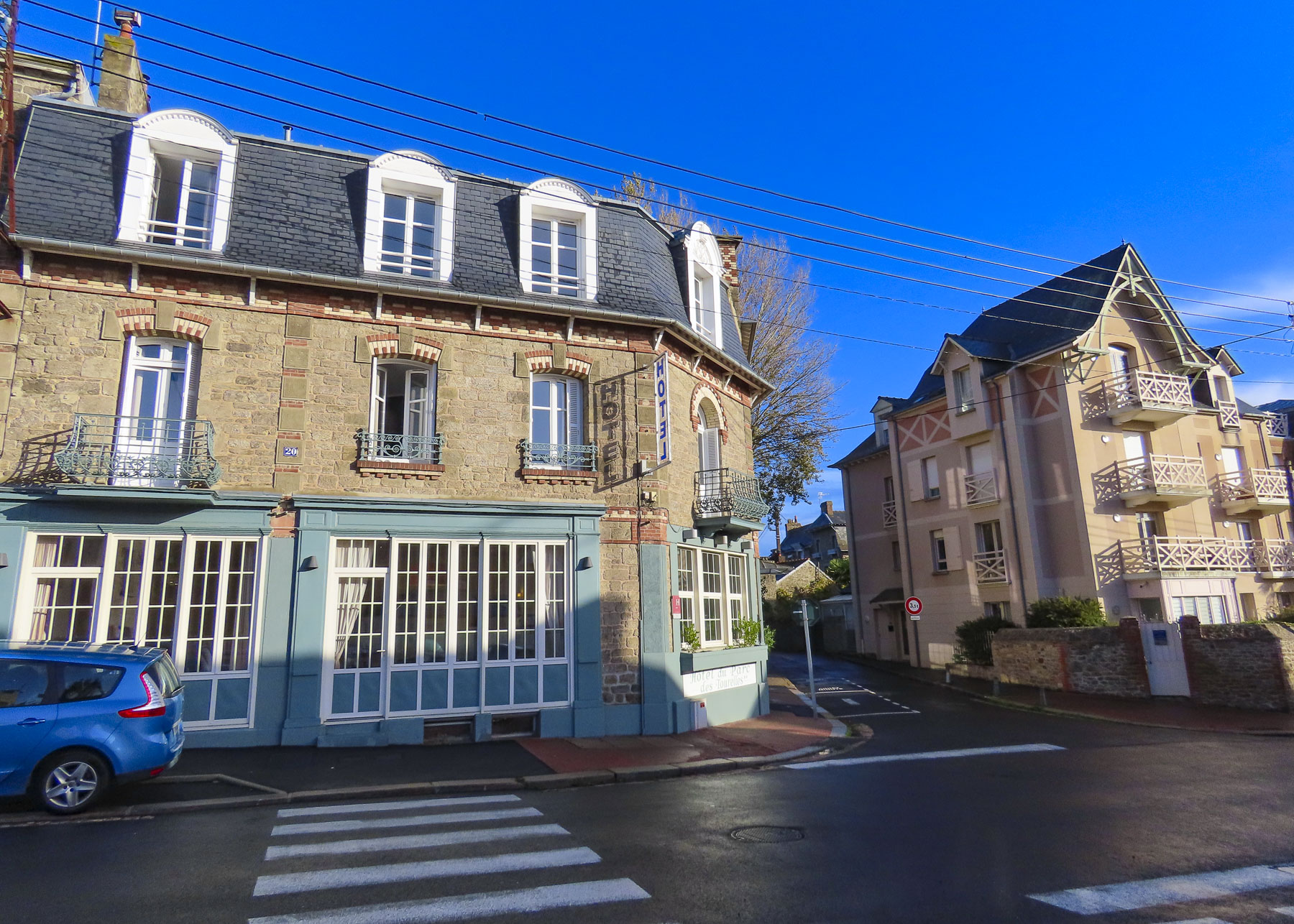
The late afternoon sun was shining brilliantly by the time we arrived in Dinard, found a free parking space on the street, and checked into the Hôtel du Parc Dinard, our home for four nights. The popular vacation spot is practically a ghost town in the fall, with most of its elegant Victorian-era homes battened down tight awaiting winter storms. The quietness was perfect for us, and the town would be our base for visiting Saint-Malo, a short distance away across the Rance Estuary, and farther inland the ancient riverport town of Dinan.


A former fishing village, Dinard was transformed into a vacation hotspot, when the French gentry, wealthy Americans, and British aristocrats discovered its picturesque beaches, and cliffside walks in the late-nineteenth century. A pleasant mild climate, influenced by the nearby warm waters of the Atlantic gulf stream helped set its reputation as “the Pearl of the Emerald Coast.” A who’s who list of celebrities – Picasso, Gary Grant, Joan Collins, Winston Churchill, and Oscar Wilde – frequented the seaside resort. The British film director Alfred Hitchcock visited often enough that the town erected a statue in his honor. Film legend believes he based the house in the film “Psycho,” on one of the town’s elegant mansions and the movie “Birds,” partly on experiences with raucous seagulls along the cliffs here. His relationship with the town led to the establishment of the Dinard Festival of British & Irish Film. Now in its 35th year, it’s held early in October. Prize winners receive a golden Hitchcock statuette.


One of France’s most “British resorts,” the town’s luster faded in the 1960’s when the “jet set” discovered the Mediterranean beaches of southern France. Fortunately, the town has been rediscovered as a holiday destination and today attracts folks looking for vacation rentals in the now sub-divided mansions, who appreciate its quite ambiance and location along the Cote d’Emeraude of Brittany.

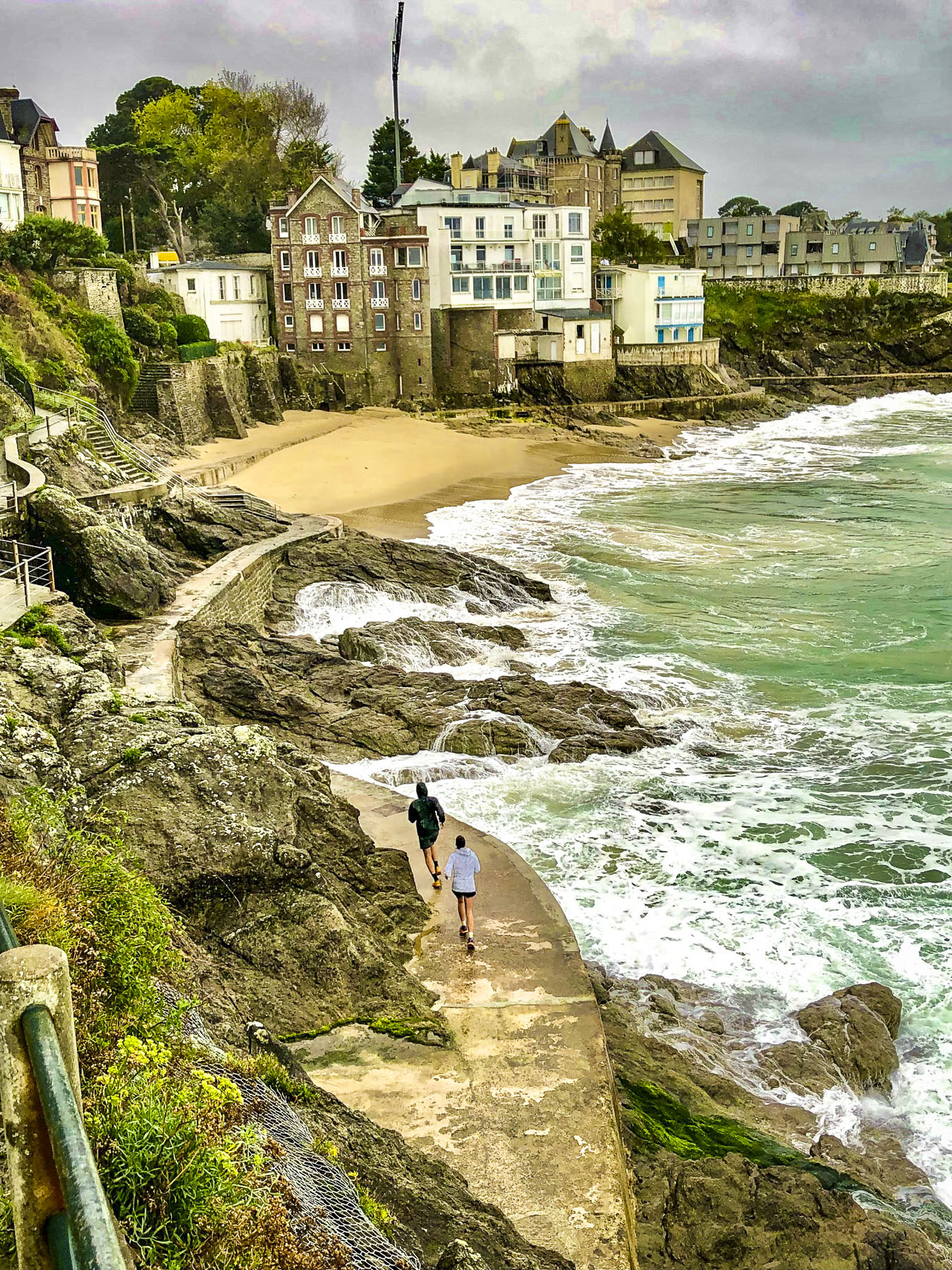


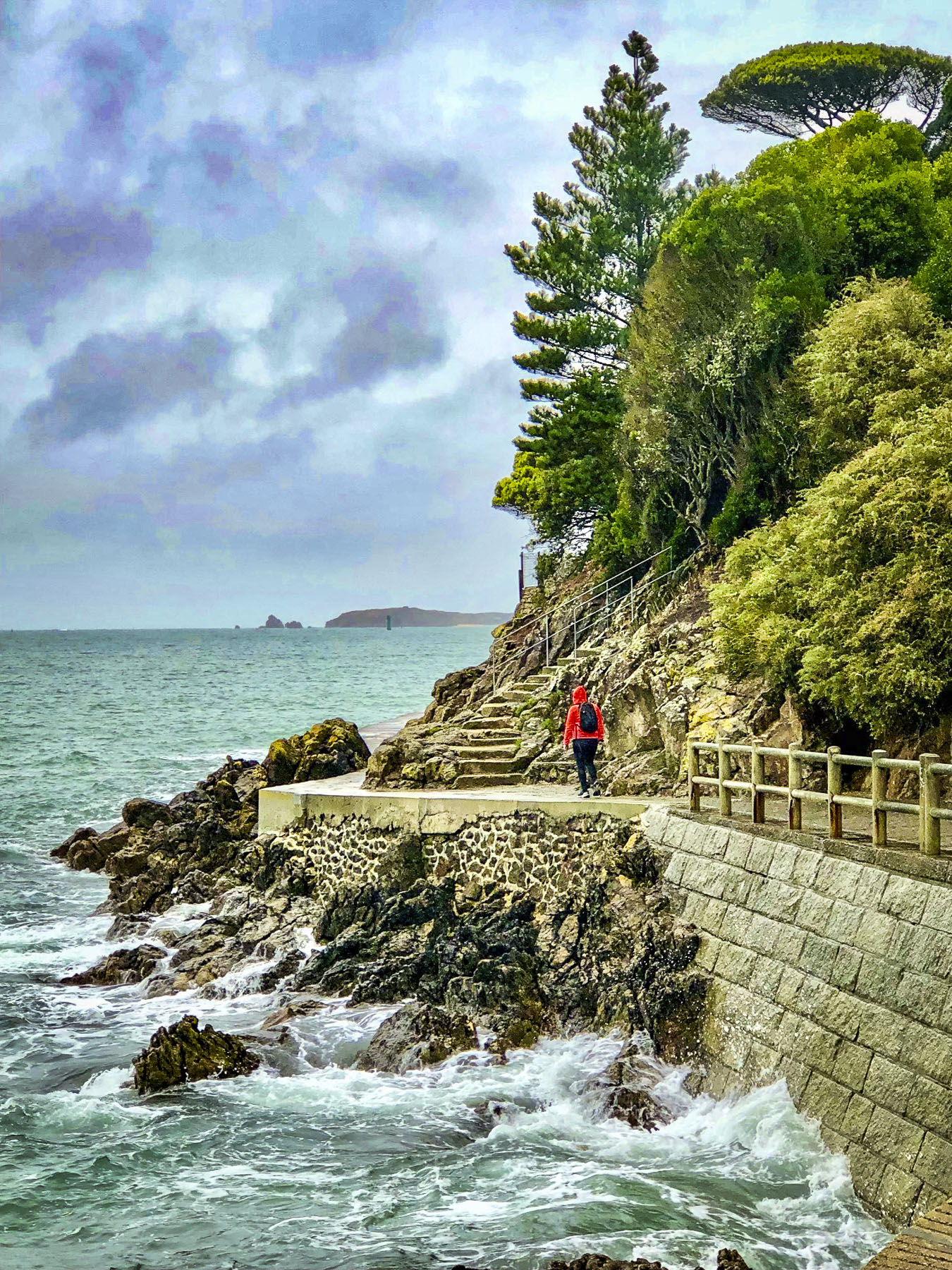
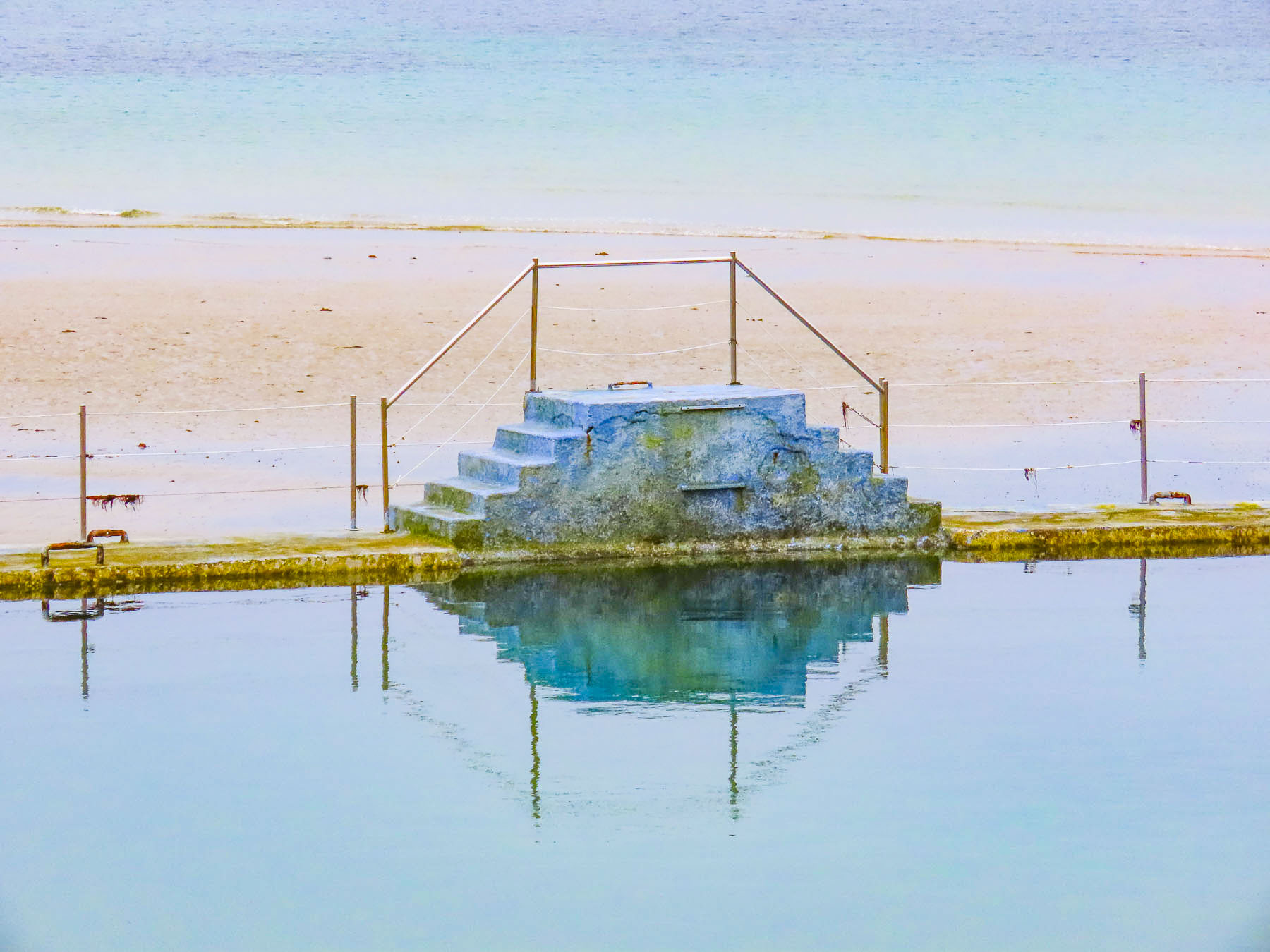
One of the best ways to enjoy the town, in any season, is to follow the Coastal Path of Dinard, a 5-mile-long improved trail that hugs the rocky coastline, passes sandy coves and fascinating old architecture. From our hotel we broke our walk into two manageable segments and included a stop at the weekly market one day to purchase supplies for a picnic lunch for later in the day. One afternoon we drove west along the backroads to Saint-Briac-sur-Mer. Here we could see the extreme tides of the Brittany coast, which left boats at their moorings high and dry at low tide.

Just across the water from Dinard the old fortress city of Saint-Malo still guards the natural harbor created by the La Rance estuary as it enters the Gulf of Saint-Malo and the English Channel. Its ramparts have remained mostly unscathed since their first construction in the 12th century, in order to deter feared Viking attacks. Centuries later the Corsairs of Saint-Malo, French privateers serving the King of France, would pillage foreign ships sailing the English Channel, or extort a transit tax from them, then flee the scene of the crime and seek refuge from the pursuing English Navy under the cannons along Saint-Malo’s ramparts. This tactic was so annoying to the British that they launched an amphibious naval assault against the Saint-Malo corsairs in 1758, but determined the city’s ramparts were impenetrable and instead attacked the nearby town of Saint-Servan and destroyed 30 of the pirate’s ships there.


Outlaws to the English and Dutch, the corsairs of Saint-Malo had more nuanced careers and were well respected as explorers and merchants in France, enriching the town and serving the interests of several French kings over the centuries. Departing from Saint-Malo, Jacques Cartier sailed down the St. Lawerence River and claimed the discovery of Canada for France in the 16th century and sacked a few vessels along the way. Jacques Gouin de Beauchêne would lead the first French expedition into the South Atlantic, raid Rio de Janeiro, find the Falkland Islands, sail through the Strait of Magellan, visit the Galapagos Islands and return to the Atlantic Ocean by sailing west to east across the treacherous waters of Cape Horn. Other corsairs helped establish trade with ports along the west coast of Africa, Southeast Asia and the Pacific, which would evolve into French colonies. Corsair Duguay-Trouin led a Moka expedition to Yemen in the early 1700s, returned with the legendary coffee beans, and French society was changed forever: the café tradition had begun. Saint-Malo prospered.

Walking atop the ramparts that encircle the ancient citadel, it’s difficult to imagine that this beautiful city lay in ruins in September 1944. The D-Day invasion of Normandy had happened three months earlier, but well dug-in German forces, led by a commander who swore to defend the Third Reich to the last man, refused to surrender their reinforced positions in Saint-Malo. It took a relentless, months long campaign of allied aerial and artillery bombardment for the Germans to concede defeat. The ramparts still stood, but 683 of the town’s 865 historic buildings were leveled, its 6,000 inhabitants homeless. The mayor at the time, Guy Lachambre, petitioned vigorously for the reconstruction council and its architects Marc Brillaud de Laujardière and Louis Arretche not to modernize the war-torn town, but to respect the ancient medieval character of the city and retain its maze of alleys, granite facades and steep slate roofs. It took two years to painstakingly remove the rubble, before rebuilding could start. Workers cataloged the ruins like an archaeological excavation, numbering each brick and stone, so that town’s original building materials could be reused, when possible, to authentically resurrect it from its ashes. Major reconstruction lasted until 1960; however, the Cathédrale de Saint-Malo, the final resting place for the famous Corsairs Jacques Cartier and René Duguay-Trouin, didn’t acquire its new steeple until 1971. The church’s spire, rightfully returned to its place of honor on the citadel’s skyline, was once again a welcome landmark for sailors returning from the sea. Renewed prosperity returned to Saint-Malo in the mid-1960s when folks rediscovered the seaside town as a great place to rent a vacation flat in apartments now vacated by families that moved away during the reconstruction years.
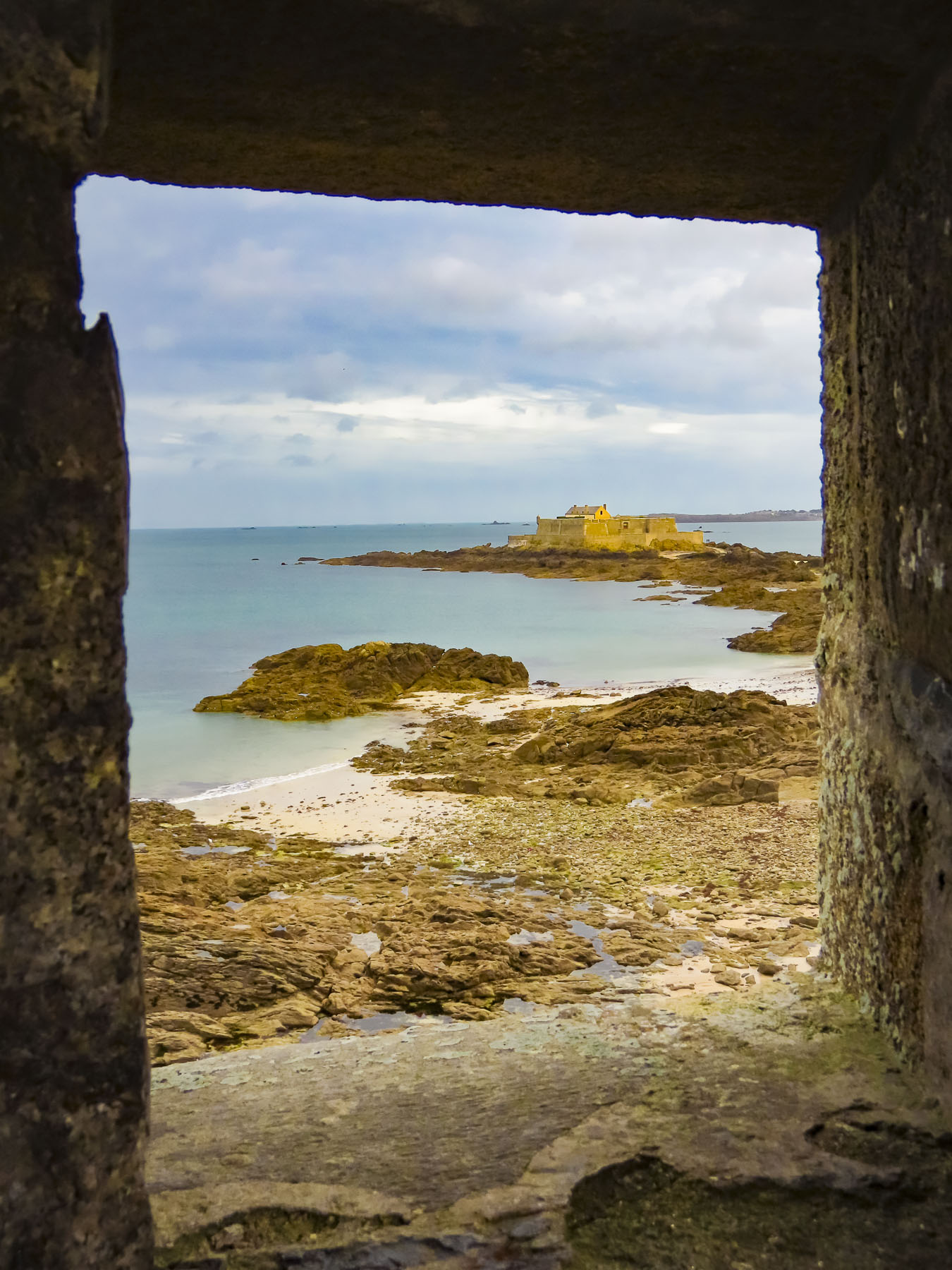


The views from atop the ramparts of the sea and the citadel were great. It’s an easy 1.4 mile loop around the ramparts, with many gateways that descend back into to the walled city or out onto the surrounding beach. At low tide it’s possible to walk across a sandy peninsula to the nearby 17th century Fort Natioinal, or to the small island Grand Bé, where the French writer François-René de Chateaubriand is buried, but be careful not to get stuck out there during an incoming high tide. Afterwards, back in town we found a rustic bar with a fire going in its stove and warmed ourselves with snifters of Calvados and café.


During the high season, parking in Saint-Malo can be problematic. However, if you are staying in Dinard it’s possible to take the small ferry across to the “The Corsair City.” If you are looking for a good read, the book All the Light We Cannot See, written by Anthony Doerr, evocatively tells an intriguing and mysterious story of life during WWII in Saint-Malo.
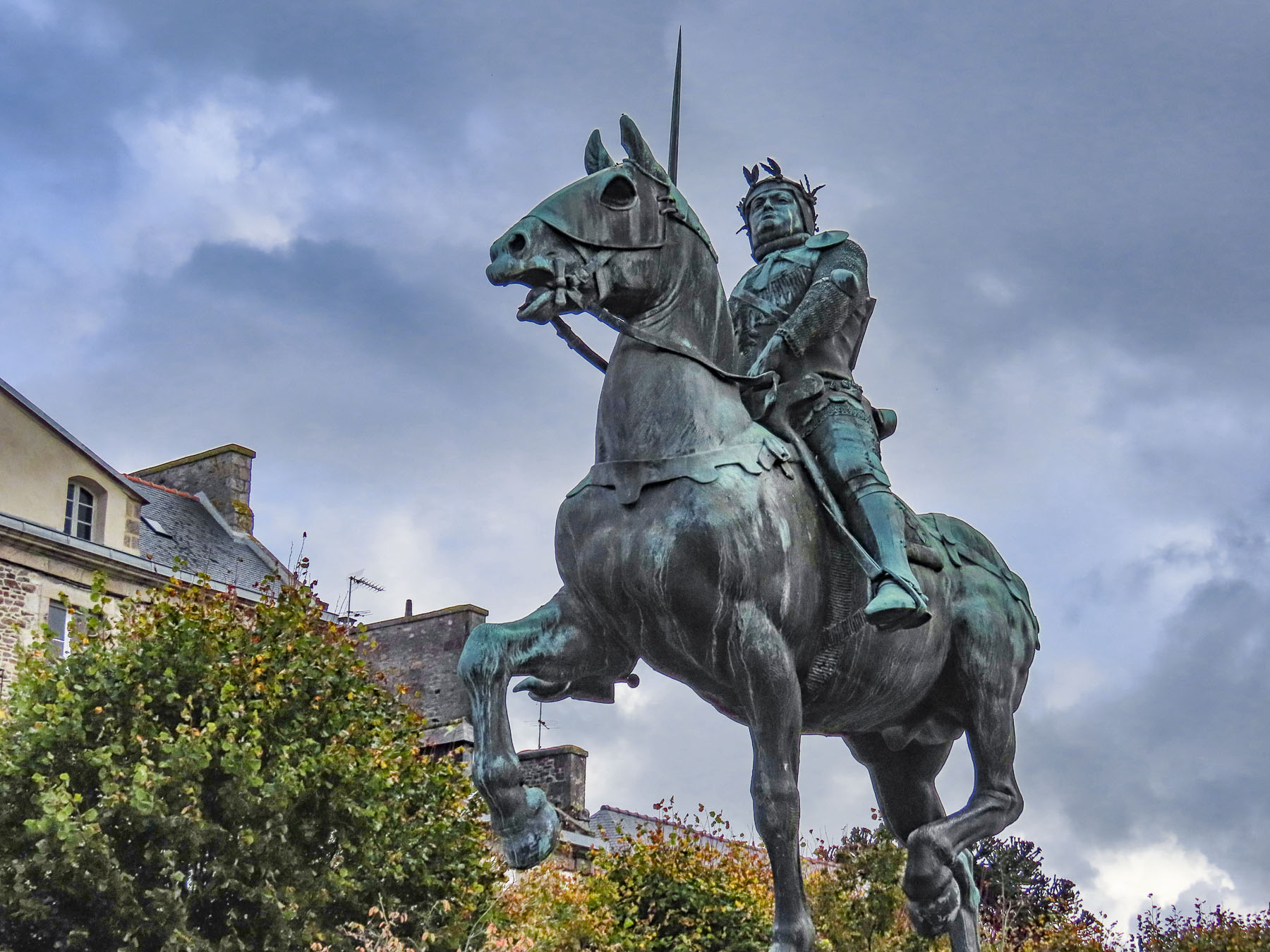
Traveling 30 minutes south from Dinard, we seemed to have arrived in the 14th century. We were greeted by an equestrian statue of the famous French general Bertrand du Guesclin, which towered above us in the car park. He was known for his many victories over the English during the Hundred Years War. He was so well regarded that upon his death, in 1380, he was given a royal funeral, his body quartered for burial, a practiced usually reserved for France’s kings. “His heart was buried in Dinan in his native Brittany, his entrails were buried in Puy, his flesh at Montferrand, and his skeleton in the tomb of St. Denis outside Paris.” We were off to an interesting start.
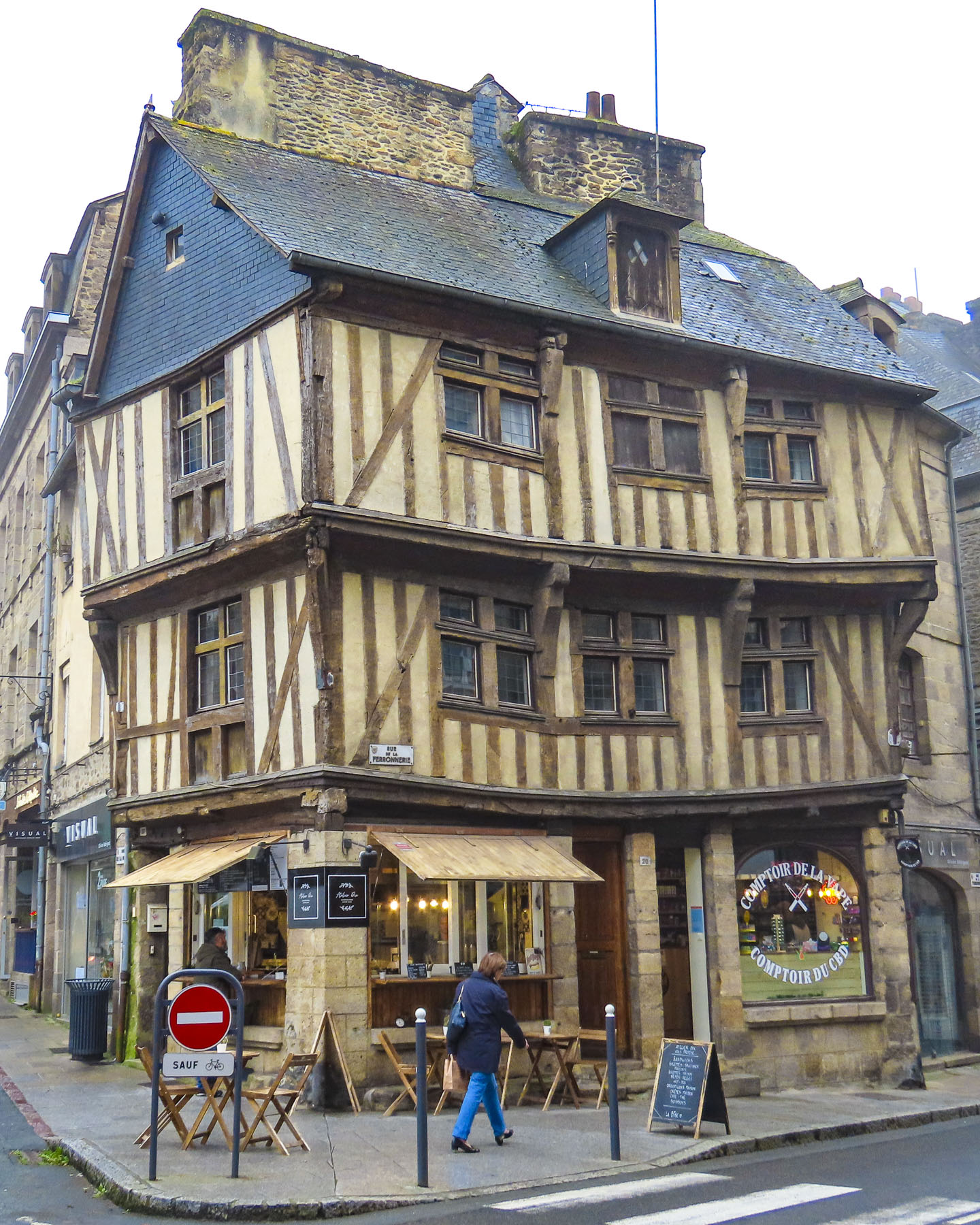

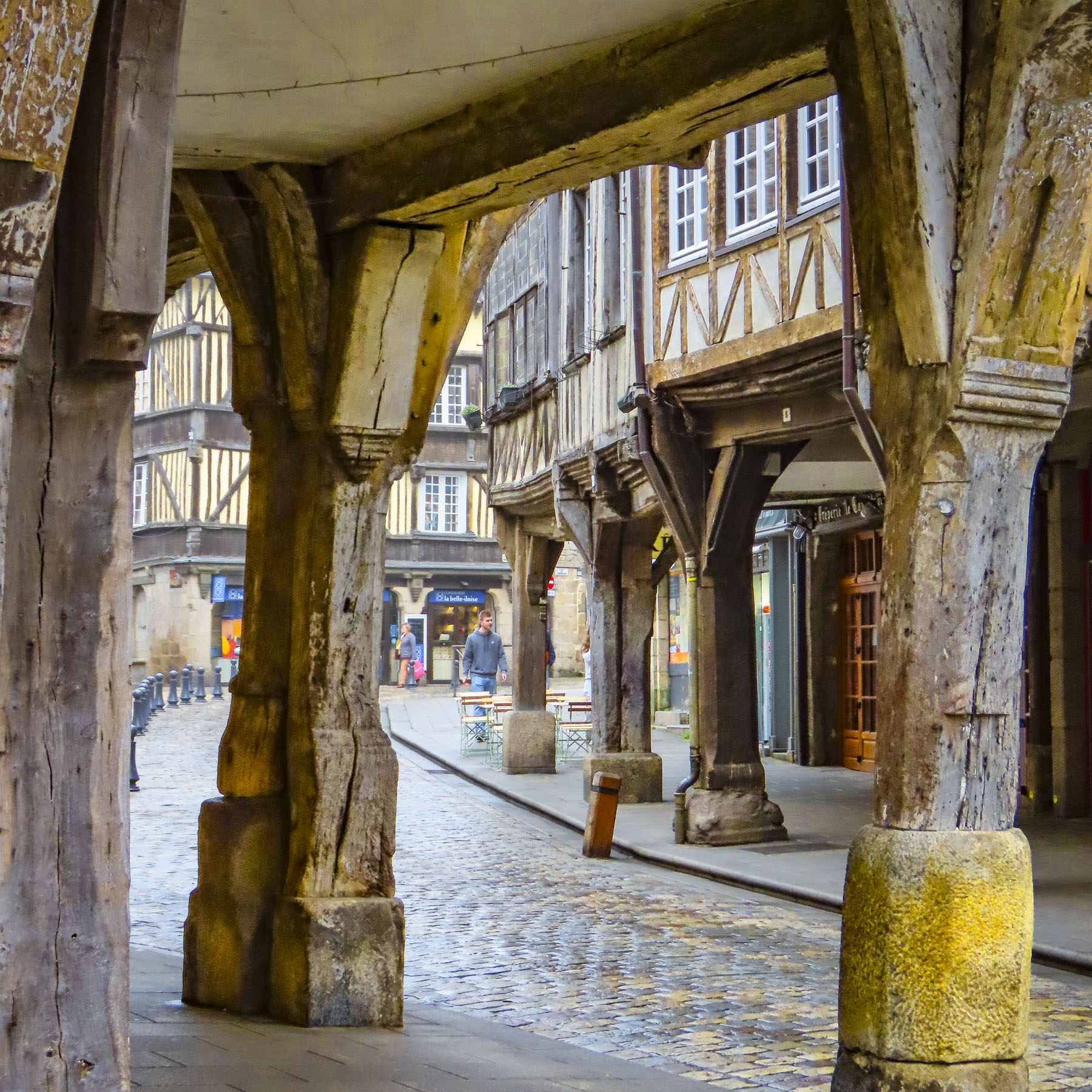
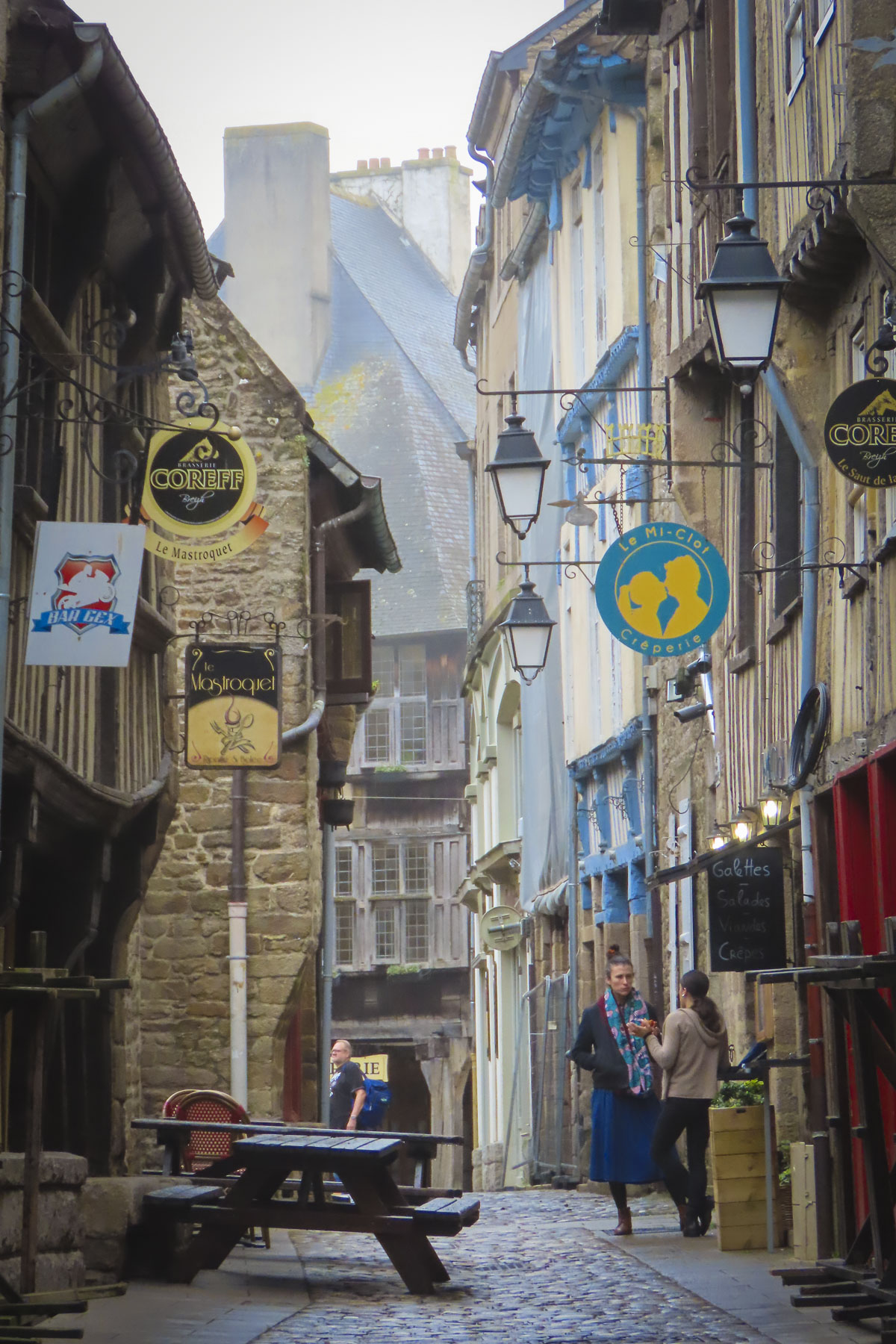
Somehow having escaped the destruction that befell Saint-Malo, Dinan’s historic center is filled with charming leaning, half-timbered medieval buildings dating from the 13th to 16th centuries, and shares an ambiance that felt more akin to Rouen than its neighbors Saint-Malo and Dinard. This morning the narrow-cobbled alleys were busy with activity, modern shops behind the ancient facades, replacing the craftsmen and guild merchants of this market town and riverport who traded with Spain, England, Holland, and the new world colonies.

Our “walk a little, then café,” led us to Marcel, on Rue de la Cordonnerie, a delightful patisserie, where between cheerfully serving customers, the staff was photographing their artistic, mouthwatering temptations to post to the store’s Instagram page. Outside it could have been 1305 or 1673; only folks’ clothing had changed.

Farther along, stores had their merchandise displayed along the sidewalks under the porches of the buildings. This style resulted from the tax code at the time when merchants’ stores were taxed based on their ground floor square footage, but were allowed to expand outward on the higher floors.

Polished from a millennium of footfalls, the cobbled lanes in Dinan glowed with different tones and hues, especially apparent on the damp overcast day we followed the long Rue du Jerzual downhill to the Port de Dinan. It’s an amazing street lined with a vast array of interesting buildings and a tower gate, which was once part of the ramparts which encircled upper Dinan.


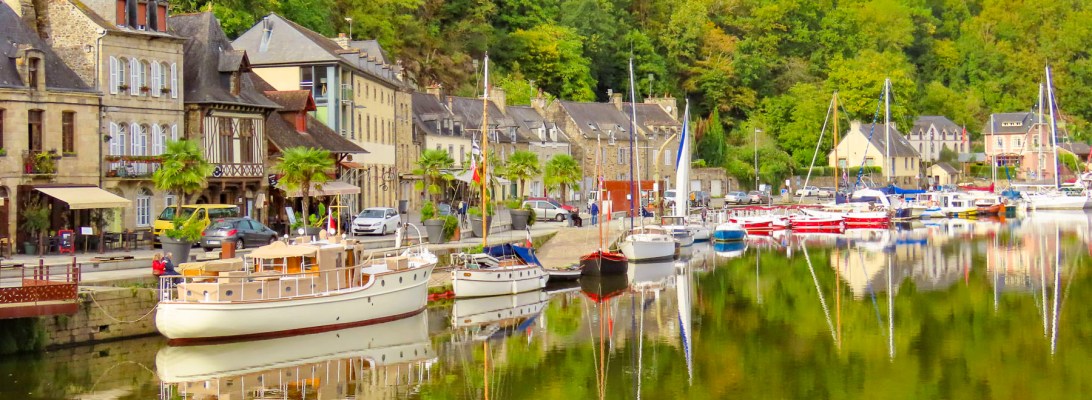
The waters of the La Rance river were calm and reflected the boats docked along the waterfront and the emerging autumn colors on the hillside above the river. Here the tributary narrows, no longer navigable for larger ships, a single arch stone bridge allowing only small recreational boats to proceed upstream to the pretty village of Léhon. A bike and footpath also follow the contour of the river to the village, only a 30 minute walk away.

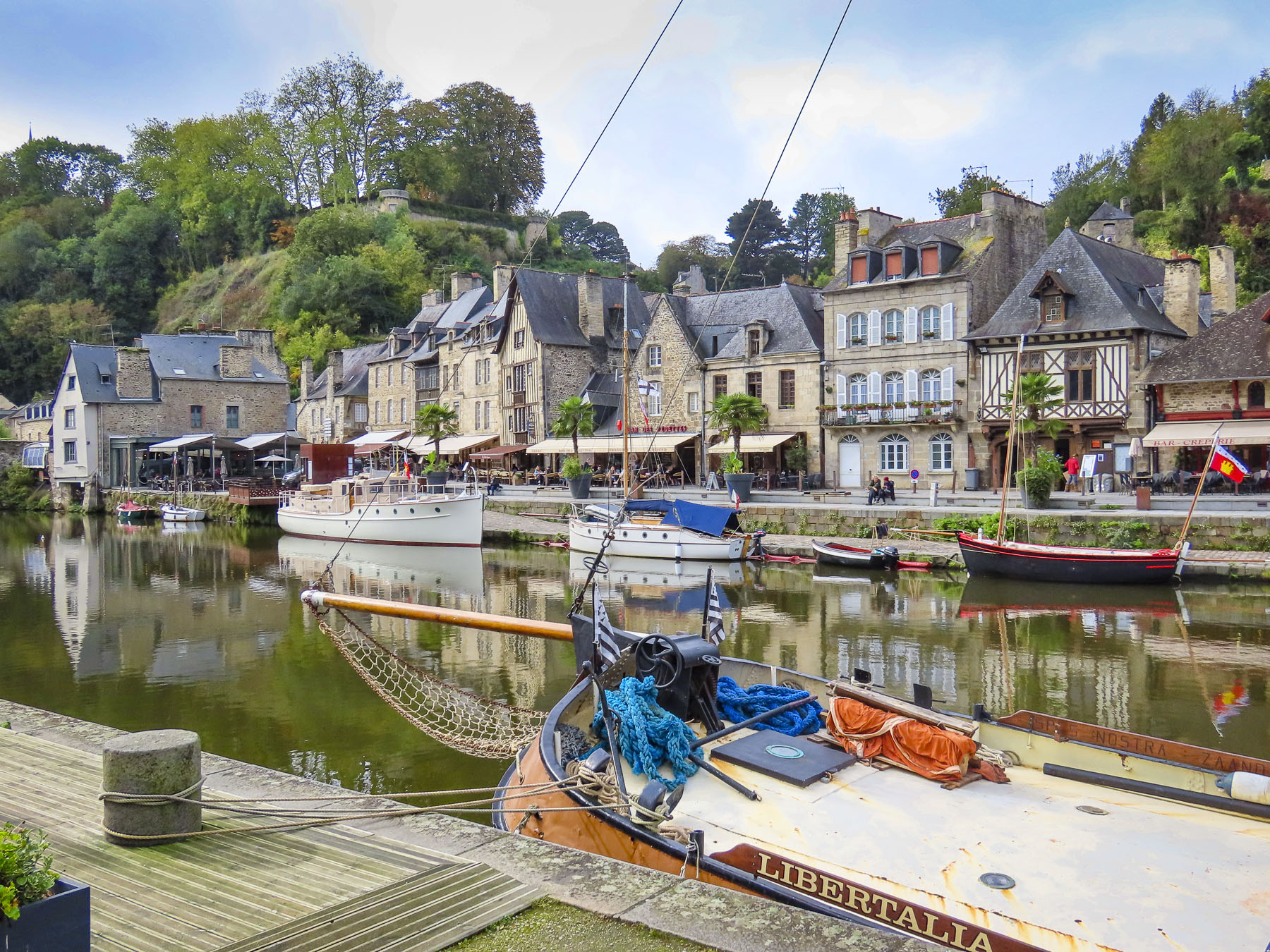
We lunched outside along the quay trying some garlicky escargot and enjoyed the now-sunny afternoon. We were dreading the long uphill walk back and had asked at the restaurant to arrange for a cab, but they cheerfully informed us there was no need as a local small bus stopped just over the bridge and would take us back to the historic center.

The driver stopped at the Basilique Saint-Sauveur for us. Built in the early 1100s, it retained its Roman style façade during a 15th century expansion. But we only had a few moments for outside shots before a late afternoon thunderstorm chased us inside.

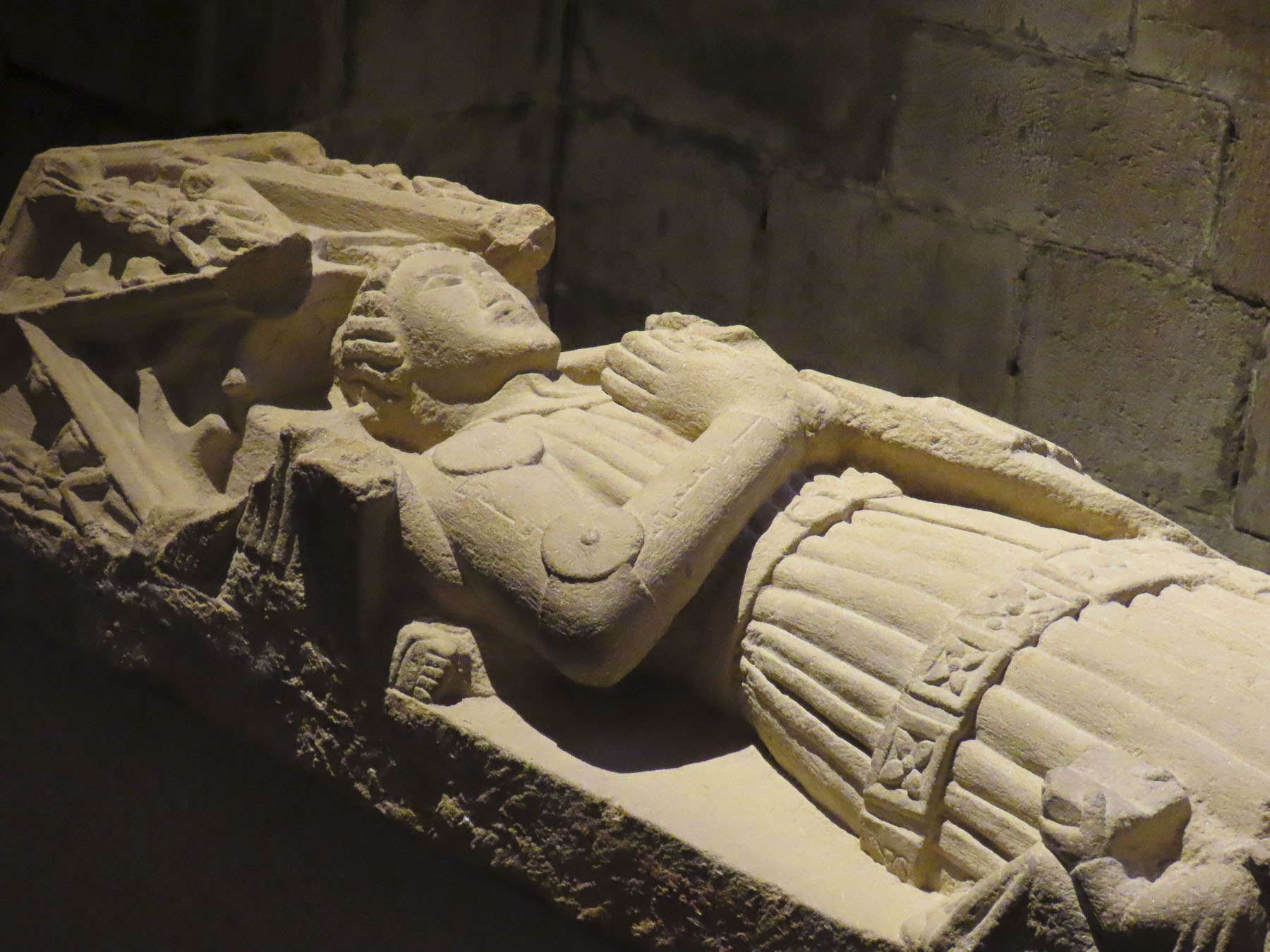

The inside has an impressive altar and artworks, while the interior architecture reflects a church renovated over several centuries. One side features Romanesque arches, though the other side displays a Gothic influence.

Rain kept us from walking through the Jardin Anglais, an English-style garden behind the town’s ramparts, with views across the La Rance river valley. We wrapped up a wonderful day in Dinan at the Château de Dinan, once a palace and fortress for the Dukes of Brittany in the 14th and 15th centuries. We seemed to have just scratched the surface of this intriguing town. And looking back it would have been a more interesting locale for a four-night stay.
Till next time,
Craig & Donna




















 2 Suitcases for 2 years