


We imagine it’s possible to enjoy a full week pleasantly wandering the quaint streets of old town Funchal, basking in the sun and swimming in front of Forte de São Tiago, while venturing no farther afield than the Monte Palace Tropical Garden.


But the real beauty of Madeira lies in its rugged seascapes and mountains. The mountains admittedly aren’t that tall if you compare them to the Swiss Alps or American Rockies.

The highest, Pico Ruivo, reaches 6100 feet, nearby Pico do Areeiro is a tad shorter at 5,965 feet, and you can drive to its summit. A popular though arduous trail connects the two summits that are often above the clouds. In January and February, the sub-tropical island’s peaks can be snowcapped, and parents take off from work to bring their kids into the mountains to make snowballs and snowmen. There really aren’t foothills before the mountains. They appear to have been thrust violently upward from the earth’s crust like a knife thrower targeting a loaf of bread. They are tremendously steep and majestic, and you can experience them up close through various hikes or simply driving across the island’s numerous switch-back roads. Madeira in many aspects is similar to California, with a landscape where it is feasible to experience mountains and ocean in the same afternoon. On Madeira though it’s within the same hour.

The weather constantly changes on Madeira. The opposite of what’s forecast quite often is what happens, as it was the morning we looked up at a small patch of blue sky, teasing us with a shaft of sunlight while we waited in the parking lot atop Pico do Areeiro for our small group of intrepid hikers to gather. It was also a good twenty degrees chillier than Funchal and we quickly layered up. The clouds descended. A light rain began. Rain ponchos appeared. Visibility was 100 feet. Not the best conditions, but it was a non-refundable tour and our international group of seventeen stoically set forth into the clouds.


Commonly known as the “Pico to Pico” or the PR1 hike, it’s a semi-difficult 5-mile trek with a 1000 ft altitude gain. The route balances across narrow ridgetops and follows cliffside trails, climbs steep stairs and ladders, and passes through narrow rock-hewn tunnels before summiting Pico Ruivo. It then descends to the Achada do Teixeira parking lot for the return shuttle to Funchal. The path is improved in many sections with cobbled pavers and hand railing, but in other parts it was a muddy, puddled mess.


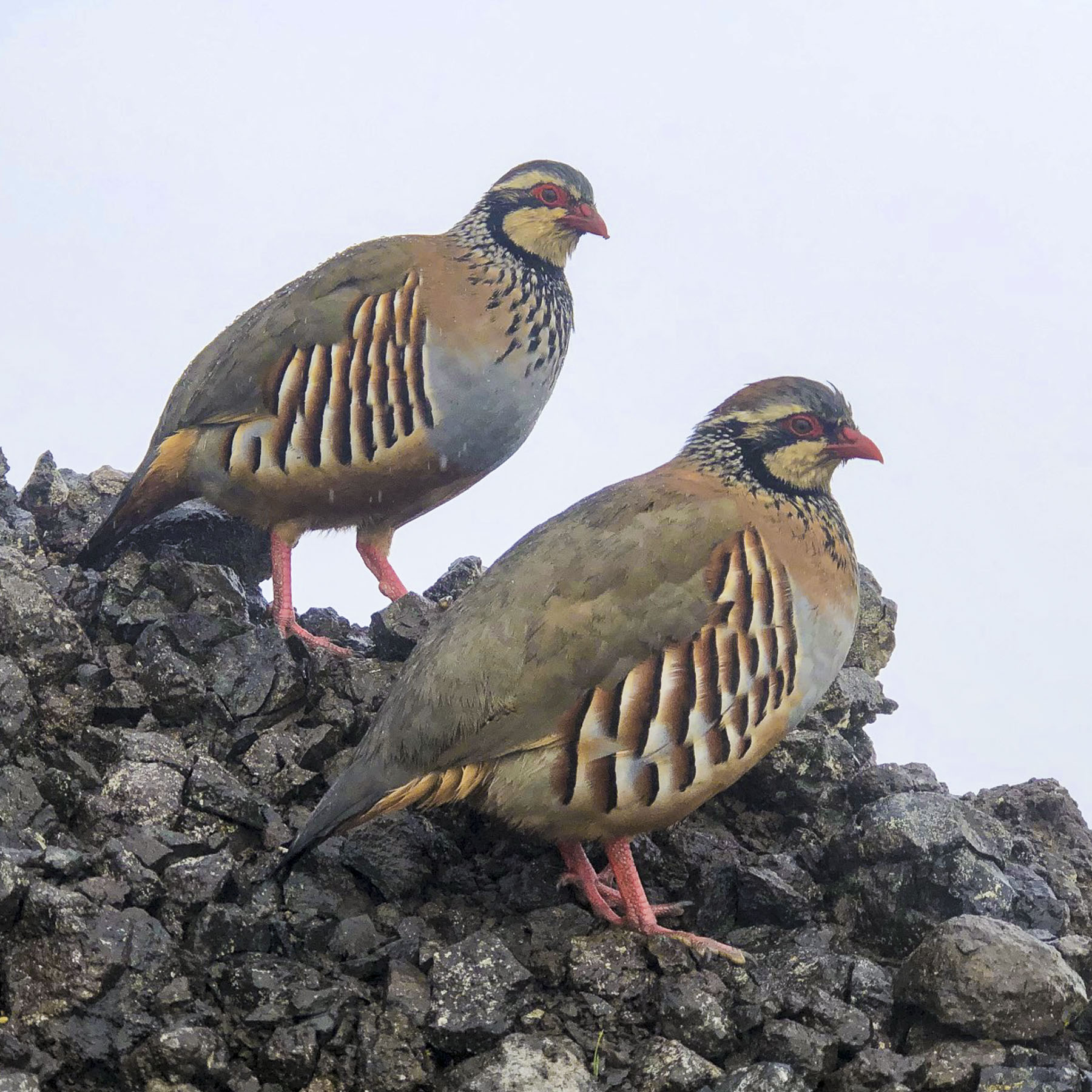
With the rain the trail was slippery and slow going. Unfortunately, the low cloud conditions didn’t allow for spectacular panoramas. But even with the dismal weather we were able to capture some photos that are evocative of the day. Spotting the well named red-legged partridge was a highlight of the trek. If you choose to do this hike, be prepared, wear sturdy shoes or hiking boots, bring extra clothing to layer up, plenty of water and lunch. Personally, I think this hike is too strenuous for older folks, especially if you are an inexperienced hiker. Back at our hotel, glasses of Madeira helped alleviate our chill.
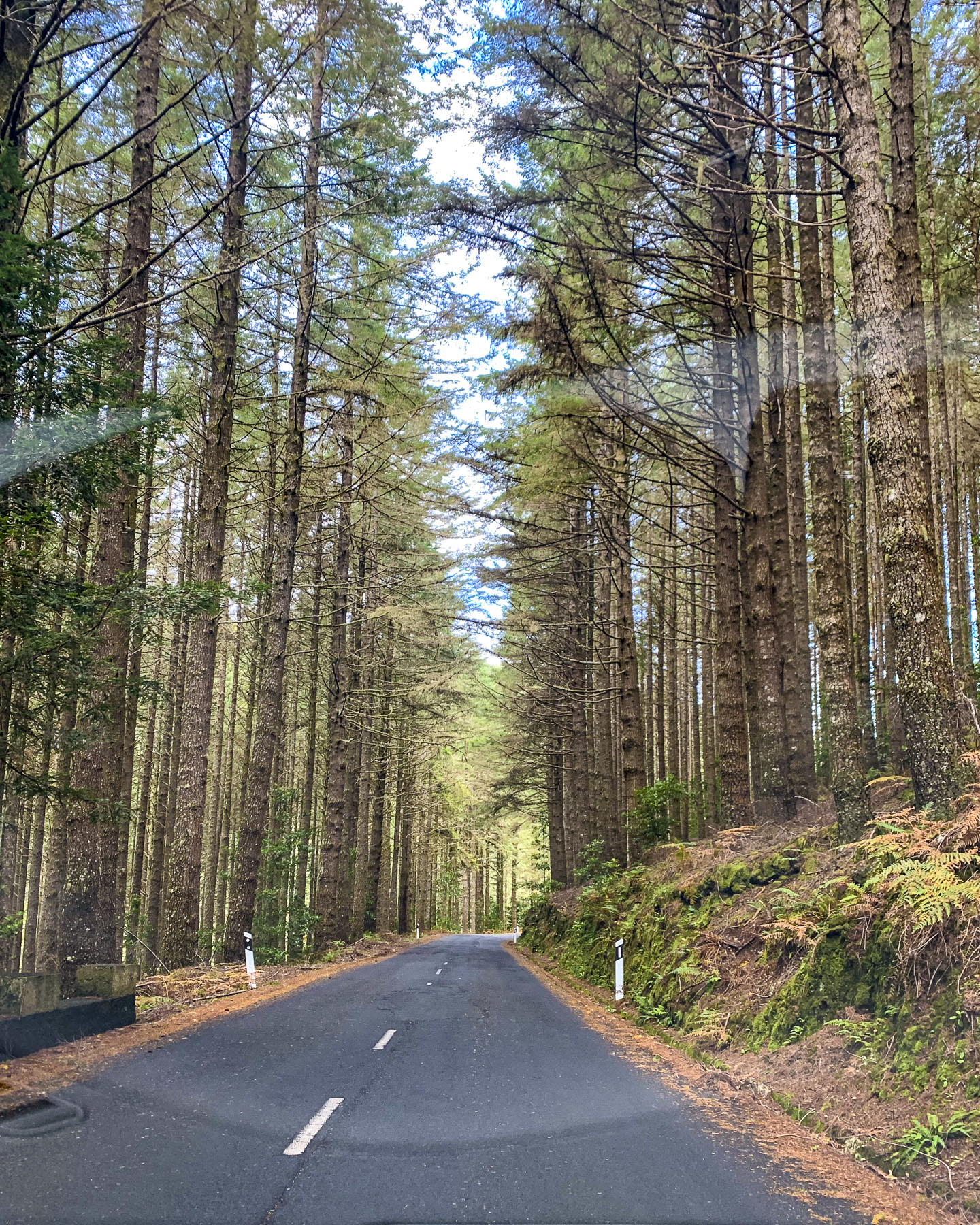

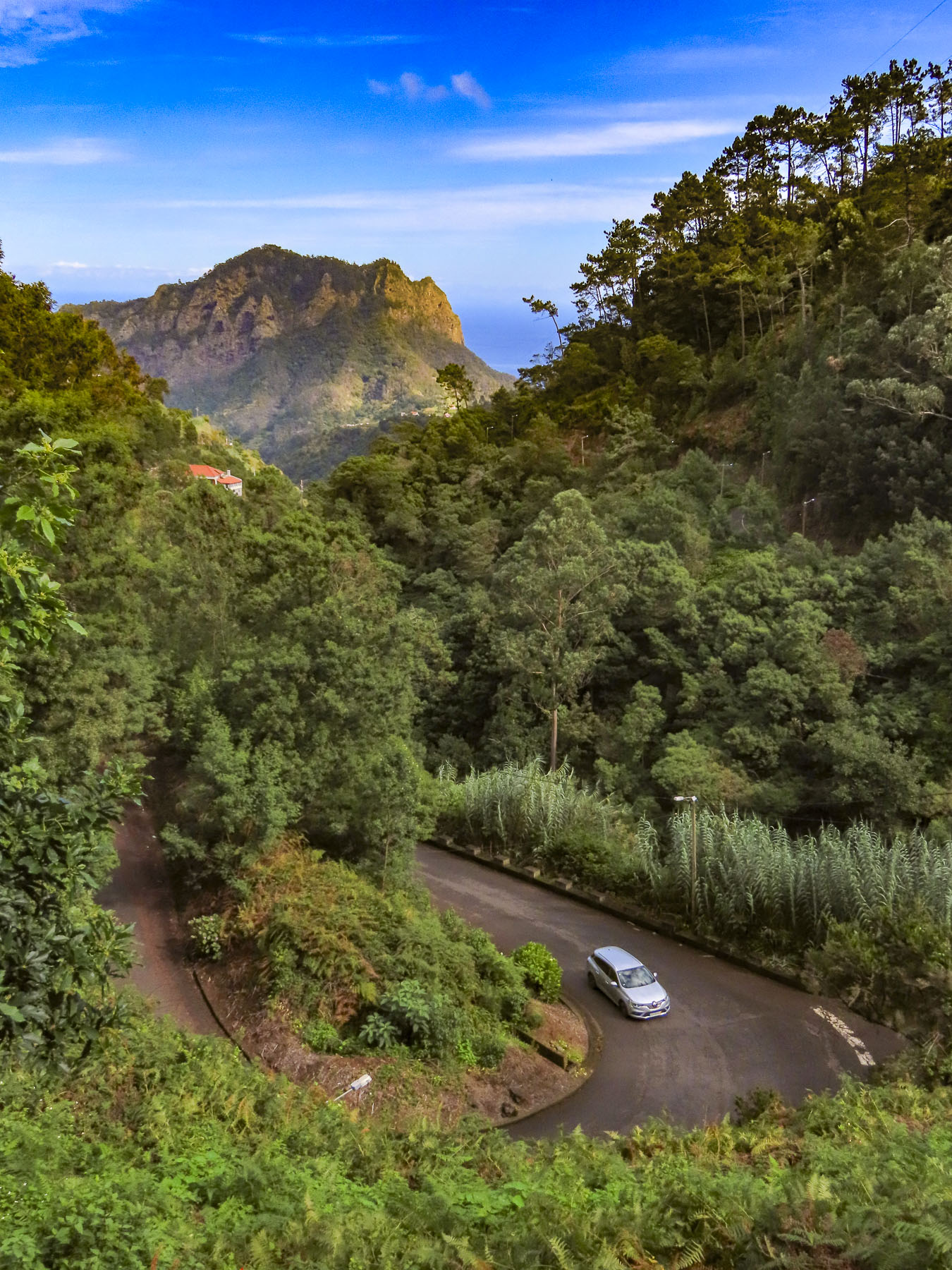
We continually drove back and forth over the mountains. Many times, we partially retraced a previous route only to turn onto narrower country lanes and zig zag to a miradouro or destination that beckoned for a photo op. As birds fly, the distances are short around the island. Not so with the roads.

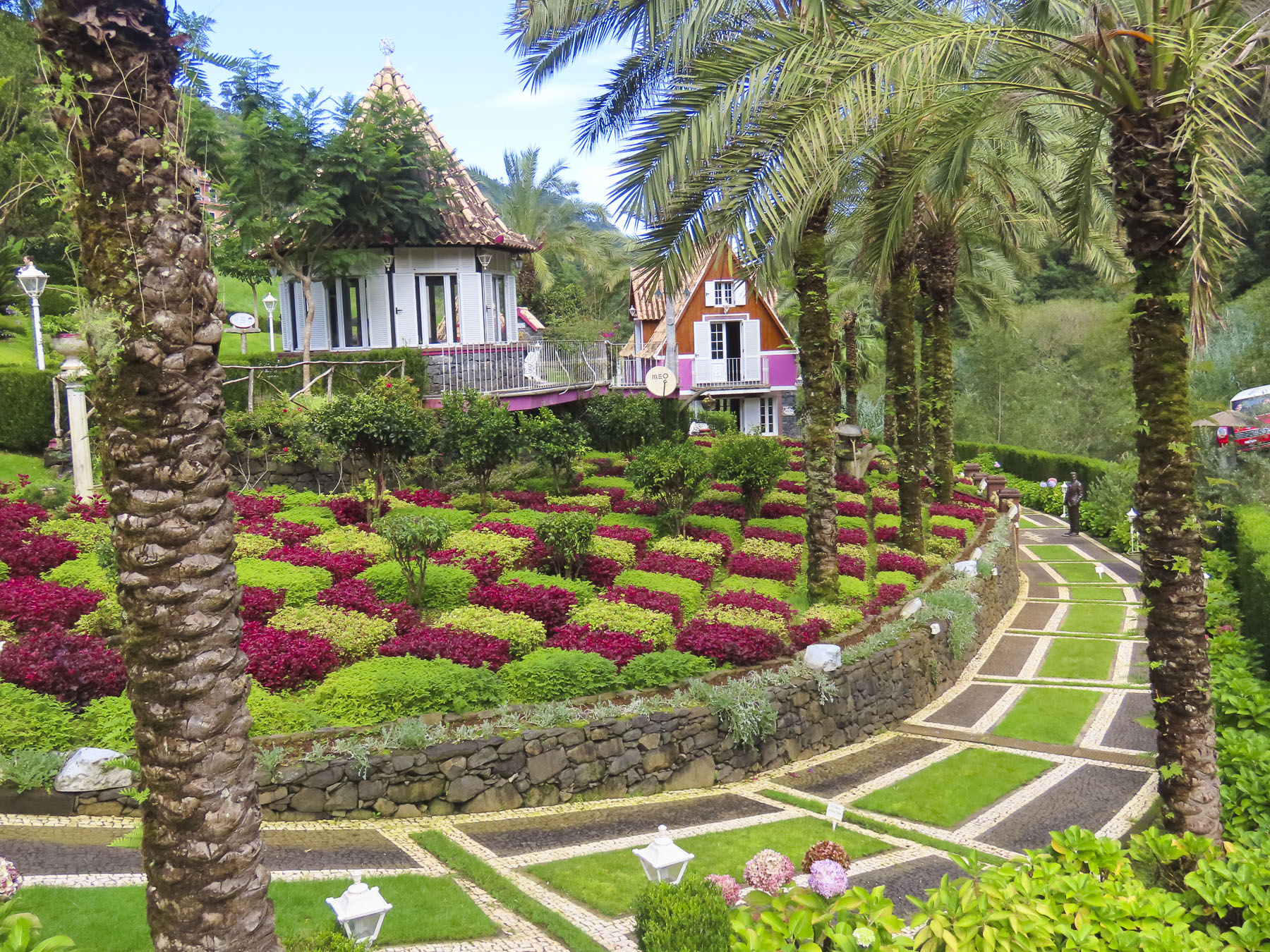
The Museu Família Teixeira was one such detour. It’s an interesting family museum that displays the older way of life on the island. One fascinating piece was the old wooden grape press on display, which looked like an ancient Roman catapult, more capable of destroying fortress walls than crushing wine grapes. The grounds of the family estate are also exquisitely landscaped as a living memorial garden to a lost son.

Afterwards we worked our way along the backroads through Faial to Santana then headed west down a long single lane road that eventually ended in the Parque Florestal das Queimadas. The full parking lot was quite the contrast to the desolate road we had just traveled.


Beyond the parking area there was a picnic area in a fairytale-like grove with two quaint thatched cottages, the smaller one serving as a snack bar. This is the trail head for the PR9 Levada do Caldeirão Verde, one of the easiest and flattest levada walks on Madeira that ends at a hundred-foot-tall waterfall cascading into a natural amphitheater. Unfortunately, we only followed the path next to the irrigation channel a short way before a sudden downpour turned us back.


Later that afternoon we drove down a well-worn track that followed the shallow Ribeira de São Jorge through a rugged narrow gorge. The road ended just before a footbridge that led to a freshwater lagoon, created by the river’s rushing water, just shy of the ocean. Above the lagoon was a restaurant with outside tables around a pool that had nice views of the surrounding hills and the sea.


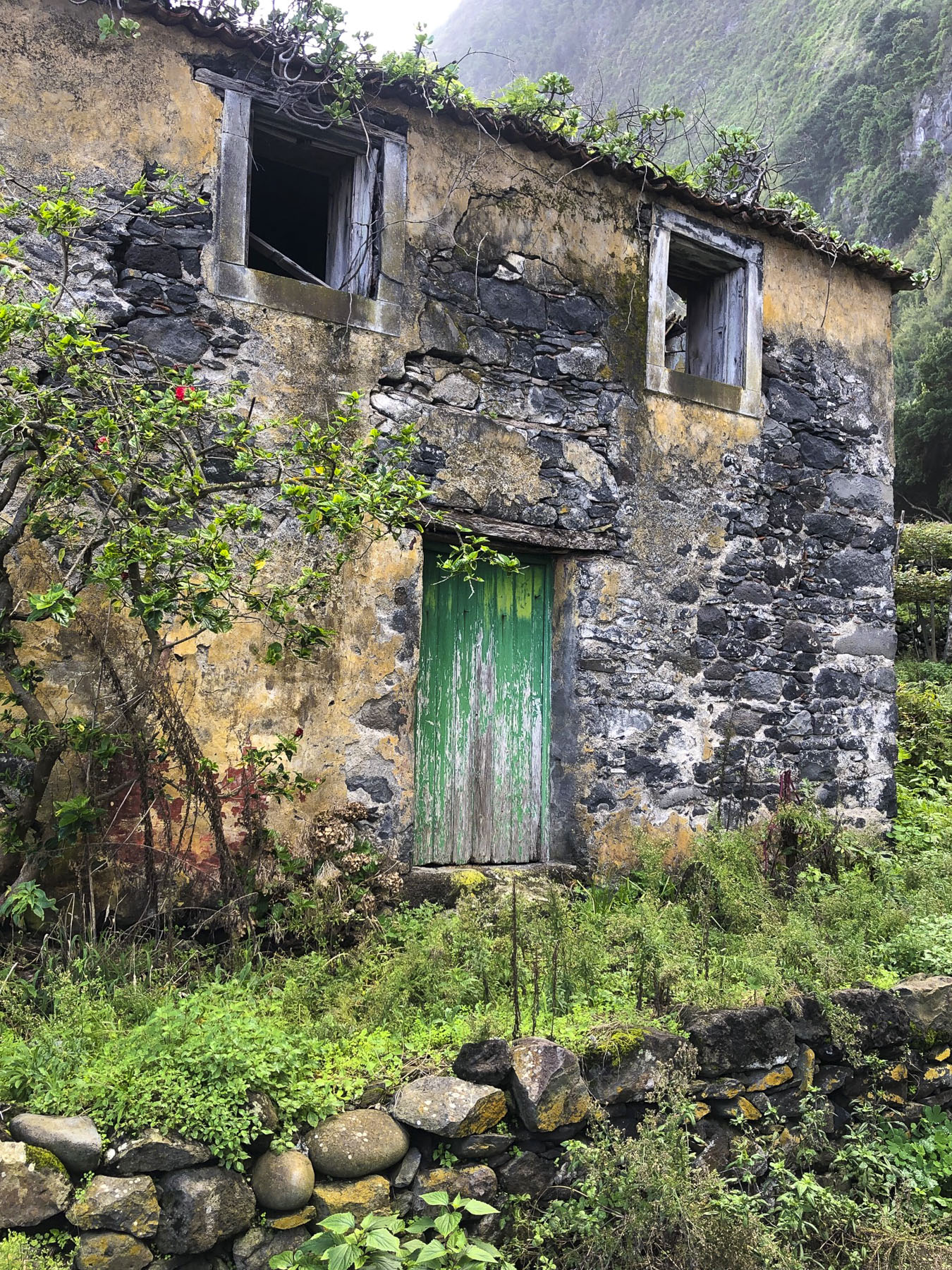
Some of the first sugar mills on the island were built in this valley during the early 1500s. It was a good location with an abundant source of river water channeled into the mills to spin their grindstones. The king of crops was eventually dethroned and today all that remains are the Ruínas de São Jorge, Ruins of St. George – a few stone walls, and an arched portico that faces the sea.


Driving back to Funchal at the end of the day, the coastline at Faial called for some last photos we couldn’t resist.


There’s a countless number of miradouros on Madeira and it was so tempting to turn at each sign indicating a view. But leaving a few unexplored provides a good excuse to plan a return to this spectacular paradise.
Till next time, Craig & Donna

 2 Suitcases for 2 years