
The long, curved road to the top of Colina da Cardosa in Castelo Branco was lined with olive trees. In this small city of 56,000 it seemed that every available piece of land that didn’t have a building on it was planted with olive trees – even in the median strip! Being olive aficionados, we were impressed with this urban landscaping that was both functional and edible. We parked adjacent to Igreja de Santa Maria do Castelo and the ruins of the old castle that dominate the hilltop. A pathway led us to benches that overlooked the prosperous expanse of the modern city. The golden hour lit the trees around us with warmth. As the sky deepened, city lights slowly filled the void. Behind us, on the slope below the castle, the old historic district was already cloaked in night. Tomorrow we’d spend the day wandering its ancient alleys.


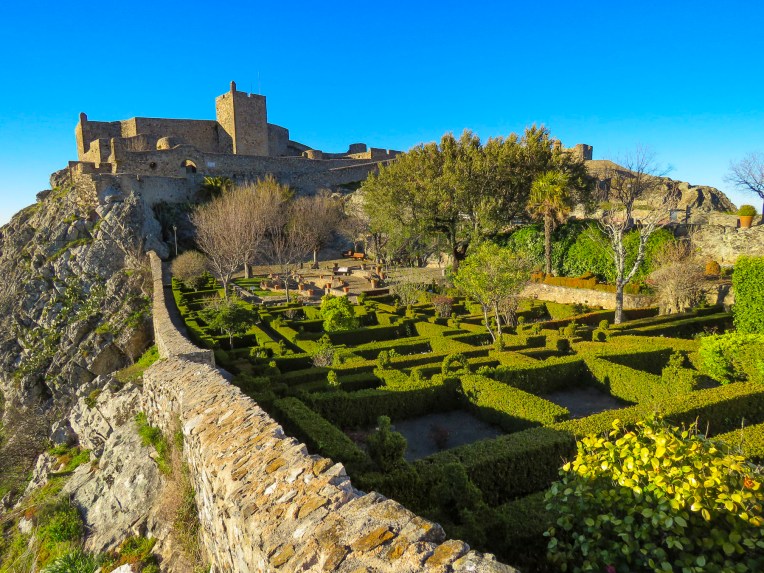
Located just a short walk from the crest of the hill TRYP Colina Do Castelo Hotel, with its free parking, turned out to be the perfect place to base our wandering of the historic district from. Better for us to walk downhill than uphill. From our balcony the next morning, we watched a brilliant sunrise. Fortifying the high ground was the rule centuries ago and the last remnant of Castelo e Muralhas Castelo Branco, the white castle, still commands the skyline above the old historic district of the town. Much isn’t known of the history of Castelo Branco before 1182, when it is first mentioned in a royal document decreeing land to who else, but those prolific castle builders the Knights Templar. Only 18km (11 miles) from the Spanish border, the fortified village quickly grew into an important center of commerce and line of defense to protect the Portuguese frontier. Today only two towers and a wide section of the ramparts are all that remained to remind us of this once mighty fortress and walled city. Igreja de Santa Maria do Castelo is thought to be the first church built in the village, when it was constructed within the castle walls on the foundations of a ruined Roman temple. The church had a turbulent history: destroyed in 1640 during the Portuguese Castile war, burnt down in 1704 and then used by the French as a stable when they invaded. It was left in ruins until it was rebuilt in the 19th century. It now sits peacefully in the park, atop the hill, with a view of the surrounding countryside.


From the castle towers we plotted our walk down through the ancient quarter to Jardim do Paço, the Bishop’s Palace Garden, then ending our day at Sé Catedral de Castelo Branco. From the hilltop we descended a long flight of shaded stairs to the Miradouro de São Gens. This is a lovely, quiet spot with a water garden and benches. During its construction in 1940s evidence of earlier civilizations living on the hill were unearthed and placards describing the finds are featured along the pathway.


We exited the park onto Rua do Mercado, the old merchant street that runs flatly across the midsection of the hill. Unlike Alfama in Lisbon, there are no boutique shops or galleries along the lane; the area is strictly residential now. The names of the narrow, cobbled lanes reflect the shops that once lined them: Rua dos Oleiros (potters,) Rua dos Peleteiros (pelters,) and Rua dos Lagares (wineries,) and they run steeply down the slope from Rua do Mercado to flatter ground around the Bishop’s Palace Garden and the newer 17th century part of town. Wonderful examples of 15th century homes with carved stone door and window frames can be found in this area. But like Alfama, Albicastrenses still gather to talk to their neighbors in the streets and hang laundry from their windows.


Fine examples of Portuguese Calcada, mosaic stone sidewalks, can be seen in front of the Bishop’s Palace, now the Museu Francisco Tavares Proença Jr., which is famous for its collection of highly embroidered, ornate colcha, bedspreads, from the Castelo Branco area. This traditional art has been unique to the region for over three-hundred years. It is thought that the inspiration for these was brought back from the orient by Portuguese traders and that the local women self-taught themselves the technique. Needing to rest, we headed into a municipal park across from the Bishop’s Garden, where there was a small café that served good coffee and tasty sandwiches.


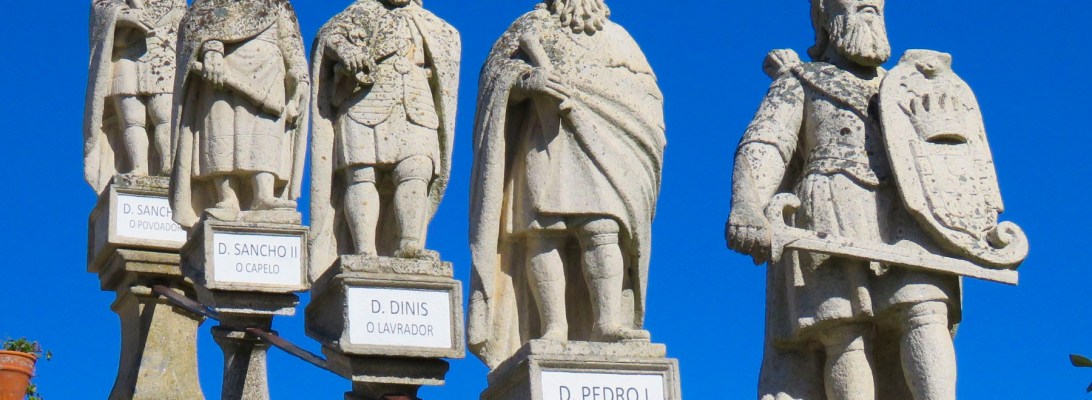
The Bishop’s Palace Garden is the crown jewel of Castelo Branco and even in mid-March when we visited was green and spectacular. Commissioned in the early 1700s by the Bishop of Guarda, D. João de Mendonça, it is one of Portugal’s best examples of baroque formal gardens. The garden is divided into four distinct sections containing fragrant orange trees, azulejos tile murals, boxwood hedges, staircases, statuary, pools, and fountains all inter-connected via pathways. Of particular interest were the staircase of the Kings of Portugal that depicted in miniature the hated Monarchs of Spain, who for short periods ruled Portugal, and the delicate sprinkler fountains found in the pools that were unique to Portuguese formal gardens at the time.


Continuing our walk to the Sé Catedral de Castelo Branco we passed a tall, richly carved, stone road marker. The Cross of Sao Joao, its fine Manueline details now heavily eroded by time, was sculpted in the 1500s to mark that there was a chapel devoted to Sao Joao nearby. Further along we passed an old defense tower that was renovated centuries earlier to become the town’s clock tower, Torre do Relógio, with its signature finely, pointed conical roof.


Just off the old square, Praça do Camões, we passed through an archway that was once one of the gates to the walled lower part of the town. Above it was the first residence of the Guarda Bishops before their luxurious palace was built. Those versatile Templars, fortress and cathedral builders extrordinaire, are also credited with the construction the of Sé Catedral de Castelo Branco in the early 13th century. The cathedral’s original footprint has been lost under centuries of expansion. Today its simple exterior belies a richly decorated interior that features a gold-leaf altar and a beautiful baptismal font.


Exhausted after a long day of discovery, we took a taxi back uphill to our hotel for the evening.


When we visited in early Spring, we had the town mostly to ourselves. There were only a handful of other tourists wandering the alleys and gardens with us. As inexpensive as Lisbon was, meals are even more budget friendly in the countryside. We highly recommend touring through the small villages and towns along the Portuguese frontier with Spain as a reprieve from the big cities of Lisbon, Coimbra and Porto. You’ll be pleasantly surprised.
Till next time,
Craig & Donna




![IMG_8535[41117]](https://i0.wp.com/2suitcasesfor2years.com/wp-content/uploads/2019/07/img_853541117.jpg?w=279&h=209&ssl=1 "IMG_8535[41117]")
![IMG_8406[41116]](https://i0.wp.com/2suitcasesfor2years.com/wp-content/uploads/2019/07/img_840641116.jpg?w=279&h=209&ssl=1 "IMG_8406[41116]")

![IMG_4442[41105]-2](https://i0.wp.com/2suitcasesfor2years.com/wp-content/uploads/2019/07/img_444241105-2.jpg?w=484&h=363&ssl=1 "IMG_4442[41105]-2")
![IMG_4328[41104]-2](https://i0.wp.com/2suitcasesfor2years.com/wp-content/uploads/2019/07/img_432841104-2.jpg?w=272&h=363&ssl=1 "IMG_4328[41104]-2")
 When we retired early, a year ago, we had to choose health insurance or travel. We made the decision to go without U.S. health insurance, because it’s too damn unaffordable and wouldn’t cover us outside the U.S. anyway. We chose travel insurance instead, with medical evacuation, and we pay out of pocket for wellness care and dentistry. Our two years on the road will bridge us until age 65 when we qualify for Medicare. And it’s surprising how affordable excellent healthcare is in other countries. We’ve paid $25.00 for an emergency room visit to a private hospital and $5.00 for the prescriptions in Ecuador to treat high altitude sickness. Our travel insurance paid fully for a visit to an ENT specialist in Lisbon to treat a persistent sinus infection. I’ve visited dentists in Cuenca, Ecuador for a tooth extraction and bridge; Sofia, Bulgaria for a broken filling; and Cape Town, South Africa for a root canal. The care has been excellent and extremely inexpensive compared to pricing in the United States. Though when we are in the United States travel insurance only covers us if we are one hundred miles away from our previous home in Pennsylvania.
 We plan on purchasing a home when we return to the United States. Right now, though, our budget is plus/minus $1000.00 per month for an apartment. One thousand per month for housing goes much further overseas than in the states and allows us to live in unique and interesting locales.
![IMG_3666[31053]](https://i0.wp.com/2suitcasesfor2years.com/wp-content/uploads/2019/07/img_366631053.jpg?w=226&h=301&ssl=1 "IMG_3666[31053]")
![C9307CA4-72DA-4D6B-8838-8D3B4A103C88[35084]](https://i0.wp.com/2suitcasesfor2years.com/wp-content/uploads/2019/07/c9307ca4-72da-4d6b-8838-8d3b4a103c8835084.jpg?w=301&h=301&crop=1&ssl=1 "C9307CA4-72DA-4D6B-8838-8D3B4A103C88[35084]")
![IMG_3677[31056]](https://i0.wp.com/2suitcasesfor2years.com/wp-content/uploads/2019/07/img_367731056.jpg?w=225&h=301&ssl=1 "IMG_3677[31056]")
![IMG_3463[31065]](https://i0.wp.com/2suitcasesfor2years.com/wp-content/uploads/2019/07/img_346331065.jpg?w=378&h=284&ssl=1 "IMG_3463[31065]")
![IMG_3140[31166]](https://i0.wp.com/2suitcasesfor2years.com/wp-content/uploads/2019/07/img_314031166.jpg?w=378&h=284&ssl=1 "IMG_3140[31166]")
![IMG_3737[35074]](https://2suitcasesfor2years.com/wp-content/uploads/2019/07/img_373735074.jpg?w=764)
 We’ve rented cars in Ecuador, Guatemala, Portugal, Bulgaria and South Africa. Near the Schist villages in the mountains of central Portugal we gave a lift to two hikers, who were exhausted from a long trek without water. We ended up having a delightful afternoon and lunch with them. Aside from the deeply rutted dirt roads of the Andes Mountain range in Ecuador, South Africa with its driving on the left has proven to be the most difficult. We find that a pilot plus navigator system works well, with the latter reminding the pilot to stay left and make very wide right-hand turns. Interesting traffic signs dot the roads here: Caution Tortoise and Baboons Share this Road Too, Watch for Stray Cattle. I chuckled to myself when I passed a sign that I thought said Zebras Humping, only to realize a moment later it was a speed bump when I hit it at a pretty good clip. Caution High Winds – Parents Hold Your Children Firmly by the Hand as there is Mortal Danger of Them Blowing Off, greeted us in the parking lot of a scenic and windy overlook. South Africa has a well deployed and concealed electronic camera system and we’ve received our first notice of a traffic violation from the rental car company.


![IMG_6810[39428]-2](https://i0.wp.com/2suitcasesfor2years.com/wp-content/uploads/2019/07/img_681039428-2.jpg?w=492&h=369&ssl=1 "IMG_6810[39428]-2")
![IMG_4520[41112]-2](https://i0.wp.com/2suitcasesfor2years.com/wp-content/uploads/2019/07/img_452041112-2.jpg?w=264&h=369&ssl=1 "IMG_4520[41112]-2")


 Monsanto


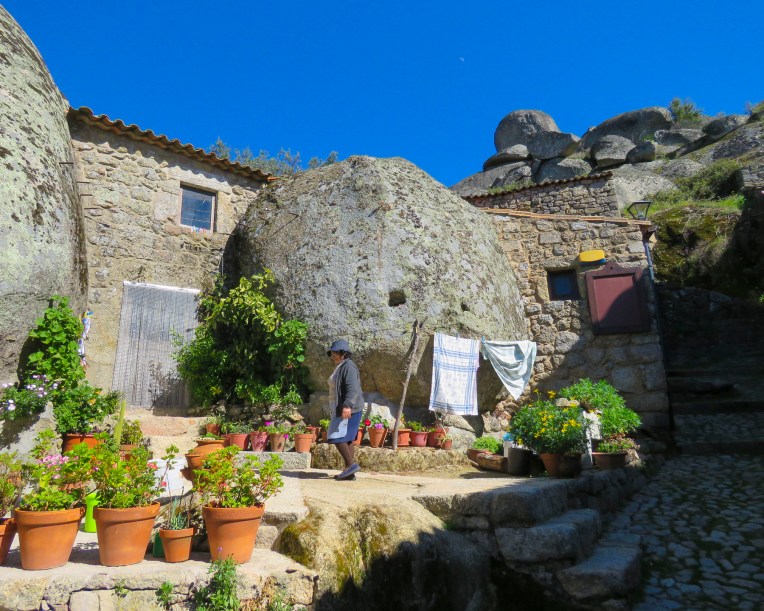 Monsanto


 2 Suitcases for 2 years